Benzoyl peroxide is the only active on this site that arrives with a legal document attached. It is an FDA over-the-counter monograph drug rather than a cosmetic, so every box carries a Drug Facts panel, and that panel has to print the active ingredient and its percentage. No "complex," no proprietary blend, no reading position on an ingredient list to guess what is really in there — the number is on the box and it is filed with the federal government. Every percentage on this page was read off the registered label on DailyMed, not off the front of the tube. That makes this the easiest category on the site to rank honestly and, it turns out, the one where the standard internet advice is only half right.
The advice is "buy 2.5%, not 10%," and it comes from one genuinely good 1986 trial: 2.5%, 5% and 10% benzoyl peroxide reduced inflammatory lesions by about the same amount, and the 10% produced noticeably more peeling, redness and burning. We have said the same thing for a year on our benzoyl peroxide guide. What that trial tested, though, was leave-on gel, sitting on skin for hours. Roughly half of what is now sold in this category is a wash that is on your face for twenty to sixty seconds, and a 2022 in-vitro study measured how long each strength needs to be in contact with Cutibacterium acnes to kill it: 5% and 10% managed it in 30 seconds, 2.5% needed 15 minutes, and 1.25% needed a full hour. Strength and format are not independent variables, and no roundup we could find ranks them together. This one does.
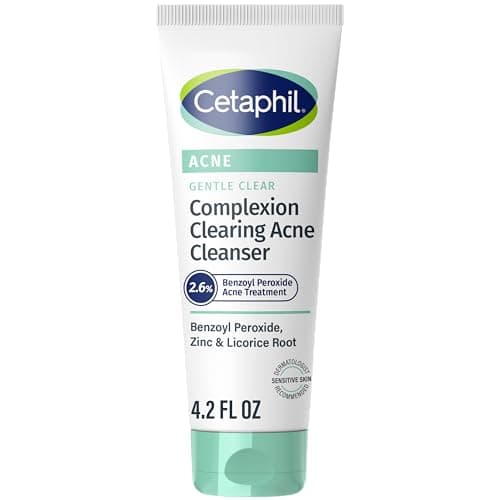
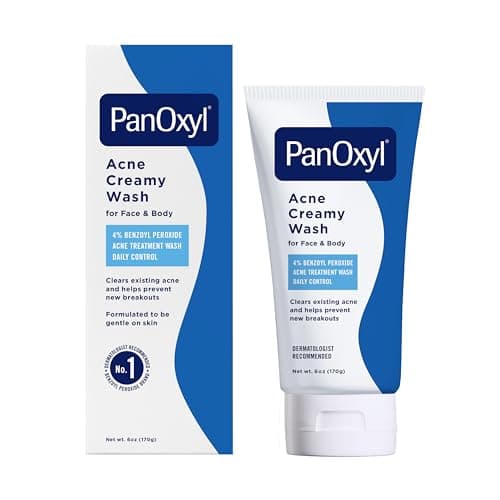
The criteria, in the order they decided the ranking. Strength versus the evidence first, judged against the format it is sold in rather than against the biggest number on the shelf. Contact time second, taken from the product's own Drug Facts directions — PanOxyl tells you to massage for one to two minutes, Cetaphil and Differin say twenty to thirty seconds, and a leave-on gel says nothing because it never comes off. Base formula third, because the way this active fails is not that it stops working, it is that people quit in week three from dryness, so what is holding the benzoyl peroxide matters as much as how much of it there is. Size against shelf life fourth, which is new this year and which nobody is scoring: benzoyl peroxide degrades into benzene, the March 2025 FDA testing and the recalls that followed put real numbers on that, and the American Academy of Dermatology now advises replacing these products every ten to twelve weeks — so a tube you cannot finish in a season is a worse buy than a smaller one at the same price per ounce. And value, which in a category where the cheapest product on the page costs about five dollars is less decisive than usual.
One thing worth saying before the picks, because it is the question most people arrive with. The benzene recalls were real, narrow and lot-specific: the FDA tested 95 benzoyl peroxide products, more than 90% had undetectable or extremely low levels, six had elevated levels, and those six were recalled at the retail level by named lot. The agency's own conclusion was that "even with daily use of these products for decades, the risk of a person developing cancer because of exposure to benzene found in these products is very low." The AAD did not tell anyone to stop using benzoyl peroxide and neither do we. What the evidence does change is how you buy and store it, and that is in the buyer's guide below. Every one of the eight products here declares no fragrance on its registered label, so the usual fragrance screen we run on mineral sunscreens and face oils found nothing to separate them — in this category, the label is doing its job.
Why the Drug Facts panel changes how you shop
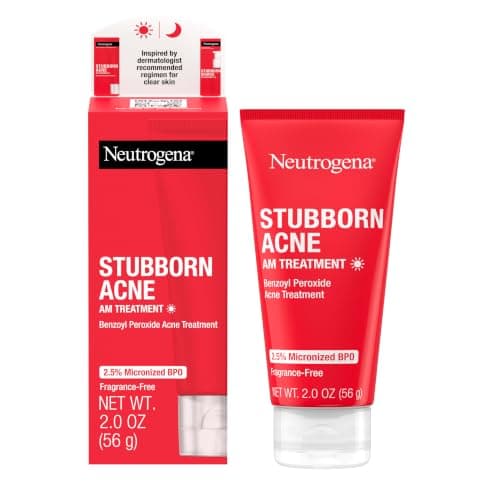
Almost every page on this site has to work around the fact that cosmetic labels hide concentrations. Our peptide roundup ranks partly on whether a brand discloses a strength at all; tranexamic acid serums had to be read by ingredient position because the front of the box is not evidence. Benzoyl peroxide is different. It is regulated as an over-the-counter drug under the FDA acne monograph, which means the box carries a Drug Facts panel, the panel states the active ingredient and its strength, and the whole label is filed publicly on DailyMed. Every number on this page came from that filing. You can check any of them in about a minute, and you should — the Amazon title for the Neutrogena treatment above does not mention benzoyl peroxide or a percentage anywhere, but its registered label says 2.5%.
A second consequence of drug status is that the directions are part of the label too. That is where the contact times in this ranking come from: PanOxyl's washes direct a one-to-two-minute massage, Cetaphil's and Differin's direct twenty to thirty seconds, and the leave-on products direct a thin layer over the affected area. Those are not marketing copy. They are the conditions under which the manufacturer is telling you the product works.
The 2.5% rule is right, and it is a rule about leave-on products
The trial everyone is quoting is Mills, Kligman, Pochi and Comite, International Journal of Dermatology, 1986: 2.5%, 5% and 10% benzoyl peroxide compared against each other and against vehicle on inflammatory acne. All three strengths beat the vehicle. None of them beat each other on lesion counts. The 2.5% produced less scaling, redness and burning than the 10%, and about the same amount as the 5%. That is why every dermatologist and every honest roundup says start low, and it is why the ingredient guide on this site has said the same thing since it was published.
The Cochrane review of topical benzoyl peroxide, updated in 2020, pooled 120 trials and nearly 30,000 participants and adds the sober frame: benzoyl peroxide probably beats placebo for participant-reported improvement (risk ratio 1.27), it is about equivalent to adapalene and to clindamycin, and people withdraw from trials because of its side effects more than twice as often as they withdraw from placebo — erythema, itching and burning. Most of that evidence is rated low-certainty. This is a genuinely useful active with a genuinely high dropout rate, and both halves of that sentence should shape what you buy.
What the contact-time data adds, and what it does not
Here is the piece that reorganizes the category. In 2022 a Thai group published minimum contact times for benzoyl peroxide against clinically isolated Cutibacterium acnes in Clinical, Cosmetic and Investigational Dermatology. To kill every isolate, 10% and 5% needed 30 seconds, 2.5% needed 15 minutes, and 1.25% needed 60 minutes. The median minimum inhibitory concentration did not differ between antibiotic-resistant and non-resistant strains, which is the other reason this ingredient matters: resistance does not accumulate against it.
Put that next to the labels. A leave-on gel has hours — so at 2.5% it has many times the contact time the bacteria needed, and the Mills result makes perfect sense. A wash has twenty seconds to two minutes. On that timescale a 5% or 10% wash clears the in-vitro bar and a 2.5% wash does not come close, which is an uncomfortable finding for the gentlest product on this page.
Now the honest limits, because this is one in-vitro study and we are not going to overstate it. It was bacteria in a dish, not bacteria in a sebaceous follicle. Benzoyl peroxide is not only antibacterial — it is mildly comedolytic and anti-inflammatory too, and neither of those mechanisms is measured by a plate count. Residue demonstrably stays on skin after rinsing, so the real contact time of a wash is longer than the time the water is running. And washes at 4% have decades of satisfied users behind them. So we did not rank the low-strength washes out of the running; we ranked them below the products where strength and format agree with each other, and we said why. If you want the strongest version of the argument for a wash anyway, it is the one our PanOxyl 4% review makes: the best acne treatment is the one you are still using in week twelve.
Benzene, the recalls, and the rule that actually comes out of it
Benzene is a known human carcinogen and it is a degradation product of benzoyl peroxide itself — not a manufacturing contaminant that a better factory could avoid, but something the molecule turns into as it breaks down. In October 2024 a Valisure and Yale team published a study in the Journal of Investigative Dermatology that measured benzene at 0.16 to 35.30 ppm across 111 over-the-counter benzoyl peroxide products held at room temperature, found no apparent benzene formation in a product stored at 2°C and high formation at 50°C, and detected benzene in the air above a product applied to a model skin plate, rising substantially under UV light at levels below peak sunlight.
The FDA then ran its own testing and published the results on 11 March 2025. It tested 95 benzoyl peroxide acne products. More than 90% had undetectable or extremely low benzene. Six had elevated levels and were voluntarily recalled at the retail level by named lot — La Roche-Posay Effaclar Duo, Walgreens Acne Control Cleanser, two Proactiv products, SLMD Benzoyl Peroxide Acne Lotion and Walgreens Tinted Acne Treatment Cream — with the maker of Zapzyt Acne Treatment Gel recalling separately after its own testing. The FDA's conclusion was that "even with daily use of these products for decades, the risk of a person developing cancer because of exposure to benzene found in these products is very low," and its advice to consumers was to check dates and throw away anything expired. The American Academy of Dermatology did not advise stopping benzoyl peroxide either. It advised storing it at room temperature or cooler, replacing it every ten to twelve weeks, and discarding any product that has been exposed to temperatures above 78°F.
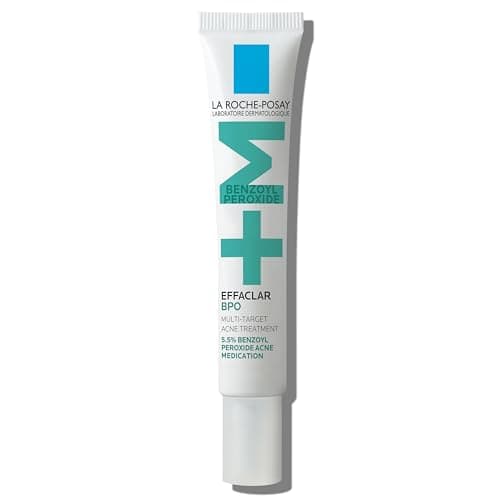
None of the eight products on this page is a recalled product, and Effaclar Duo itself is no longer listed on Amazon under that name — La Roche-Posay now sells Effaclar BPO Multi-Target, which has its own more recent registered label with a different inactive list. What all of this actually changes is four things about how you buy:
- Tube size is a specification. If the AAD wants this replaced every ten to twelve weeks, a 6 oz tube you are using on your face alone is a worse buy than a 2 oz one, whatever the per-ounce math says. Buy the size you will finish.
- Check the expiration date on the shelf, not at home. These are drugs and they carry real dates. A heavily discounted tube expiring in four months is discounted for a reason.
- Keep it cool and out of the sun. Every single label in this ranking says store at 20-25°C (68-77°F). A bathroom windowsill in August, a car and a mailbox all break that routinely. This is one of the few genuine uses for a skincare fridge that is about chemistry rather than pleasure — the Valisure work found no apparent benzene formation at 2°C.
- Do not apply it and then sit in the sun. Benzoyl peroxide already makes skin more sun-sensitive and every label tells you to apply sunscreen afterwards. The UV finding is one more reason to treat that instruction as mandatory rather than as boilerplate.
If you want the broader version of the "how long does this stuff last" question, our guide to whether skincare expires covers it — but note that benzoyl peroxide is a genuine exception to the general rule that dates on cosmetics are conservative. Here the date means something.
The base formula decides whether you are still using it in March
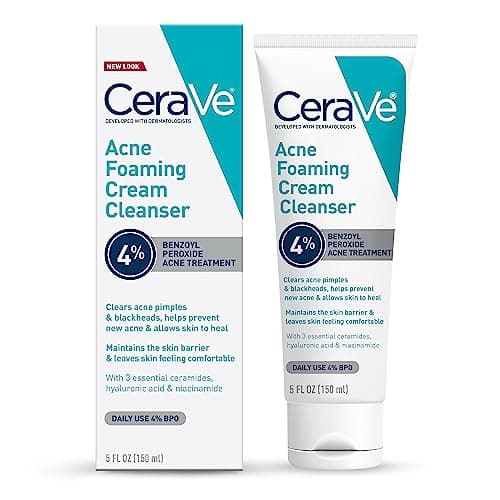
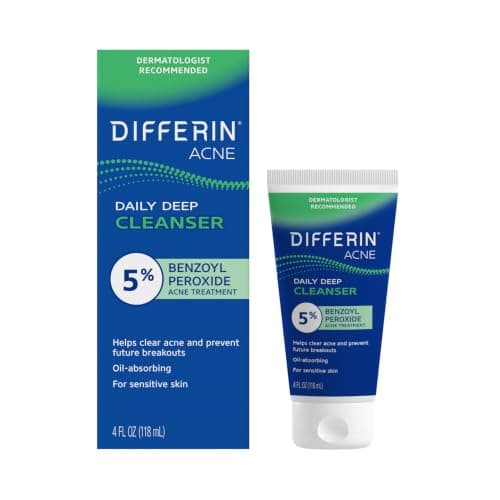
Benzoyl peroxide's failure mode is not that it stops working. It is the Cochrane number: people drop out because of erythema, itching and burning at more than twice the placebo rate. That is why the inactive list is scored so heavily here. CeraVe puts three ceramides, cholesterol, phytosphingosine, niacinamide and sodium hyaluronate behind its 4%; Cetaphil puts zinc gluconate and a licorice-derived soother behind its 2.6%; Differin puts six ingredients and a shrug behind its 5%; and the Neutrogena leave-on contains no emollient or humectant whatsoever. None of those is disqualifying, but they tell you what else you have to buy. A plain, boring moisturizer over the top is not optional with any of them — our moisturizer roundup has the cheap ones — and if your barrier is already unhappy, read the damaged barrier guide before you add a new active at all.
The bleaching is the other practical cost, and it is not a maybe. Benzoyl peroxide is an oxidizer; it bleaches towels, pillowcases, shirt collars and hair, permanently, often without you noticing until after a wash. White or written-off linens from day one is the only advice that survives contact with reality.
How to actually run it
- Weeks 1-4: one wash a day, PM. Moisturizer over the top every single time. Sunscreen every morning, without exception.
- Weeks 5-8: if there is no persistent stinging or flaking, add a 2.5% leave-on two or three nights a week, on the whole affected area rather than on individual spots.
- Weeks 9-12: nightly leave-on if tolerated. This is where most of the benefit lands, and it is also roughly when the AAD would have you replacing the tube.
- Week 12: judge it, in photographs taken in the same light, not in the mirror. Inflammatory acne responds faster than most things, but twelve weeks is the fair minimum.
Pair it with adapalene rather than instead of it — that combination is well supported, and our Differin adapalene review covers the other half. Do not layer it directly with vitamin C, which it oxidizes. Be careful stacking it on a daily chemical exfoliant: alternate nights, or pick one.
Which one for which face
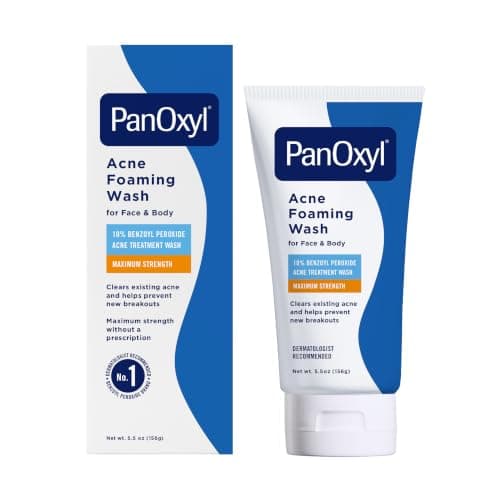
- Starting from nothing: PanOxyl 4% Creamy Wash. Longest directed contact time of any wash here, gentlest surfactant base, cheapest per ounce.
- Already tolerating a wash and want the evidence-backed step up: Neutrogena Stubborn Acne AM at 2.5% — with a moisturizer, because it brings none of its own.
- Dry, flaking or mid-retinoid: CeraVe Foaming Acne Cream Cleanser, as long as you are not also using a separate exfoliant, because it already contains glycolic acid.
- Shortest possible ingredient list, lowest price: Differin 5% — and accept it is the driest wash on the page.
- Back, chest and shoulders: PanOxyl 10% Foaming Wash, which is the one context where a maximum strength is a decision rather than a dare.
- Skin that reacts to everything: Cetaphil Gentle Clear, knowing it is the gentlest product here and the one with the weakest strength-to-contact-time case.
- A small area, or you want the freshest possible tube: La Roche-Posay Effaclar BPO, if you can accept the price per ounce.
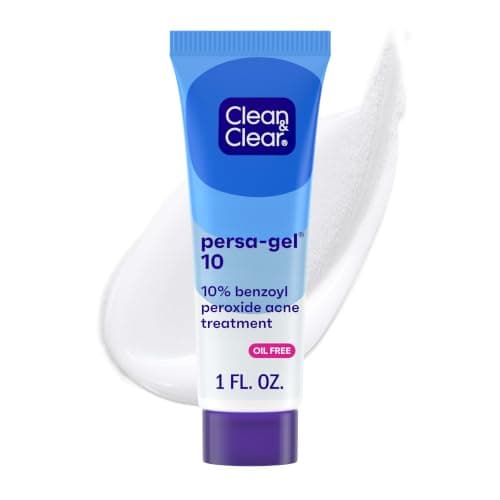
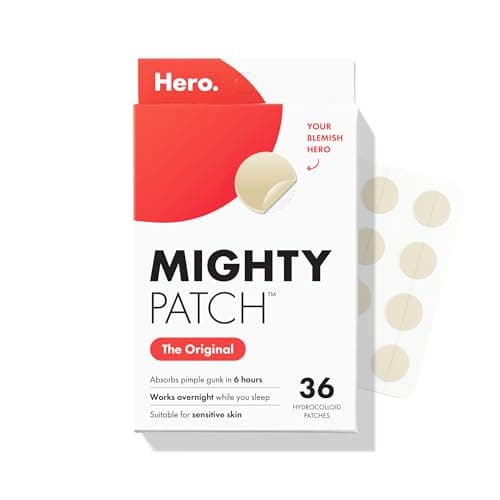
- One angry spot, tonight: Persa-Gel 10 dabbed on it — or, honestly, a hydrocolloid patch, which will not bleach your pillowcase.
The honest ceiling
Benzoyl peroxide is the most effective acne active you can buy without a prescription and it is still, per Cochrane, a modest, low-certainty, high-dropout intervention. It does nothing for the closed comedones and bumpy texture that salicylic acid handles, and nothing for the marks left behind, which is what our azelaic acid roundup is for. If you have nodules or cysts, or twelve honest weeks have not moved anything, the highest-value next step is a dermatologist and a prescription, not a stronger tube. Everything on this page costs less than twenty dollars for a reason: this is the cheap, well-evidenced floor of acne treatment, and it is a floor, not a ceiling.