Tranexamic acid is the one pigmentation ingredient with a mechanism nobody else in the aisle shares. Vitamin C, arbutin, kojic acid and azelaic acid all work at the pigment factory, slowing the enzyme that makes melanin. Tranexamic acid works one step earlier, on the signal that tells the factory to start — which is why it is the ingredient dermatologists reach for in melasma, and why it sometimes moves discoloration that everything else has stalled on. It is also, usefully, a category you can check. Tranexamic acid is a single molecule that appears under its own name on an ingredient list, and the serious formulas print a percentage. So this page is ranked from the INCI, not the front of the box, and the INCI turned up the finding that organizes it: of the eight products here, seven declare a strength, and one of the best-selling budget serums in the category lists no tranexamic acid at all. It lists cetyl tranexamate mesylate, an ester derivative — and its own bullet points say so, if you read past the headline.
The criteria, in the order they decided the ranking. Declared strength first, judged against what the published trials actually used rather than against the biggest number on a shelf: the split-face melasma studies ran at 2%, 3% and 5%, so that is the evidence band, and a listing advertising a "20% tranexamic acid complex" is telling you the percentage of a blend, not of the molecule. Partner formula second — niacinamide, arbutin and kojic acid attack pigment by different routes and are legitimate partners, but every extra active is one more thing to react to, and on pigment-prone skin a reaction makes more pigment. The fragrance screen third, and the claim is the front label's, so we read the back: two products here say fragrance-free and then declare a rose flower oil or a perfuming solvent further down the list. Routine fit fourth, because two of the eight quietly bundle a second category of active — an exfoliating acid in one, a retinoid in another — which changes when you can use them and who can use them at all. And price per ounce, which reorders the list hard: the same 3% strength is on sale here at three prices that differ by roughly an order of magnitude.
Two honest framings before the picks. The first is that the evidence for a tranexamic acid serum is thinner than the ingredient's reputation, which was earned by the oral drug under medical supervision. Our tranexamic acid guide makes that case at length; the short version is in the buyer's guide below, including a double-blind trial in which a 5% gel did no better than its own vehicle. The second is that none of this works without sunscreen, and for melasma specifically not without a tinted one, because the pigment is driven by visible light as well as UV. If you buy one thing from this page and one thing from our mineral sunscreen roundup, buy the sunscreen first.
How tranexamic acid works, and why that matters for buying one
Tranexamic acid is a synthetic cousin of the amino acid lysine, used for decades as an oral drug to reduce bleeding. It does that by blocking plasminogen from becoming plasmin. Skin cells under UV use the same plasmin system to send the signals — prostaglandins, arachidonic acid, endothelin-1 — that switch melanocytes on, and a 1998 study in the Journal of Photochemistry and Photobiology showed that applying the molecule topically prevented UV-induced pigmentation by cutting that signal off. A 2016 biopsy study in Clinical and Experimental Dermatology found the same thing in melasma skin: twelve weeks of a 2% formula lowered epidermal melanin, blood-vessel counts tended to fall and endothelin-1 was suppressed. That is the whole reason to buy it. Every other brightener you can find on our dark spots roundup works at the enzyme. This one works on the message, which is why it is the ingredient for melasma — a condition driven by hormonal, vascular and light-related signaling rather than by an overactive enzyme — and why it sometimes moves discoloration that has ignored everything else.
It also means the buying question is simpler than in most categories. Tranexamic acid is one molecule with one INCI name. It has no isomers to argue about and no oxidation problem to formulate around. So the product either contains it or does not, at a strength the label either prints or does not, and both of those are checkable on the back of the box.
What the trials actually used
Every strength claim on this page was judged against four small clinical studies, all of them twelve weeks, and it is worth knowing what they found because the marketing has drifted a long way from it. A 2014 split-face trial in fifty Iranian women compared a 3% tranexamic acid solution with the gold-standard combination of 3% hydroquinone and 0.01% dexamethasone; both sides improved by a similar amount, and the hydroquinone side had significantly more side effects. A 2015 split-face trial in thirty women compared 5% liposomal tranexamic acid with 4% hydroquinone; both improved, the tranexamic acid side slightly more, without reaching significance, and the only irritation occurred on the hydroquinone side. The 2016 biopsy study above used 2% and improved 22 of 23 participants — but it had no control side. And a 2012 double-blind trial in twenty-three Thai women, the most rigorous design of the four, put a 5% gel against its own vehicle: both sides lightened, the tranexamic acid side was not significantly better than the plain gel, and it produced more redness. A 2017 meta-analysis pooling eleven studies found a real but modest benefit, and most of the pooled data was oral.
Three things follow for a shopper. The evidence band is 2% to 5%. That is where every declared-strength pick on this page sits, and there is no trial showing that 6%, 10% or 20% does more — the "20% tranexamic acid complex" language on some marketplace listings describes the percentage of a blend, not of the molecule, and is not comparable to anything above. The vehicle did a lot of the work. In the one blinded, vehicle-controlled trial, the plain gel plus the sunscreen every participant was issued lightened melasma on its own. That is not an argument against tranexamic acid; it is an argument that sunscreen is the active ingredient and the serum is the adjunct. The reputation belongs to the pill. Oral tranexamic acid, prescribed and monitored, is what dermatologists mean when they call this the melasma ingredient. It carries a clotting risk, it is a prescription decision, and no serum on this page should be bought on its strength.
Reading the label: the molecule, the derivative and the position
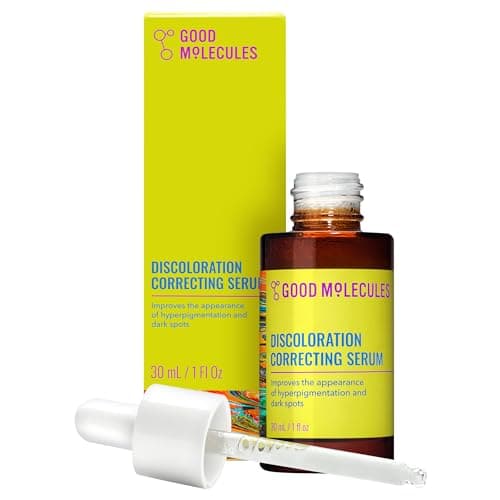
The finding that organizes this page is that one of the best-selling budget products in the category contains no tranexamic acid. Good Molecules Discoloration Correcting Serum lists cetyl tranexamate mesylate — an ester of tranexamic acid, made oil-soluble so it can be formulated differently — and the brand's own product copy calls it "a stabilized tranexamic acid derivative." That is honest. It is also not the molecule any of the trials above used, its own evidence is thin and mostly in the laboratory, and no percentage of it is printed. We saw the same pattern when we ranked azelaic acid serums: several widely recommended "10% azelaic" products turned out to contain a glycine-linked derivative, and people were buying them on the strength of trials the derivative was never in. The rule is identical here. Look for the words Tranexamic Acid on the INCI list. If you find a longer name built around tranexamate, you are looking at a derivative.
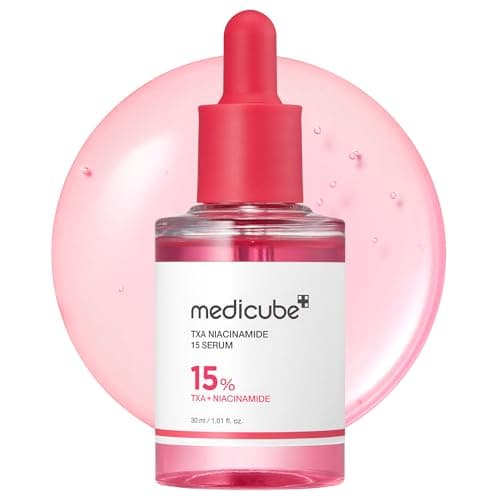
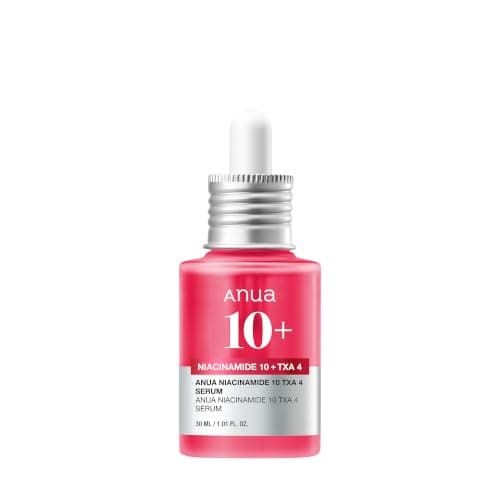
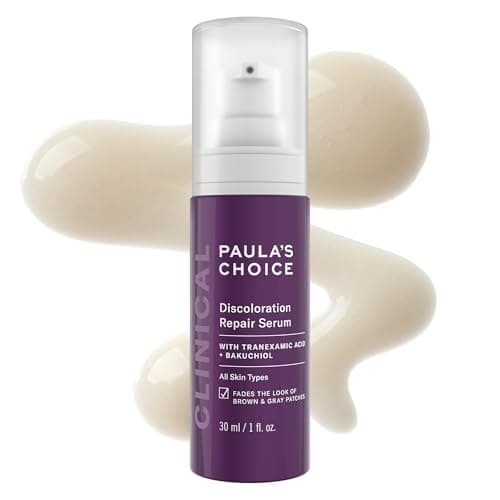
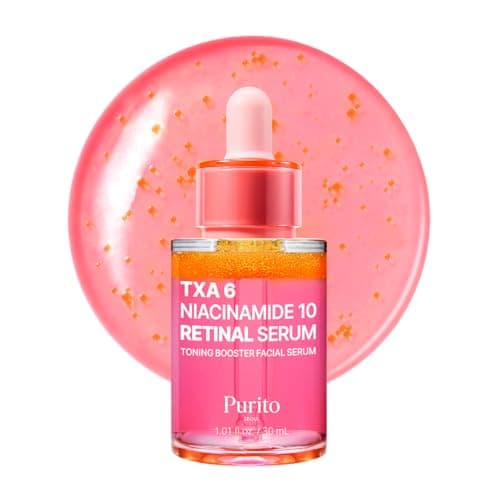
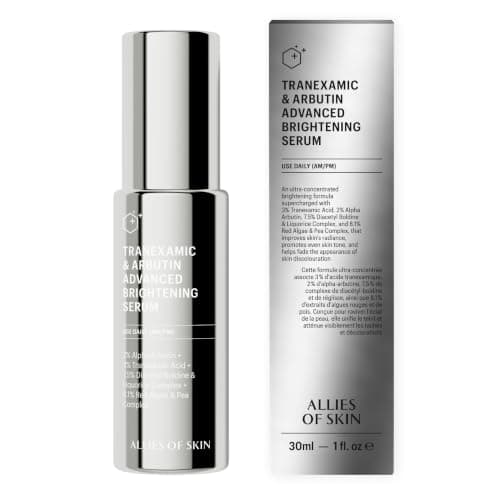
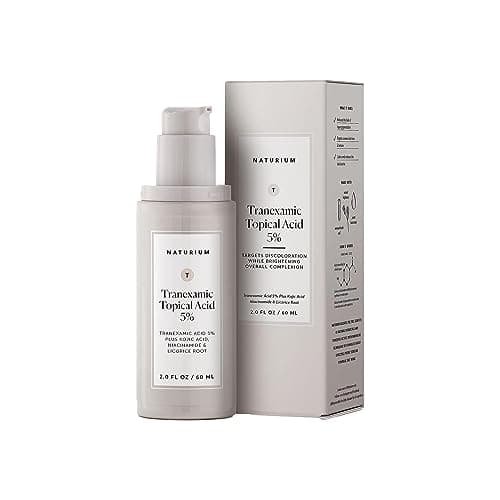
Position matters too. Ingredient lists are ordered by weight down to 1%, so a genuine 5% should appear near the top, after water and perhaps a solvent or humectant. Naturium's tranexamic acid is third; Purito's and Minimalist's are third; Paula's Choice and Allies of Skin list it fourth; Anua's is fourth under 10% niacinamide, and medicube's is fifth with the ppm printed beside it. All of those are consistent with the number on the front. A serum that claims a percentage and lists tranexamic acid below the preservatives is not.
Counting the actives
Tranexamic acid is almost never sold alone, and the usual partners are sensible. Niacinamide interferes with the transfer of pigment from melanocyte to skin cell; arbutin and kojic acid slow the enzyme that makes it; licorice root does a little of both. Because the mechanisms differ, combining them is legitimate formulation, not filler, and it is why the Naturium ranks first rather than a plain 5% solution. But every extra active is an extra thing to react to, and the cruel logic of pigmentation is that irritation causes inflammation and inflammation causes pigment. The Naturium carries four brighteners, which is the most on this page; the Good Molecules carries two, which is why it scores highest on tolerance despite scoring lowest on strength. If your skin is reactive, fewer actives at a declared strength beats more actives at any strength — and it also beats layering two separate brightening serums, which is the mistake our niacinamide guide warns about most often.
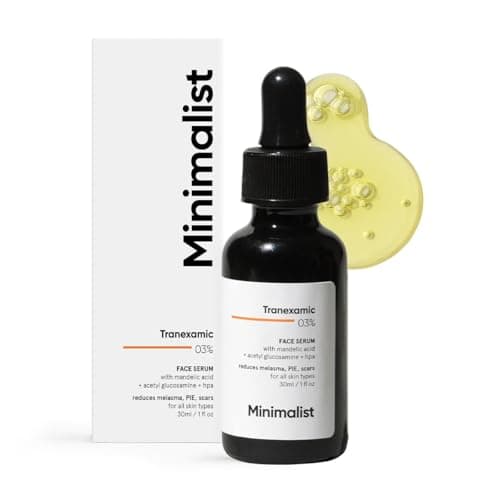
Two products bundle something that is not a brightener at all, and it changes what they are. The Minimalist carries 3% mandelic acid at a pH the brand states as 3.8 to 4.8 — an exfoliating acid serum, night-only and every-other-day to start by the brand's own instructions, which gives up the single most practical advantage tranexamic acid has: it is not photosensitizing and can be used morning and night with anything. The Purito carries retinal, a retinoid, at trace position 27. Both pairings are defensible for post-acne marks on tolerant skin. Neither is a plain tranexamic acid serum, and the retinoid rules the Purito out in pregnancy and breastfeeding — which, because of the hormonal trigger, is precisely when a lot of melasma starts.
"Fragrance-free" is a front-label claim
Every product on this page is sold as fragrance-free. On the published INCI, six are. medicube's serum declares Rosa Centifolia Flower Oil, a rose oil, roughly just past the midpoint of its list; the label is technically true because a flower oil is not "fragrance" as an INCI term, and a rose oil is scented and sensitizing all the same. Purito's carries phenylpropanol near the end, a solvent classed as a perfuming agent. Neither is a reason to avoid the product outright — both are far down the list, and the medicube is still the value pick at 5% — but if you are on this page because your skin reacts, the same screen we run on face oils and mineral sunscreens applies, and the clean declarations here are Naturium, Anua, Paula's Choice, Minimalist, Good Molecules and Allies of Skin.
Price per ounce reorders everything
The same 3% tranexamic acid strength is on sale on this page at three prices that differ by roughly an order of magnitude, at our last price check. The extra money buys an emulsion base and a sensible partner formula in the Paula's Choice, and a long botanical-and-peptide list in the Allies of Skin — pleasant, well-made, and not why pigment fades. At our last price check the best per-ounce number at the full 5% was the Naturium, because its 2 fl oz bottle is twice the size of everything else here at a mid-range price; the best shelf price at the full 5% is the medicube. Live prices render on each pick above and are refreshed daily; if a number is missing, we do not have a verified one and the button goes to the listing instead.
How to use it, and the step that matters more
Once or twice daily after cleansing and before moisturizer, on the whole face rather than spot-treated, for a minimum of twelve weeks before judging — every trial above ran that long. Use one brightening serum, not three. Then the part that decides the outcome: melasma is triggered by visible light as well as UV, and a 2021 review in the Journal of the American Academy of Dermatology is explicit that a sunscreen has to be visible on the skin to block visible light. That means an iron-oxide tinted sunscreen, worn daily, which our mineral sunscreen roundup ranks and our application guide doses. In the blinded trial that found no difference between a 5% gel and its vehicle, every participant wore sunscreen and every participant lightened. Read that as the order of operations.
Which one for which face
- Most people, stubborn patchy pigment: Naturium. Full 5%, three partners, fragrance-free, and at our last price check the best per-ounce number of the 5% picks.
- Same strength, less money, tolerant skin: medicube — eyes open about the rose oil.
- Already buying a niacinamide serum: Anua, which replaces it rather than adding a step.
- Reactive, dry or mature skin with the symmetrical melasma pattern: Paula's Choice, at the trial strength, in an emulsion, with the niacinamide kept at 5%.
- Post-acne marks on skin that tolerates actives: Purito if you want a retinoid in the same bottle and are not pregnant; Minimalist if you want a gentle AHA instead and are not already exfoliating.
- Skin that reacts to everything: Good Molecules, knowing it is a derivative — or a plain azelaic acid, which has better evidence for reactive, mark-prone skin than any derivative does.
The honest ceiling
Melasma is chronic and relapsing. A topical can lighten it; nothing over the counter cures it, and it commonly returns with a summer, a pregnancy or a change in contraception. If a symmetrical discoloration across the cheeks, forehead or upper lip is bothering you enough to be reading this, the highest-value next step is a dermatologist, both for the diagnosis — several conditions look like melasma and respond to different things — and because the options at that point, including the oral form of this very molecule, are prescription ones. Our tranexamic acid guide covers when to escalate. Buy the serum as the adjunct it is, wear the tinted sunscreen as the treatment it is, and give it the twelve weeks.