Skip to content
Barrier & Bloom

Routines · Skincare Routines

The best skincare routine is shorter than the internet wants it to be

Three products carry almost all of the benefit. Here is the evidence-ranked core, what each skin type should change about it, and the exact point where adding more stops paying you back.

By Stephen V.Updated How we review
#ad

We earn a commission when you buy through our Amazon links, at no extra cost to you. It never changes a verdict, and we say so when the cheaper product is the better buy. How this works.

The best skincare routine for almost everyone is three products: a gentle cleanser at night, a moisturizer twice a day, and a broad-spectrum SPF 30+ every morning. Add one active — a retinoid at night — once those three are automatic. That is the whole answer. Everything after this paragraph is why, what changes for your skin type, and where the extra steps stop earning their place.

This page is deliberately different from the other three routine guides here. If you want the sequence products go on in, read skincare routine order. If you want the morning versus night split, read skincare steps: AM & PM. If you own nothing at all and want a shopping list, start at the beginner routine. This page answers a different question: of everything you could do, which parts are actually worth doing, and in what order of importance?

The ranking, by how much each step actually matters

Not all steps are equal, and pretending they are is how people end up with eleven bottles and worse skin. Ranked by strength of evidence and size of effect:

  1. Daily broad-spectrum sunscreen. The single most effective thing you can put on your face. Photoprotection has decades of published work behind it, and it is the only step that prevents damage rather than treating it after the fact.
  2. A moisturizer you use twice a day. Barrier function is the substrate everything else depends on. A skin barrier that is holding water tolerates actives, looks smoother, and stops the itch-flake-irritation cycle that sends people shopping.
  3. A cleanser that does not strip. The job is removing sunscreen, sebum and the day. Anything harsher than that is working against steps 1 and 2.
  4. A retinoid, a few nights a week. The best-evidenced ingredient for texture, tone and fine lines — but it is a step 4 for a reason. It only pays off on top of a barrier that is already intact.
  5. Everything else. Vitamin C, exfoliating acids, niacinamide, eye cream, essences, oils. Genuinely useful in specific situations, genuinely optional in general.

The gap between step 1 and step 5 is enormous. A person doing steps 1–3 consistently will, over five years, be in better shape than a person doing an elaborate ten-step ritual four nights a month and then abandoning it. Consistency beats sophistication by a distance that is embarrassing for the industry.

The core routine, written out

Morning: rinse with water or use your cleanser if you wake up oily. Moisturizer. Sunscreen. That is it — three minutes, two products, no thinking required.

Night: cleanse properly to remove sunscreen and the day. Moisturizer. Once your skin is used to that, add a retinoid two nights a week, applied before the moisturizer, and work up slowly from there.

Note what is missing. There is no toner, no essence, no serum in the base routine, no eye cream, no face oil, no weekly mask. Every one of those can be a nice addition; not one of them is load-bearing. If your routine is failing, it is almost never because it is missing a seventh product.

What changes for your skin type

The three steps do not change. The textures do, and that is most of what people are actually asking when they ask for a routine for their skin type.

  • Oily or breakout-prone: a gel or foaming cleanser, a light lotion or gel moisturizer instead of a cream, and a matte-finish sunscreen. Do not skip moisturizer — stripping oily skin makes it oilier. The full version is in our oily skin routine, and the picks are in best skincare for oily skin.
  • Dry: a cream cleanser or a non-foaming gel, a rich ceramide cream, and a hydrating sunscreen rather than a drying alcohol-forward one. Applying moisturizer to slightly damp skin is worth more than any additional product. See best skincare for dry skin.
  • Sensitive or reactive: fragrance-free everything, mineral sunscreen if chemical filters sting, and a much slower introduction of any active — one new product every two weeks, never two at once. Our sensitive skin picks are built around that.
  • Combination: treat it as two faces. Foaming cleanser is usually fine, a gel-cream moisturizer splits the difference, and if your T-zone is the problem, a salicylic acid product used there only is more sensible than switching your whole routine.
  • Mature or aging-concerned: the same three steps, plus the retinoid moved from optional to non-negotiable. Ranked options are in best anti-aging skincare.

The three products that make up the routine

Below are the picks that fill each core slot — the cleanser, the moisturizer and the sunscreen. They are chosen the same way everything on this site is: by decoding the published ingredient list and comparing it against the category, not by lab testing we did not do. Prices are live and date-stamped.

The short answer

Quick picks

#ProductBest forScorePrice
01
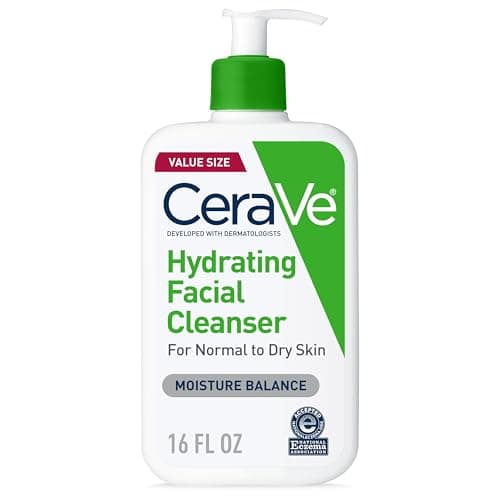
CeraVe CeraVe Hydrating Facial Cleanser
CeraVe Hydrating Facial Cleanser

A non-foaming, fragrance-free cream cleanser with ceramides and hyaluronic acid in the base, which is unusual — most cleansers rinse away and leave nothing behind. It removes sunscreen and a day's grime without the tight, squeaky feeling that means you have stripped your barrier.

The cleanser slot
8.5
$15.97Amazon
02
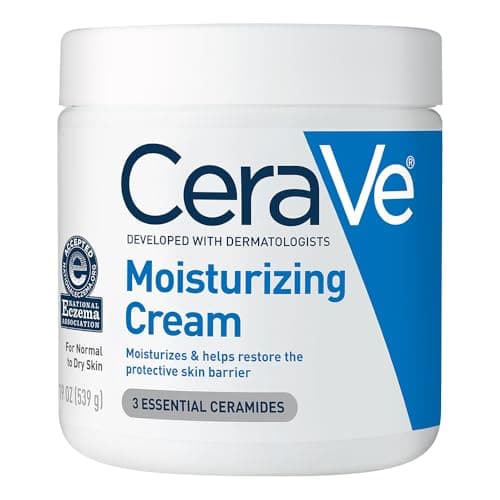
CeraVe CeraVe Moisturizing Cream
CeraVe Moisturizing Cream

The cheapest way to put the three lipid families a barrier is built from — ceramides, cholesterol and fatty acids — back onto skin. Fragrance-free, thick, and boring in the way a load-bearing product should be.

The moisturizer slot
8.5
$18.96Amazon
03
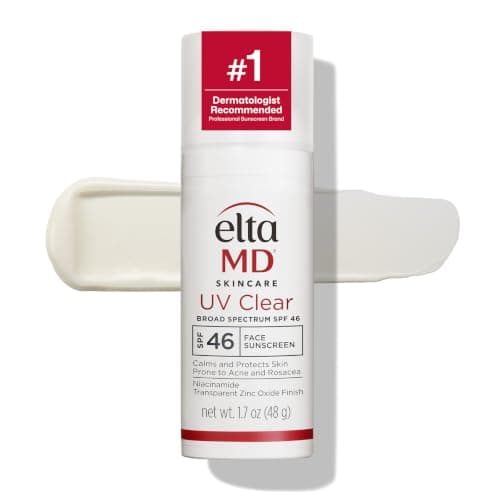
EltaMD EltaMD UV Clear SPF 46
EltaMD UV Clear SPF 46

The step that matters most deserves the sunscreen you will not resent applying. Zinc-led, oil-free, with 5% niacinamide, and light enough that it disappears rather than sitting on the face. It is expensive per ounce and it is still the one we point people at first.

The sunscreen slot
8.0
$45.00Amazon

#ad · Live prices from the Amazon Product API, as of Aug 28, 2026. Where we have no verified live price, we show none — a gap beats a number that has rotted.

In detail

The picks, in full

01
CeraVe CeraVe Hydrating Facial Cleanser

The cleanser slot

CeraVe Hydrating Facial Cleanser

Non-foaming cream3 ceramides + HAFragrance-free16 oz
8.5/10

A non-foaming, fragrance-free cream cleanser with ceramides and hyaluronic acid in the base, which is unusual — most cleansers rinse away and leave nothing behind. It removes sunscreen and a day's grime without the tight, squeaky feeling that means you have stripped your barrier.

Cleansing power
7
Gentleness
9
Barrier support
9
Value
9

Pros

  • Cleans thoroughly without the post-wash tightness that signals a stripped barrier
  • Ceramides and hyaluronic acid in the base leave skin comfortable, not bare
  • Fragrance-free, so it stacks safely with retinoids and acids later in the routine
  • Large bottle at a price that makes twice-daily use painless

Cons

  • The milky, low-lather texture reads as 'not cleaning' to people who like foam
  • Not strong enough on its own to remove heavy waterproof makeup

Don't buy this if…

you are genuinely oily and want the squeak of a foaming gel — a foaming cleanser will feel right to you and there is a better-matched pick in our oily-skin routine.

$15.97View on Amazon

$18.9916% off

Price as of Aug 28, 2026. Prices change — Amazon's at checkout is the one that counts.

#ad · we may earn a commission from this link to CeraVe Hydrating Facial Cleanser

02
CeraVe CeraVe Moisturizing Cream

The moisturizer slot

CeraVe Moisturizing Cream

3 essential ceramidesMVE slow releaseFragrance-freeFace + body
8.5/10

The cheapest way to put the three lipid families a barrier is built from — ceramides, cholesterol and fatty acids — back onto skin. Fragrance-free, thick, and boring in the way a load-bearing product should be.

Barrier repair
9
Hydration
9
Gentleness
8
Value
8

Pros

  • Repairs the barrier rather than only hydrating the surface
  • Nothing in the list is a common irritant — no fragrance, no essential oils
  • Works as the buffer layer when you start a retinoid
  • Value per ounce is not close to anything else in the category

Cons

  • Genuinely heavy on oily skin, especially in humidity
  • Tub packaging is less hygienic than a pump

Don't buy this if…

your skin runs oily — the richness that dry skin loves is exactly what will feel like a film on you. A gel-cream is the right texture for that slot instead.

$18.96View on Amazon

$20.497% off

Price as of Aug 28, 2026. Prices change — Amazon's at checkout is the one that counts.

#ad · we may earn a commission from this link to CeraVe Moisturizing Cream

03
EltaMD EltaMD UV Clear SPF 46

The sunscreen slot

EltaMD UV Clear SPF 46

SPF 469% zinc oxide5% niacinamideFragrance-free
8.0/10

The step that matters most deserves the sunscreen you will not resent applying. Zinc-led, oil-free, with 5% niacinamide, and light enough that it disappears rather than sitting on the face. It is expensive per ounce and it is still the one we point people at first.

Finish
9
Protection
9
Sensitive-safe
9
Value
5

Pros

  • Weightless finish is the reason people actually reapply it
  • Niacinamide at a meaningful level calms visible redness
  • Oil-free and non-comedogenic — the usual pick for breakout-prone skin
  • Layers under makeup without pilling

Cons

  • The highest price per ounce of any sunscreen we rank
  • Contains octinoxate, so it is not a zinc-only mineral formula

Don't buy this if…

you need to cover a family or a body — buy a cheaper high-SPF lotion for that and keep this for your face, or skip it entirely for a drugstore option you will use more generously.

$45.00View on Amazon

Price as of Aug 28, 2026. Prices change — Amazon's at checkout is the one that counts.

#ad · we may earn a commission from this link to EltaMD UV Clear SPF 46

When to add a fourth product — and which one

Add the fourth product when the first three have been automatic for at least a month, not before. The correct fourth product is almost always a retinoid, because it is the only over-the-counter active with a serious evidence base for changing skin over time rather than improving how it looks that morning. Start at a low strength two nights a week, apply it to dry skin, and put your moisturizer on top. Expect eight to twelve weeks before you see anything; expect some flaking in weeks two to four.

The two situations where something else takes the fourth slot: if your main complaint is active breakouts, a salicylic acid or benzoyl peroxide product is a more direct answer, and if your main complaint is uneven tone or dullness, vitamin C in the morning is a reasonable swap. Nobody needs all three at once, and stacking them in the first month is the single most reliable way to end up with a damaged barrier.

The steps most routines could delete

Toner. A modern toner is a thin hydration layer. Pleasant, not load-bearing. If you own one, use it; do not buy one to complete a set.

Eye cream.Almost always a smaller, more expensive moisturizer in a smaller jar. There are real reasons to use one — a caffeine gel for morning puffiness, a low-dose retinoid formulated for thinner skin — but "because a routine should have one" is not among them. We rank the ones worth it in best eye creams.

Physical scrubs. Superseded by chemical exfoliants for almost every purpose, and the aggressive ones cause the roughness people buy them to fix.

Face oil. A comfort step for dry skin in winter. It goes last at night and it is fine. It is not doing anything the moisturizer underneath is not already doing better.

How long before the routine works?

Hydration and comfort improve within days — that is the moisturizer doing its job, and it is the fastest feedback you will get. Texture and tone take six to twelve weeks with a retinoid. Sun damage prevented by sunscreen never announces itself at all, which is exactly why people quit the most valuable step first. We wrote a whole page on realistic timelines: how long skincare actually takes to work.
How we picked

We did not lab-test this gear

Everyone in this category says they tested twenty products. We have not lab-tested any of these, and we say so. What we did instead: compiled the published specifications, decoded the ingredient (INCI) lists active by active, ran the math where there was math to run, and scored each product against a published rubric. The scores are judgments from documented research — not measurements we took, because we do not have a lab and we will not pretend we do. Where a number came from someone else's work, we name them in Sources.

Questions

Frequently asked

What is the best skincare routine?
A gentle cleanser at night, a moisturizer morning and night, and a broad-spectrum SPF 30 or higher every morning. Once those three are habitual, add a retinoid two nights a week. That covers the overwhelming majority of the benefit available from a routine at any price.
How many products should a skincare routine have?
Three to four. Three is the evidence-supported core (cleanser, moisturizer, sunscreen) and a retinoid is the one addition that reliably earns its slot. Beyond four, you are buying refinement and preference, not results — and the risk of irritation from stacked actives starts to outweigh the gains.
Is an expensive skincare routine better than a cheap one?
No. Price buys texture, fragrance and packaging far more than it buys a better ingredient list. Several of our top picks across the site are drugstore products, and we say so on the page when the cheap option wins. What you cannot buy at any price is consistency.
Do I need a serum in my routine?
Not to have a complete routine. A serum is a delivery format for an active, so the real question is whether you need that active — a retinoid, vitamin C or niacinamide. If you do, a serum is often the best way to get it. If you do not, skipping serums entirely costs you nothing.
Should my morning and night routines be different?
Yes, in one respect that matters. Morning is for protection: moisturizer and sunscreen. Night is for repair: proper cleansing and, if you use one, your retinoid. Splitting demanding actives across AM and PM also stops your skin from handling two irritating products at once.

Keep reading

Receipts

Sources

We do not run a testing lab, and we do not pretend to. Where a measured number came from someone else's work, we name them and link them. Where we could not verify something, we say so on the page rather than quietly leaving it out. Read our full method.