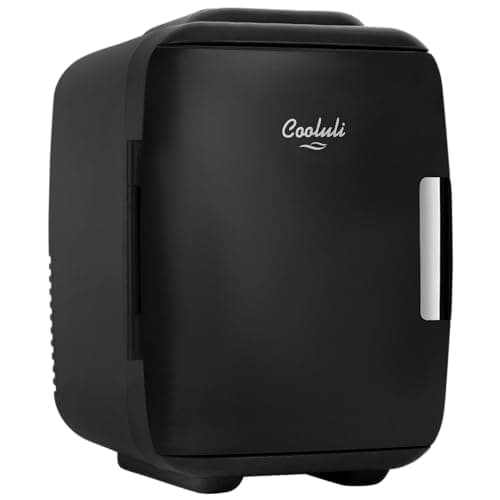
Best skincare fridge overall
Cooluli Classic 4L Mini Fridge
The default skincare fridge for good reason: 4 liters (about 6 cans), genuinely quiet, powered by wall, car or USB, and the widest color range around. It's a comfort-and-preservation tool, not a treatment — but as that, nothing at the price does it better.
- Cooling
- 8
- Capacity
- 7
- Quiet
- 7
- Build
- 8
- Value
- 8
Pros
- Quiet enough for a bedroom or desk
- Three power options, including a car adapter
- Long, reliable track record across many owners
- The widest range of colors and finishes in the class
Cons
- 4 L fills up fast — holds a small edit, not a full routine
- Only chills 10–15 °C below ambient — never store food or meds in it
- Warm mode is a nice-to-have you'll rarely use for skincare
Don't buy this if…
…you want to chill a whole routine plus masks — size up to a 9-can unit — or you expect the fridge itself to improve how your products work, which no fridge does.
The honest framing matters more than any spec here: decide first whether you actually want cold skincare, because the fridge only delivers comfort plus a modest shelf-life extension for a few heat-sensitive items. If the answer is yes, the Cooluli is the easy pick — quiet, proven, well-priced. The only reasons to choose differently are price (grab the near-identical CROWNFUL if it undercuts on the day) or capacity (step up to a 9-can model if 4 liters is too tight for what you want to chill).
Worth saying plainly, since this unit is sold as a skincare fridge: the cooling hardware inside it is the same thermoelectric element you would get in a beverage mini fridge, and a nine-can beverage model holds more for comparable money. Our skincare fridge vs mini fridge comparison sets the two categories side by side.
$59.9910% off
Price as of October 19, 2026. Prices change — Amazon's at checkout is the one that counts.
#ad · we may earn a commission from this link to Cooluli Classic 4L Mini Fridge