Skip to content
Barrier & Bloom

Single reviews · Reviews

EltaMD UV Clear SPF 46 review: the sunscreen dermatologists keep naming

We decoded EltaMD's zinc-based, niacinamide-spiked SPF 46 and compared it to the field. Here's the honest verdict on why it's our top sunscreen for sensitive and rosacea-prone skin — and whether it's worth the price.

By Stephen V.Updated How we review
#ad

We earn a commission when you buy through our Amazon links, at no extra cost to you. It never changes a verdict, and we say so when the cheaper product is the better buy. How this works.

Verdict:EltaMD UV Clear is the sunscreen we recommend first for sensitive, acne-prone and rosacea-prone skin. It is a mineral-led SPF 46 built around 9% zinc oxide, spiked with 5% niacinamide, oil-free and light enough to wear under makeup without the white cast or heaviness most zinc sunscreens carry. That combination — high protection, calming niacinamide, no fragrance, no pore-clogging oils — is exactly why it is a dermatologist staple. The catch is the price: at around forty-five dollars it is several times what a drugstore SPF costs. If your skin flares, it earns it; if it doesn't, you can spend far less.

Our method, stated plainly: we did not lab-test this sunscreen.We have no lab and we are not dermatologists. We decoded the full published ingredient list, compiled EltaMD's documented specs and third-party recognition, and compared the formula to the other sensitive-skin sunscreens in the category. Everything below follows from that — the full method is on how we review.

Who it's for

This is the sunscreen for reactive skin. If you have rosacea-prone or easily flushed skin, the zinc oxide sits on top rather than converting UV to heat the way some chemical filters do, and the niacinamide actively calms redness — a genuinely thoughtful pairing. If you break out, the oil-free, non-comedogenic base is designed not to make it worse. It is also a strong pick for anyone who has found mineral sunscreens too thick or too chalky before, because this one is unusually light. It sits at the top of our sensitive-and-rosacea sunscreen thinking for those reasons.

The ingredient list, decoded

Start with the active filters, because honesty matters here: UV Clear is mineral-led but not purely mineral. The primary filter is 9% zinc oxide, a broad-spectrum mineral that shields UVA and UVB and is well tolerated by sensitive skin — but the formula also contains a small amount of octinoxate, a chemical UVB filter that helps keep the finish light and cosmetically elegant. If you need a 100% mineral sunscreen (some pregnancies, some reef regulations, some personal preferences), this isn't it, and you should know that going in. What zinc gives you is gentle, reliable broad-spectrum cover; what the octinoxate buys is the wearability.

The supporting cast is where UV Clear separates itself. Headlining is 5% niacinamide — a meaningful, not token, dose of the ingredient we cover in our niacinamide guide, which reduces redness, supports the barrier and is a large part of why rosacea patients tolerate this so well. Alongside it sit sodium hyaluronate for hydration, tocopheryl acetate (vitamin E) as an antioxidant, and lactic acid at a low, non-exfoliating level. The base is oil-free, fragrance-free and non-comedogenic, with no added perfume to provoke a flare. The only honest negatives a decode surfaces: the octinoxate rules it out for purists, and, like most zinc sunscreens, it can still leave a faint cast on deeper skin tones despite being lighter than average.

How it compares

Against a drugstore mineral SPF, UV Clear wins on elegance and on that 5% niacinamide — few affordable zinc sunscreens feel this light or actively calm redness. Against a pure chemical sunscreen, it trades a little slip and invisibility for far better tolerance on reactive skin. The real question isn't whether it's good — it plainly is — but whether your skin needs it. If you flush, break out, or have rosacea, this is worth the premium and belongs in the morning slot of your routine, applied last before makeup — see where sunscreen goes in the correct routine order. If your skin is calm and uncomplicated, a good drugstore SPF protects you just as well for a quarter of the price.
01
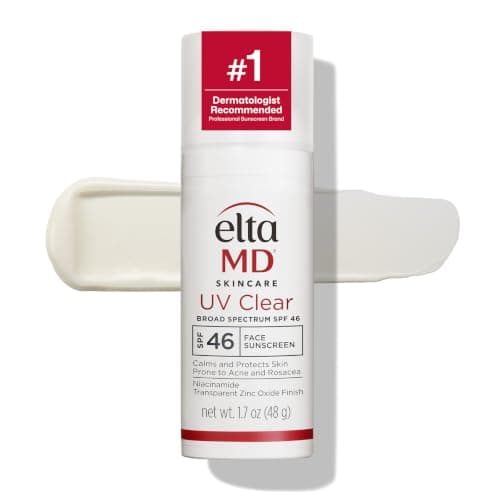
EltaMD EltaMD UV Clear Broad-Spectrum SPF 46

Best sunscreen for sensitive & rosacea-prone skin

EltaMD UV Clear Broad-Spectrum SPF 46

SPF 46 · broad-spectrum9% zinc oxide (+ octinoxate)5% niacinamideOil-free · fragrance-free · non-comedogenic
9.0/10

The dermatologist-favorite sensitive-skin sunscreen for a reason: 9% zinc oxide, a real 5% dose of calming niacinamide, oil-free and light enough for daily wear under makeup. Not fully mineral (it contains octinoxate) and genuinely expensive — but if your skin flares, it's worth it.

Sun protection
10
Cosmetic finish
9
Gentleness
10
Formula extras
9
Value
7

Pros

  • Zinc-led broad-spectrum protection that reactive skin tolerates
  • Real 5% niacinamide dose visibly calms redness
  • Unusually light, non-greasy finish for a mineral sunscreen
  • Oil-free and non-comedogenic — safe for acne-prone skin

Cons

  • Expensive — several times the cost of a drugstore SPF
  • Not 100% mineral: contains octinoxate, a chemical filter
  • Can still leave a faint cast on deeper skin tones

Don't buy this if…

you need a 100% mineral (zinc-only) sunscreen, or your skin is calm and uncomplicated and you just want reliable daily SPF — a good drugstore sunscreen protects you for far less.

The one thing to weigh before buying is simply money. The formula is close to best-in-class for sensitive and rosacea-prone skin, and the 5% niacinamide is a real functional bonus, not marketing garnish. But sunscreen only works if you use enough of it, every day — and if the price makes you ration it, a cheaper SPF you apply generously beats an expensive one you use sparingly. Buy this if your skin genuinely reacts; otherwise the value math argues for something less precious.

$45.00View on Amazon

Price as of Jul 19, 2026. Prices change — Amazon's at checkout is the one that counts.

#ad · we may earn a commission from this link to EltaMD UV Clear Broad-Spectrum SPF 46

How we picked

We did not lab-test this gear

Everyone in this category says they tested twenty products. We have not lab-tested any of these, and we say so. What we did instead: compiled the published specifications, decoded the ingredient (INCI) lists active by active, ran the math where there was math to run, and scored each product against a published rubric. The scores are judgments from documented research — not measurements we took, because we do not have a lab and we will not pretend we do. Where a number came from someone else's work, we name them in Sources.

Questions

Frequently asked

Is EltaMD UV Clear a mineral (physical) sunscreen?
It's mineral-led, not purely mineral. The main filter is 9% zinc oxide, but the formula also contains octinoxate, a chemical UVB filter, which helps keep the finish light. If you specifically need a 100% mineral sunscreen, this one doesn't qualify — we confirmed the filters by decoding the published ingredient list.
Why do dermatologists recommend EltaMD UV Clear for rosacea and acne?
Two reasons: the zinc oxide is gentle and broad-spectrum, and the 5% niacinamide actively calms redness while supporting the skin barrier. The base is oil-free, fragrance-free and non-comedogenic, so it protects without triggering flushing or breakouts in reactive skin.
Is EltaMD UV Clear worth the high price?
If you have sensitive, acne-prone or rosacea-prone skin, yes — the tolerability and the niacinamide are hard to match at any price. If your skin is calm and you just want daily protection, a good drugstore SPF does the core job for much less, so the premium is optional.
Does it leave a white cast?
Far less than most zinc sunscreens — it's one of the lightest mineral-led formulas around. On deeper skin tones a faint cast can still show, which is why EltaMD also sells a tinted version worth considering if that's a concern for you.

Keep reading

Receipts

Sources

We do not run a testing lab, and we do not pretend to. Where a measured number came from someone else's work, we name them and link them. Where we could not verify something, we say so on the page rather than quietly leaving it out. Read our full method.