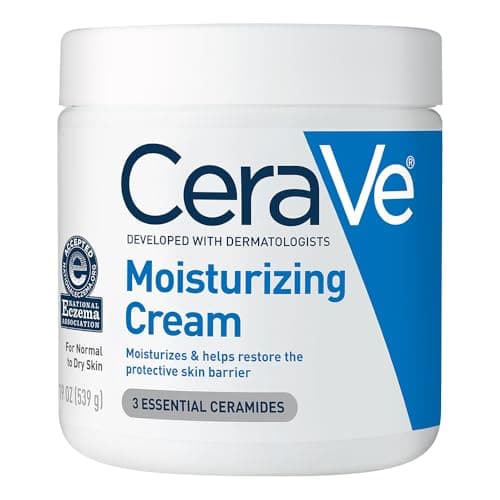
Verdict: CeraVe Moisturizing Cream is the moisturizer we recommend before almost any other. A fragrance-free, non-comedogenic tub built around three skin-identical ceramides, hyaluronic acid and a slow-release delivery system, sold for the price of a sandwich. For dry and sensitive skin it does the one thing a moisturizer must do — repair and hold the barrier — with no fragrance, essential oils or fuss to react to. It is thick, it comes in a tub you dip your fingers into, and it is not a treatment for wrinkles or acne. Read on for exactly what is in it and who should look elsewhere.
To be clear about our method: we did not lab-test this cream.We do not own a lab and we are not dermatologists. What we did was decode the full published ingredient (INCI) list, compile CeraVe's documented specs and certifications, and compare the formula against the other tub creams and barrier moisturizers in the category. That is the whole basis for the scores below — you can read the method in full on how we review.
Who it's for
This is a barrier moisturizer, so it shines for the people whose barrier needs help: dry, flaky, tight, or over-exfoliated skin, and sensitive or eczema-prone skin that reacts to fragrance. It is a fantastic body cream and a very good face cream for anyone who likes a rich finish. It is also the ideal "buffer" layer if you use retinoids or acids — ceramides and cholesterol are exactly what stripped skin is missing. If that sounds like you, it is our default pick, which is why it tops our best skincare products shelf and our best skincare for sensitive skin list.
The ingredient list, decoded
Read the INCI list and the design is obvious. After water and glycerin (a humectant that pulls water into the skin), the cream leans on fatty alcohols and triglycerides for a rich, emollient base — the reason it feels heavy but also why it seals so well. The headline actives are the three essential ceramides — Ceramide NP, Ceramide AP and Ceramide EOP — the same lipid types your skin makes to hold its barrier together. Alongside them sit cholesterol and phytosphingosine, which matters: a healthy barrier is roughly ceramides, cholesterol and fatty acids in balance, so including all three is a more complete repair story than ceramides alone.
Sodium hyaluronate (the salt form of hyaluronic acid, smaller and more stable) adds a humectant hit on top of the glycerin. The clever part is delivery: CeraVe uses a patented MVE (MultiVesicular Emulsion)system that packs the ceramides into layered vesicles and releases them gradually, which is the honest mechanism behind the "works for hours" claim. Dimethicone gives a light occlusive seal without feeling greasy on the surface. There is no fragrance, no essential oil and no drying alcohol in the list — the reason it carries a National Eczema Association seal and is so hard to react to. The only functional negatives a decode turns up are minor: it is a fairly plain, heavy formula, and the tub format is less hygienic than a pump if you dig in with unwashed fingers.
How it compares
Against Vanicream Moisturizing Cream, CeraVe wins on the barrier story — Vanicream is superb for pure minimalism and reactive skin but does not load up on ceramides the way CeraVe does. Against La Roche-Posay's Toleriane Double Repair, the two are close cousins (both use ceramides plus niacinamide); LRP is lighter and better as a daily facial lotion, while CeraVe's tub is richer and a far better value by volume. Against a gel like Neutrogena Hydro Boost, it is not a fair fight for dry skin — the gel hydrates but does not seal or rebuild the barrier. For most people with dry or sensitive skin who want one jar that repairs and protects, CeraVe is the sensible, boring, correct answer.