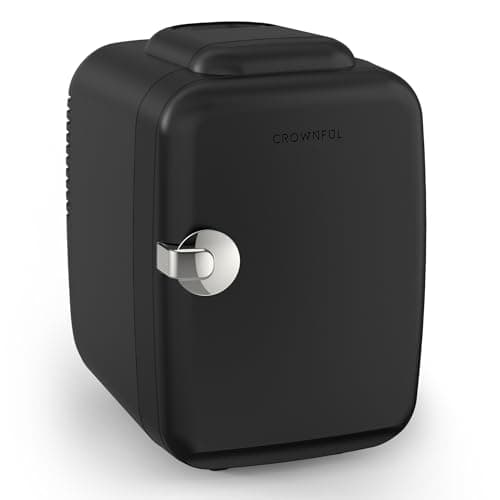
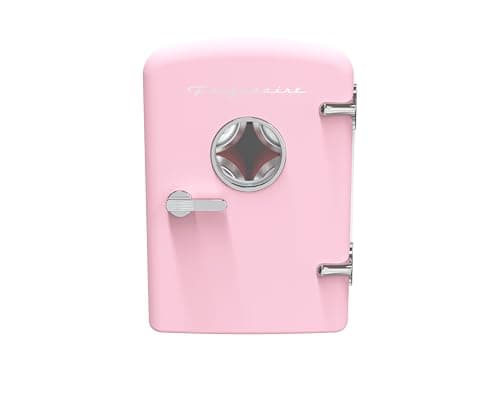
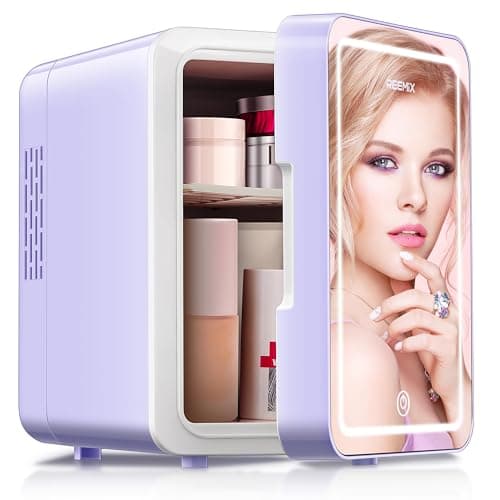
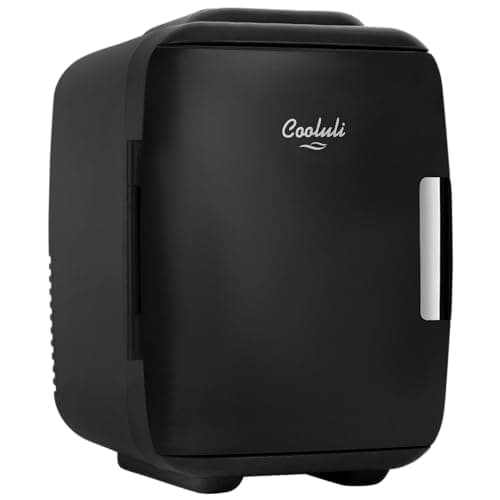
A skincare fridge does one real thing well: it keeps products cool. That feels wonderful on hot, inflamed, or puffy skin, it can genuinely extend the useful life of a few items — vitamin C, sheet masks, eye products, some naturals — and it looks tidy on a vanity. What it does notdo is "boost absorption" or transform how a product works; no dermatologist would sign off on that claim, and we are not going to make it. Buy one because you like cold skincare and want your actives to last a little longer, not because a 30-second video implied it is a treatment in itself.
Nearly every unit in this category is a thermoelectric (Peltier) cooler. That matters for your expectations: thermoelectric fridges chill to roughly 10–15 °C below the room, not to a kitchen fridge's 4 °C, and they hum quietly rather than cycling loudly like a compressor. We ranked on the things that actually differ between them — real usable capacity, how cold they hold, noise, build, and value — and we did the running-cost math so you know what leaving one on all year costs. The short version of that math is in the buyer's guide below: it is about the price of one coffee a month.
What a skincare fridge actually does
Three things, all real, none magic. First, it makes cold skincare pleasant — a chilled gel, eye cream, or sheet mask constricts surface blood vessels and de-puffs for an hour or two, which feels great in the morning and after a late night. Second, it can extend the life of a few specific products: vitamin C serums (which oxidize with heat and light), naturals and preservative-light formulas, sheet masks, and some eye creams keep their potency longer when cool and dark. Third, it keeps everything in one tidy place. That is the honest list.
What a fridge does not do is increase how much of a product your skin absorbs, or make an active work better than it would at room temperature. Cooling is a comfort and a preservation tool, not a treatment. Most of your routine — cleansers, moisturizers, sunscreen — does not need refrigerating at all and is perfectly happy in a cabinet.
Cost to run: the math nobody publishes
These are thermoelectric units, so they draw a modest, constant load whenever they are cooling. Here is the arithmetic, shown so you can check it: at a typical rated ~55 W, running continuously is 55 W × 24 h ≈ 1.3 kWh/day, or about 40 kWh/month. On the U.S. average residential rate of roughly $0.16/kWh (EIA), that is about $6 a month— call it the price of one coffee. Unplug it when you travel and it is less. That is the whole cost story, and it is why "is it worth the electricity?" is a non-question: it is not the electricity you should weigh, it is whether you will actually use it.
How to choose
- Capacity is the real decision. 4 L (≈6 cans) holds a small edit — a few serums, an eye cream, a couple of masks. If you want a full routine plus masks in there, size up to a 9-can unit like the Frigidaire.
- They all cool similarly.Do not overthink the temperature spec; every thermoelectric unit lands in the same 10–15 °C-below-ambient range. Build, capacity and price are where they differ.
- Cools & warms is standard. Nearly all include a warm mode. It is a nice-to-have, not a reason to pay more.
Once you have a fridge, the thing most worth chilling is a good vitamin C serum — cool storage slows the oxidation that turns it brown and weak. For everything else, see our best skincare products shelf.
Worth being clear about where a fridge sits against the rest of the shelf: it is last in our evidence ranking of every at-home device because it is storage rather than a treatment — and if fifty dollars is the whole budget, the devices under $50 roundup ranks a cheaper 4 L fridge against the tools that do more.
The question this page gets asked most often is whether a cosmetic fridge is a different appliance from an ordinary beverage mini fridge. It is not — both are thermoelectric coolers, and the beverage version usually costs less per litre. We compare them directly in skincare fridge vs mini fridge, including when the smaller footprint is worth paying for.