Skip to content
Barrier & Bloom

Roundups · Best Skincare

The best skincare for dry skin, ranked on what actually holds water in

Dry skin is a lipid problem, not a thirst problem. Four picks ranked on the three things a formula needs to fix it — plus the layering trick that beats buying anything.

By Stephen V.Updated How we review
#ad

We earn a commission when you buy through our Amazon links, at no extra cost to you. It never changes a verdict, and we say so when the cheaper product is the better buy. How this works.

Dry skin is not thirsty. It is leaking. The stratum corneum is a lipid matrix — ceramides, cholesterol and fatty acids holding water in — and when that matrix is depleted, water evaporates faster than the skin can replace it. That is why drinking more water does nothing noticeable, and why the products that work are the ones that supply water and then physically stop it leaving.

Every functional moisturizer does one, two or all three of these jobs. Humectants (glycerin, hyaluronic acid, urea) pull water into the outer layers. Emollients (squalane, fatty alcohols, plant oils) fill the gaps between cells so skin feels smooth. Occlusives (petrolatum, dimethicone, waxes) form a seal that slows water loss. A product with humectants and nothing else hydrates briefly and then gives it all back to the air, which is exactly why a hyaluronic acid serum on its own can leave dry skin feeling worse.

So we ranked on all three. Below: the cream that supplies the missing lipids, the cleanser that does not undo it, the serum that adds the water layer underneath, and the balm for the patches that have gone past dry into cracked. If your skin is dry and reacts to everything, our sensitive skin picks overlap heavily and are the safer starting point.

The short answer

Quick picks

#ProductBest forScorePrice
01
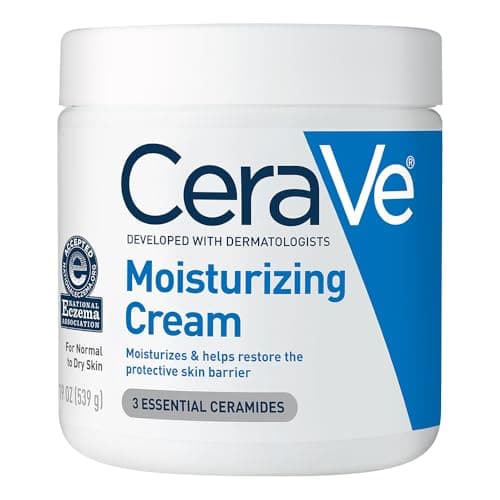
CeraVe CeraVe Moisturizing Cream
CeraVe Moisturizing Cream

The correct default for dry skin and it is not close. Three skin-identical ceramides plus cholesterol and phytosphingosine — the actual lipid families a dry barrier is missing — with glycerin and hyaluronic acid underneath and dimethicone sealing on top. Humectant, emollient and occlusive in one fragrance-free tub, for the price of lunch.

Best overall
8.8
$18.96Amazon
02
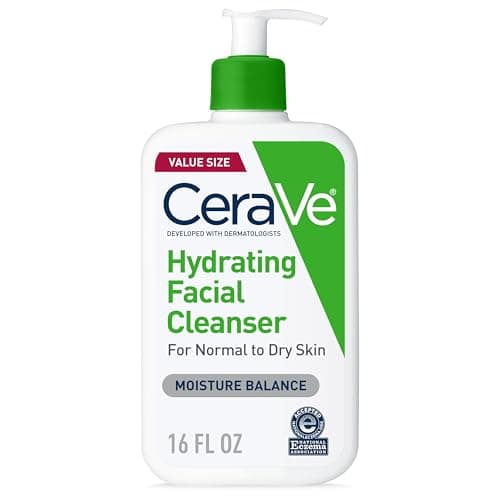
CeraVe CeraVe Hydrating Facial Cleanser
CeraVe Hydrating Facial Cleanser

The step where most dry-skin routines are quietly sabotaged. This is a non-foaming cream cleanser with ceramides and hyaluronic acid in the base — it removes sunscreen and grime and leaves the barrier where it found it, instead of stripping the lipids you are trying to replace.

Best cleanser for dry skin
8.5
$15.97Amazon
03
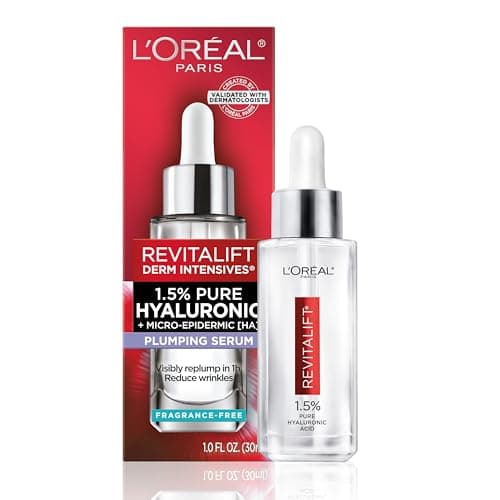
L'Oreal L'Oreal Revitalift 1.5% Hyaluronic Acid Serum
L'Oreal Revitalift 1.5% Hyaluronic Acid Serum

The water layer that goes under the cream. 1.5% hyaluronic acid at two molecular weights, in a light fluid that absorbs in seconds. On its own it is not a moisturizer and will not fix dry skin — under an occlusive cream, applied to damp skin, it is a genuine upgrade.

Best hydrating serum
8.3
$22.40Amazon
04
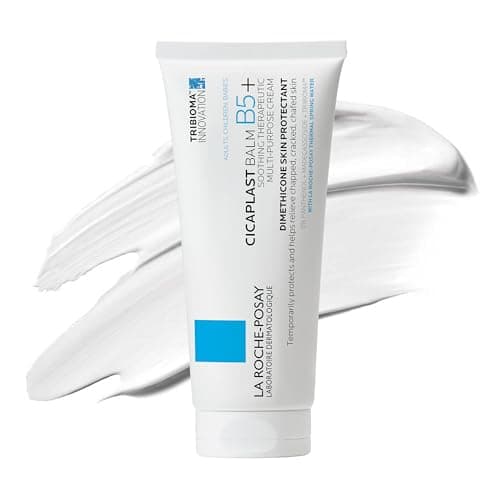
La Roche-Posay La Roche-Posay Cicaplast Balm B5
La Roche-Posay Cicaplast Balm B5

The one to reach for when dry has become cracked, flaking or raw — around the nose in winter, on retinoid-burned patches, on hands that have split. Panthenol, glycerin, shea and madecassoside in a heavy occlusive base. It is a repair product, not a daily face cream, and pricing it that way is the honest read.

Best for cracked and flaking patches
7.8
$32.97Amazon

#ad · Live prices from the Amazon Product API, as of Aug 28, 2026. Where we have no verified live price, we show none — a gap beats a number that has rotted.

In detail

The picks, in full

01
CeraVe CeraVe Moisturizing Cream

Best overall

CeraVe Moisturizing Cream

3 essential ceramidesMVE slow releaseFragrance-free19 oz tub
8.8/10

The correct default for dry skin and it is not close. Three skin-identical ceramides plus cholesterol and phytosphingosine — the actual lipid families a dry barrier is missing — with glycerin and hyaluronic acid underneath and dimethicone sealing on top. Humectant, emollient and occlusive in one fragrance-free tub, for the price of lunch.

Barrier repair
9
Hydration
9
Occlusion
8
Value
9

Pros

  • Covers all three moisturizer jobs — the reason it outperforms richer, pricier creams
  • Ceramides plus cholesterol rebuild the barrier rather than just coating it
  • Fragrance-free with a National Eczema Association seal
  • Value per ounce is unmatched, so you can use it generously on body as well as face

Cons

  • Heavy on the face if your skin is only seasonally dry
  • Tub packaging is less hygienic than a pump
  • Takes a minute to absorb — not a rushed-morning product

Don't buy this if…

you want something that sinks in fast under makeup, or your dryness is confined to winter — a lighter ceramide lotion will serve you better most of the year.

$18.96View on Amazon

$20.497% off

Price as of Aug 28, 2026. Prices change — Amazon's at checkout is the one that counts.

#ad · we may earn a commission from this link to CeraVe Moisturizing Cream

02
CeraVe CeraVe Hydrating Facial Cleanser

Best cleanser for dry skin

CeraVe Hydrating Facial Cleanser

Non-foaming cream3 ceramides + HAFragrance-free16 oz
8.5/10

The step where most dry-skin routines are quietly sabotaged. This is a non-foaming cream cleanser with ceramides and hyaluronic acid in the base — it removes sunscreen and grime and leaves the barrier where it found it, instead of stripping the lipids you are trying to replace.

Cleansing power
7
Gentleness
9
Barrier support
9
Value
9

Pros

  • No tightness afterwards — the clearest sign a cleanser is not stripping you
  • Ceramides and hyaluronic acid deposit rather than rinse entirely away
  • Fragrance-free and non-comedogenic
  • Big bottle, low price, safe to use twice a day

Cons

  • Milky low-lather texture reads as 'not working' if you like foam
  • Will not remove heavy waterproof makeup on its own

Don't buy this if…

your skin is oily or you wear heavy makeup daily — you will end up double cleansing anyway, and a gel cleanser is the more efficient second step.

$15.97View on Amazon

$18.9916% off

Price as of Aug 28, 2026. Prices change — Amazon's at checkout is the one that counts.

#ad · we may earn a commission from this link to CeraVe Hydrating Facial Cleanser

03
L'Oreal L'Oreal Revitalift 1.5% Hyaluronic Acid Serum

Best hydrating serum

L'Oreal Revitalift 1.5% Hyaluronic Acid Serum

1.5% hyaluronic acidTwo molecular weightsFragrance-free1 oz
8.3/10

The water layer that goes under the cream. 1.5% hyaluronic acid at two molecular weights, in a light fluid that absorbs in seconds. On its own it is not a moisturizer and will not fix dry skin — under an occlusive cream, applied to damp skin, it is a genuine upgrade.

Hydration
8
Texture
9
Gentleness
8
Value
8

Pros

  • Pulls water into the outer layers so the cream on top has something to seal
  • Absorbs fast with no tackiness under a cream or sunscreen
  • Fragrance-free, which is rare at this price in the mass-market aisle
  • Costs a fraction of the boutique HA serums with near-identical ingredient logic

Cons

  • Does nothing useful without an occlusive layer over it
  • In very dry air it can pull water out of skin rather than in — that is HA physics, not a formulation flaw

Don't buy this if…

you live somewhere genuinely arid and are not going to seal it — in low humidity an unsealed humectant can make dryness worse, and a plain ceramide cream is the better single purchase.

$22.40View on Amazon

$35.9938% off

Price as of Aug 28, 2026. Prices change — Amazon's at checkout is the one that counts.

#ad · we may earn a commission from this link to L'Oreal Revitalift 1.5% Hyaluronic Acid Serum

04
La Roche-Posay La Roche-Posay Cicaplast Balm B5

Best for cracked and flaking patches

La Roche-Posay Cicaplast Balm B5

5% panthenolShea butterMadecassosideFragrance-free
7.8/10

The one to reach for when dry has become cracked, flaking or raw — around the nose in winter, on retinoid-burned patches, on hands that have split. Panthenol, glycerin, shea and madecassoside in a heavy occlusive base. It is a repair product, not a daily face cream, and pricing it that way is the honest read.

Repair speed
9
Occlusion
9
Gentleness
8
Value
5

Pros

  • Genuinely fast on split, flaking or raw patches — usually overnight
  • Thick occlusive seal that stops water loss where skin is compromised
  • Fragrance-free and tolerated by most reactive skin
  • Works on lips, cuticles and hands as well as face

Cons

  • Expensive per ounce compared with plain petrolatum, which does much of the same job
  • Too heavy and too greasy for all-over daily facial use

Don't buy this if…

you are breakout-prone and planning to use it over your whole face — the occlusion that helps a cracked patch is exactly what you do not want across a congested T-zone.

$32.97View on Amazon

Price as of Aug 28, 2026. Prices change — Amazon's at checkout is the one that counts.

#ad · we may earn a commission from this link to La Roche-Posay Cicaplast Balm B5

The layering trick that beats buying anything

Apply your moisturizer within about a minute of getting out of the shower, onto skin that is still damp. That is it. You are trapping the water already sitting on the surface instead of asking a cream to supply it, and the difference on genuinely dry skin is larger than the difference between a twelve-dollar cream and a hundred-dollar one. If you do nothing else on this page, do that.

The second free intervention is water temperature. Hot showers feel wonderful and dissolve surface lipids efficiently; lukewarm water and a shorter shower is standard dermatology advice for dry skin for exactly that reason. The third is humidity — if your indoor air is dry, a humectant serum has nothing to pull from and will underperform no matter what you paid for it.

Humectant, emollient, occlusive — how to tell which you are buying

TypeCommon examples on a labelWhat it does
HumectantGlycerin, sodium hyaluronate, urea, panthenol, honeyPulls water into the outer layers. Needs sealing or it evaporates.
EmollientSqualane, cetyl alcohol, caprylic triglyceride, plant oilsFills the gaps between cells. This is what "soft" feels like.
OcclusivePetrolatum, dimethicone, shea butter, lanolin, waxesPhysical seal that slows water loss. The strongest single lever.

A cream that only lists humectants near the top and nothing occlusive is a hydrating serum wearing a moisturizer's label. On dry skin it will feel great for twenty minutes. Learning to spot that in ten seconds is most of what our ingredient list guide teaches, and the ceramides guide explains why the lipid families matter more than the marketing.

Dry versus dehydrated — and why it changes the answer

Dry is a skin type: not enough oil, usually lifelong, often worse in winter and with age. It wants lipids and occlusion — the ceramide cream and the balm. Dehydrated is a temporary condition: not enough water, and it happens to any skin type including oily. It wants humectants plus a seal, and it wants you to stop doing whatever caused it (over-exfoliation, a harsh cleanser, a retinoid ramped too fast).

The tell: dry skin feels rough and looks flaky but is comfortable; dehydrated skin feels tight, may sting on application, and often looks oily and flaky at the same time. If that second description fits, the products here will help but the actual fix is subtraction — see how to fix a damaged skin barrier.

What about slugging?

Sealing your night routine under a thin layer of plain petrolatum is cheap, effective, and well supported by the physics — petrolatum reduces transepidermal water loss more than almost anything else available. It is a reasonable weekly move for very dry skin in winter and an excellent one for cracked patches. Two caveats: do not slug over an active like a retinoid or an acid, because occlusion increases penetration and therefore irritation, and do not do it nightly if you are breakout-prone.

What to buy first

The cream. It does all three jobs at once and it is the cheapest item on the list. Buy the cleanser second — a stripping cleanser will undo the cream every night, and that is the most common reason a dry-skin routine stalls. The serum is a genuine but incremental upgrade, and the balm is a targeted purchase for specific damaged patches rather than a daily product. Total for the first two is under forty dollars, and both last months.
How we picked

We did not lab-test this gear

Everyone in this category says they tested twenty products. We have not lab-tested any of these, and we say so. What we did instead: compiled the published specifications, decoded the ingredient (INCI) lists active by active, ran the math where there was math to run, and scored each product against a published rubric. The scores are judgments from documented research — not measurements we took, because we do not have a lab and we will not pretend we do. Where a number came from someone else's work, we name them in Sources.

Questions

Frequently asked

What is the best skincare for dry skin?
A ceramide-rich cream applied to damp skin, a non-stripping cream cleanser, and — if you want an upgrade — a hyaluronic acid serum underneath the cream. Our top pick is CeraVe's Moisturizing Cream, because it is the rare product that supplies humectants, emollients and an occlusive seal in one fragrance-free formula.
Does drinking more water help dry skin?
Not noticeably. Dry skin is a barrier problem — the lipid matrix is depleted so water escapes faster than it is replaced — and systemic hydration does not fix a barrier. What works is applying humectants to damp skin and sealing them with an occlusive.
Why does my skin feel dry even though I moisturize?
Usually one of three things: your cleanser is stripping more than your moisturizer replaces, your moisturizer is humectant-only with nothing occlusive to seal it, or you are applying it to bone-dry skin instead of damp. Fix the cleanser first — it is the most common culprit.
Is hyaluronic acid good for dry skin?
Yes, with a condition attached. Hyaluronic acid is a humectant, so it pulls water into the outer layers, but it does not stop that water leaving. Used on damp skin and sealed under a cream it is a real upgrade; used alone in dry air it can make dryness worse.
How often should I exfoliate dry skin?
Less than you think — once a week at most, and it is entirely reasonable to skip it. Flaking on dry skin is usually a sign the barrier needs lipids, not that dead cells need scrubbing off. Exfoliating a compromised barrier makes the flaking worse in a fortnight.

Keep reading

Receipts

Sources

We do not run a testing lab, and we do not pretend to. Where a measured number came from someone else's work, we name them and link them. Where we could not verify something, we say so on the page rather than quietly leaving it out. Read our full method.