Sunscreen is the only product on this site where you do not have to take our word for what is in it. In the United States a sunscreen is an over-the-counter drug, so the box carries a Drug Facts panel that lists every active ingredient with its exact percentage, and the same label is filed with the FDA and published on the National Library of Medicine's DailyMed. That changes how this category can be bought. A "100% mineral" claim is checkable in ten seconds: the actives box should contain zinc oxide, titanium dioxide, or both, and nothing else. Every product below passes that test, and every percentage on this page was read off that panel rather than off the front of the tube.
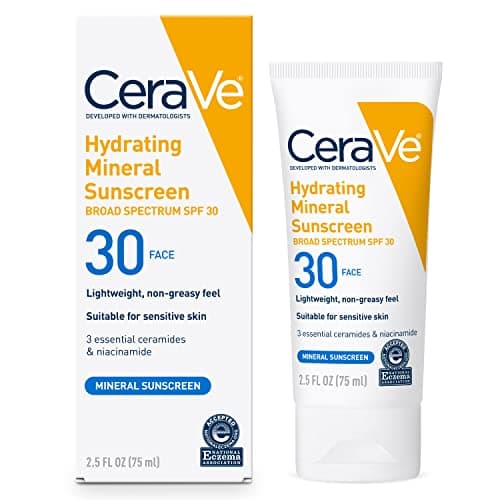
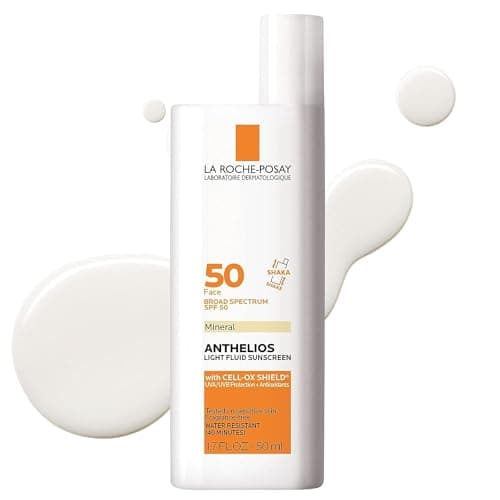
The panel also exposes two things the marketing does not say. First, the percentage does not set the SPF. Two products on this page — a drugstore CeraVe and a prestige La Roche-Posay, both owned by L'Oréal — declare the identical actives, titanium dioxide 6%, zinc oxide 5%, and one is labeled SPF 30 while the other is labeled SPF 50. The rest of the formula did the difference. Second, what did it is often visible further down the label: four of the eight products carry a UV-absorbing ester in the inactive list — butyloctyl salicylate, ethylhexyl methoxycrylene or diethylhexyl syringylidenemalonate — which are close structural relatives of approved chemical filters and are used to boost SPF without appearing in the actives box. That is legal, and it is not a safety problem. It is just worth knowing if "no chemical filters" is the reason you are on this page.
So the ranking is criteria-first, in this order. The filter declaration: how much of the mineral load is zinc oxide rather than titanium dioxide, because zinc covers long-wave UVA where titanium does not, and whether the inactives carry a booster. Fragrance and botanical load, the same screen we apply on face oils and cleansing balms, and which matters more here than anywhere because the whole reason to buy mineral is usually a face that reacts. Cast and finish, judged from what the formula is built to do — a tint, the zinc-to-titanium ratio, the vehicle — rather than from adjectives on the box. The water-resistance label, which by law must say 40 or 80 minutes if the product was tested for it, and which several daily-wear formulas here honestly do not carry. And price per ounce, which reorders the list: the cheapest bottle here is also one with the longest water-resistance claim, and one prestige fluid comes in a smaller tube than the drugstore option that declares the same actives.
One thing this page will not do is call mineral sunscreen safer, cleaner, or better than chemical sunscreen. It is not, and our chemical vs mineral comparison makes the case at length. Mineral is the right choice for skin that stings, for rosacea, for the weeks after a procedure, and for anyone who simply prefers it. It is a worse choice for deep skin tones that want an invisible finish, unless you buy a tint. If none of that describes you, the top of our general face sunscreen roundup is a zinc-led hybrid that most faces will find easier to wear — and it is worth knowing that it is a hybrid, because a great many people believe it is mineral.
Read the Drug Facts panel, not the front of the tube
Because a US sunscreen is regulated as an over-the-counter drug, its label is not marketing — it is a filing. The Drug Facts panel must list each active ingredient with its concentration, must state "broad spectrum" only if the product passed the FDA's critical-wavelength test, must give a water-resistance time of either 40 or 80 minutes if it makes the claim at all, and may not use the words waterproof, sweatproof or sunblock. The same label is submitted to the FDA and published, tube by tube, on the National Library of Medicine's DailyMed database, which is where most of the numbers on this page were read. That makes this the easiest category on this site to audit yourself. A "mineral" sunscreen is one whose actives box contains zinc oxide, titanium dioxide, or both — and nothing else. If avobenzone, octinoxate, octisalate, homosalate or octocrylene appear in that box, it is a hybrid, however the front of the tube is worded.
It is worth applying that test to the most-recommended "mineral" sunscreen on the internet. EltaMD UV Clear, which tops our general face sunscreen roundup and has its own full review, is a zinc-led hybrid: 9% zinc oxide alongside octinoxate, a chemical UVB filter. It is an excellent product and we rank it first for most faces. It is not on this page, because it does not pass the actives-box test, and a surprising number of people who bought it as mineral would be surprised to learn that.
Zinc oxide and titanium dioxide are not interchangeable
The two mineral filters are routinely described as if they were one thing. They are not. Titanium dioxide is a strong UVB and short-wave UVA filter that falls away in the long-wave UVA range; zinc oxide covers that range. A study in Dermatologic Surgery found microfine zinc oxide gave superior protection between 340 and 380 nm when measured on human skin — the long UVA band most associated with photoaging — and, in dried coatings, was less white than titanium dioxide at every concentration tested. That is why this page ranks on zinc share rather than on the total mineral percentage. A formula that is 15% zinc and 3% titanium is a different proposition from one that is 6% titanium and 5% zinc, even though both are "100% mineral."
One popular explanation of how these filters work also needs retiring. Mineral sunscreens are still sold as "physical blockers" that reflect UV like a mirror. When the reflectance of zinc oxide and titanium dioxide was actually measured with an integrating sphere, reflection accounted for only about 4-5% of incident UV — less than SPF 2. The rest of the protection is absorption, the same mechanism as a chemical filter. The difference between the two families is real, but it is about tolerability, cast and formulation, not about one absorbing and the other bouncing.
Why the percentage does not tell you the SPF
The most useful finding on this page is the pair of labels that match. CeraVe Hydrating Mineral Sunscreen SPF 30 declares titanium dioxide 6% and zinc oxide 5%. La Roche-Posay Anthelios Mineral Ultra-Light Fluid SPF 50 declares titanium dioxide 6% and zinc oxide 5%. Same parent company, identical actives, and a labeled SPF that differs by twenty points. SPF is measured on the finished product, not calculated from the filters, and the finished product includes film-formers that spread the filter evenly, particle coatings that change how it scatters, and — in both of these formulas — an inactive ingredient that absorbs UV in its own right.
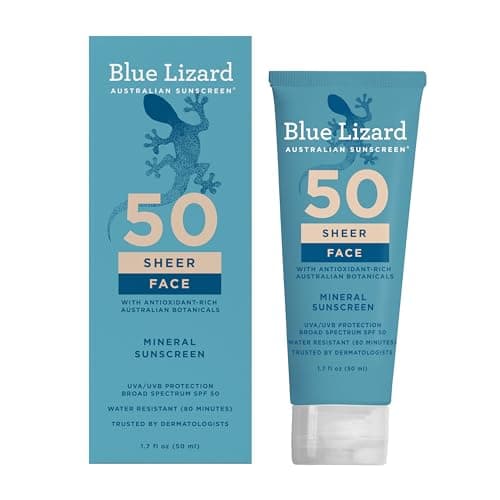
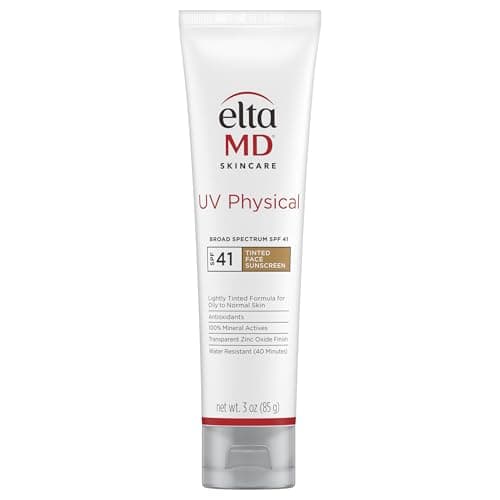
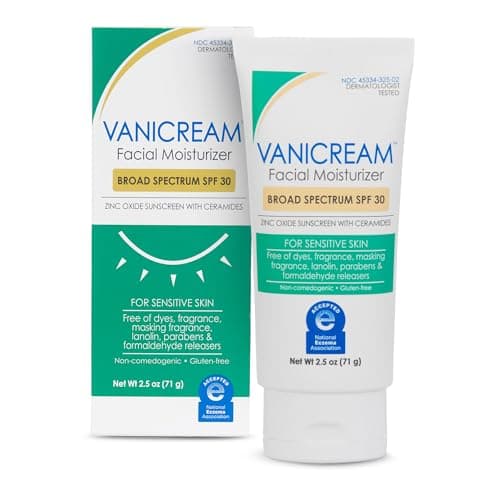
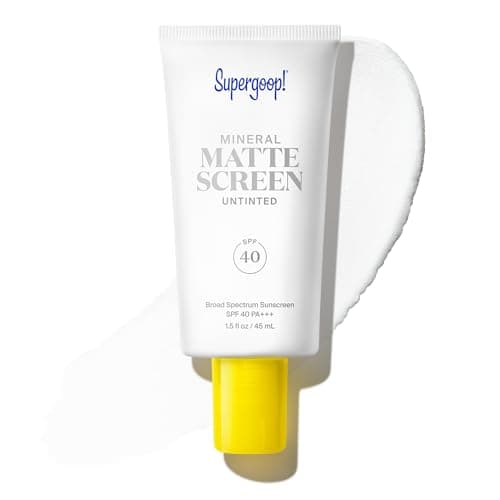
That ingredient is butyloctyl salicylate, and it is worth understanding because it appears in three of the eight products here, and two relatives — ethylhexyl methoxycrylene and diethylhexyl syringylidenemalonate — bring the count of products with some UV-absorbing inactive to four. Chemically these are close cousins of approved organic filters — the salicylate is a near-twin of octisalate — and they absorb UV. Because they are not approved actives they are listed among the inactives, where they raise the tested SPF without changing the "100% mineral" claim, which refers only to the actives box. A cosmetic chemist's write-up of the practice is in the sources below. Our position is the boring one: this is not a safety issue, and the products that use it are still mineral sunscreens by the only definition that is regulated. But if your reason for choosing mineral is to avoid organic UV absorbers entirely, the honest picks are the four that carry none — Vanicream, Blue Lizard Sheer Face, the EltaMD tint and, scent aside, the Supergoop — and the label, not the front of the box, is how you tell.
A tint is a feature, not a cosmetic
White cast is not a formulation failure; it is the same scattering that makes the filter work, and on medium and deep skin tones it is the single biggest reason mineral sunscreen goes unworn. There are two honest fixes. Formulators can shrink the particle and coat it, which is how every "sheer" or "invisible" product here is made. Or they can add iron oxides, which cancel the cast optically — and which do something no untinted sunscreen does. A 2021 review in the Journal of the American Academy of Dermatology is unambiguous: for a sunscreen to protect against visible light it must itself be visible on the skin, and the nanoparticle mineral filters used to avoid a cast do not provide that protection. Tinted formulas using iron oxides do, which is why the review recommends them for melasma and post-inflammatory hyperpigmentation. If dark spots are your concern, the tint is the active ingredient you are shopping for; our dark-spots roundup covers the rest of that routine.
What the water-resistance line is telling you
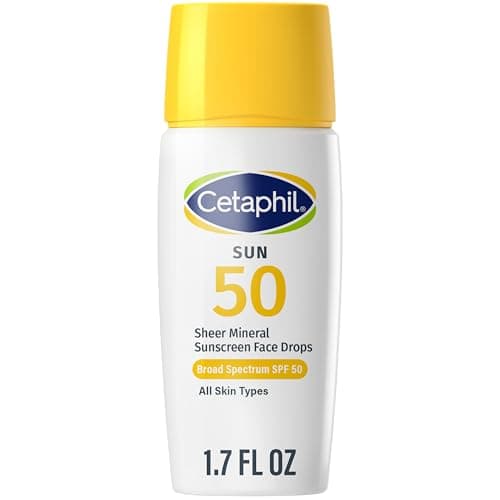
Three of the eight registered labels here state no water-resistance time at all, and for two more we could not find a registered label to check. That is not an omission to read past — under the FDA's rules a product may only print "water resistant (40 minutes)" or "(80 minutes)" if it was tested to that standard, so a label that says nothing was not tested. For a sunscreen worn under a roof and reapplied at lunch this is irrelevant. For a day outdoors it is the whole question. The two products that carry the 80-minute claim, the Cetaphil and the Blue Lizard, are both drugstore-priced; the two prestige-priced fluids, the La Roche-Posay and the Supergoop, carry none we could verify. Price and testing are not the same axis.
Which one for which face
- Most people, daily, at a desk: the Cetaphil liquid. Zinc-only, cheap, 80-minute rated, short list.
- Reactive, rosacea-prone or post-procedure: Vanicream. One active, nothing else doing UV work, the widest "free of" list here, and the finish is the price of that. Our rosacea roundup applies the same logic to the rest of the routine.
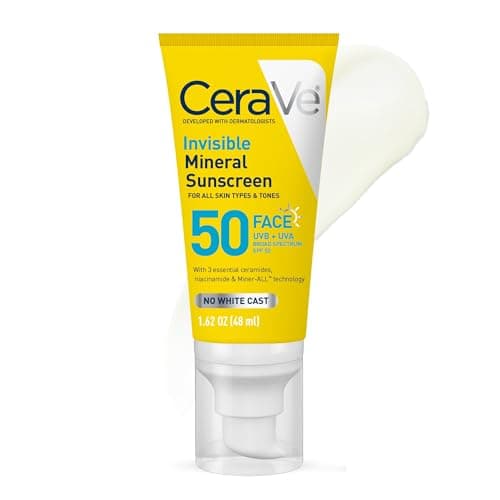
- Medium to deep skin tones: the CeraVe Invisible if you want untinted and are willing to test the brand's claim on your own face; the EltaMD tint if you would rather have iron oxides do the work and get visible-light protection with it.
- Melasma or dark spots: the tint, on the evidence above. An untinted mineral sunscreen — however high its zinc — is not protecting you from the wavelength that matters most for pigment.
- Sweat, sport, a beach day: Blue Lizard Sheer Face — 80 minutes, 18% actives, no boosters — with a reapplication every two hours, which no US sunscreen may promise to exceed without FDA-approved data.
- Oily skin that wants matte: the La Roche-Posay fluid, eyes open about the label; or the Supergoop, eyes open about the scent.
The part the filter cannot fix
Every SPF number on this page was measured at 2 milligrams per square centimeter, which for a face and neck is roughly a third of a teaspoon — visibly more than most people apply, and more than a dropper of liquid instinctively delivers. Under-application does not trim a few points off the number; it collapses it. Our how-much-to-apply guide has the two-finger method. Get that right with the cheapest bottle here and you are better protected than with the most expensive one applied the way most people apply it.