Skip to content
Barrier & Bloom

Roundups · Best Skincare

The best face sunscreen is the one you'll actually reapply

Six daily facial SPFs ranked on finish, filter chemistry and value — plus what the label legally has to mean, and why the expensive one is not automatically better.

By Stephen V.Updated How we review
#ad

We earn a commission when you buy through our Amazon links, at no extra cost to you. It never changes a verdict, and we say so when the cheaper product is the better buy. How this works.

Sunscreen is the only product on this site with a well-documented, decades-deep evidence base behind it, and it is also the product people most often buy once and then quietly abandon. The reason is almost never the SPF number. It is the finish — the white cast, the greasy film, the stinging eyes, the pilling under makeup. So the ranking below weights how it wears as heavily as what it filters, because a bottle of SPF 50 sitting unused in a drawer protects nothing.

A quick note on what the label means, because the terms are legally defined and most articles gloss them. Under the FDA's sunscreen rules, "broad spectrum" requires passing a test showing a critical wavelength of at least 370 nm — that is the UVA claim, and it is the one that matters for aging, not just burning. Only broad spectrum products at SPF 15 or higher may claim to reduce the risk of skin cancer and early skin aging; anything below that can only claim to help prevent sunburn. "Water resistant" must state 40 or 80 minutes on the front label, and no product in the US may call itself waterproof, sweatproof, or a sunblock. Every pick below is broad spectrum. Where the differences actually live is filter chemistry and texture, and that is what we ranked.

The short answer

Quick picks

#ProductBest forScorePrice
01
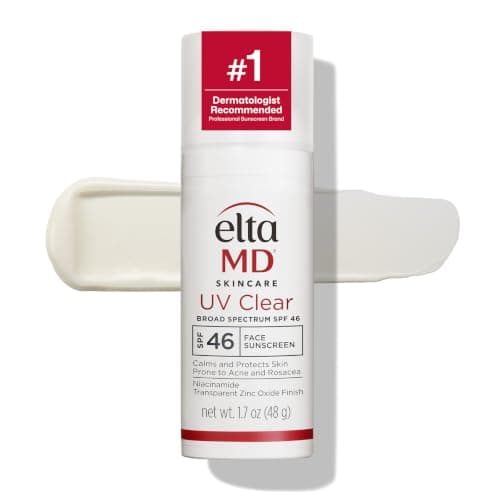
EltaMD EltaMD UV Clear SPF 46
EltaMD UV Clear SPF 46

The one dermatology offices actually stock, and the rare mineral-led sunscreen that disappears on most skin tones. Zinc oxide plus niacinamide, oil-free, and calm enough for rosacea and acne-prone skin. It costs more than it should, and it is still the pick.

Best overall
8.2
$45.00Amazon
02
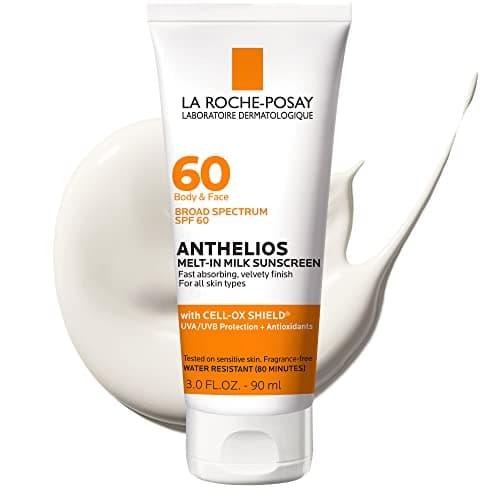
La Roche-Posay La Roche-Posay Anthelios Melt-In Milk SPF 60
La Roche-Posay Anthelios Melt-In Milk SPF 60

The best face-and-body compromise in the category. A high-SPF chemical lotion that sinks in fast, does not smell like a pool deck, and costs a fraction of the boutique options per ounce — so you actually use enough of it.

Best for face and body
7.6
$25.99Amazon
03
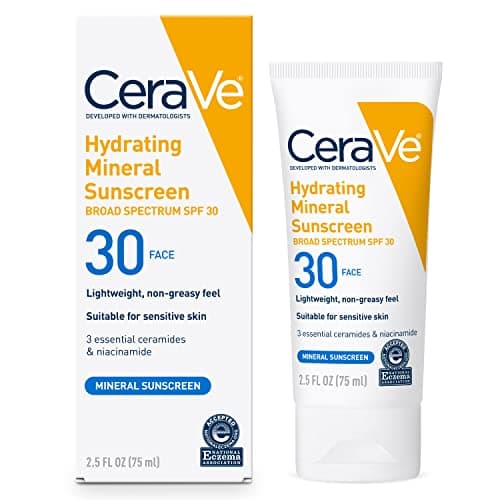
CeraVe CeraVe Hydrating Mineral Sunscreen SPF 30
CeraVe Hydrating Mineral Sunscreen SPF 30

The sensible mineral option: 100% zinc-and-titanium filters, ceramides and hyaluronic acid in the base, fragrance-free, and priced like a drugstore product because it is one. The trade-off is a faint cast on deeper skin tones.

Best mineral filter
7.4
$13.97Amazon
04
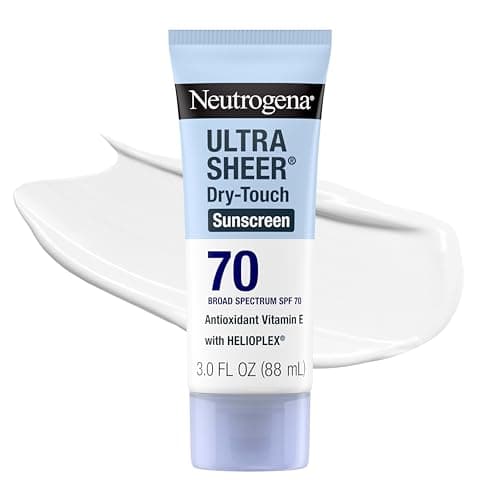
Neutrogena Neutrogena Ultra Sheer Dry-Touch SPF 70
Neutrogena Ultra Sheer Dry-Touch SPF 70

The value benchmark. High SPF, a genuinely matte dry-touch finish, and a price low enough that you will use a proper amount instead of rationing it. Nothing about it is elegant; everything about it works.

Best budget
7.6
$9.88Amazon
05
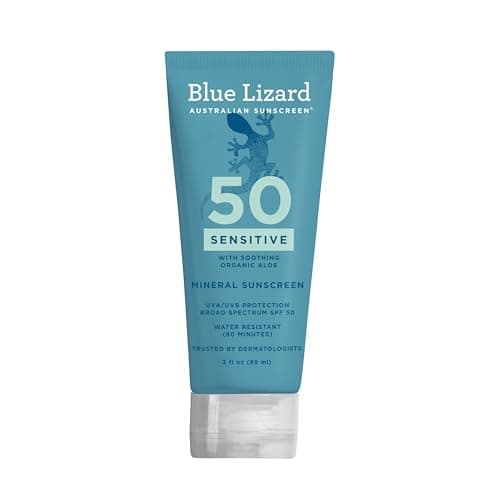
Blue Lizard Blue Lizard Sensitive Mineral SPF 50+
Blue Lizard Sensitive Mineral SPF 50+

The one to hand a dermatologist-flagged, easily-irritated face. Zinc oxide, no fragrance, no chemical filters, high SPF, and water resistant — a genuinely uncompromising sensitive-skin formula at a drugstore price.

Best for sensitive skin
7.4
$10.99Amazon
06
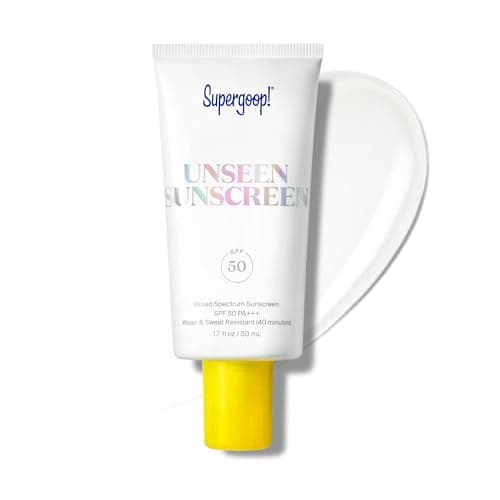
Supergoop! Supergoop! Unseen Sunscreen SPF 50
Supergoop! Unseen Sunscreen SPF 50

A genuinely invisible gel that behaves like a makeup primer, which is the entire reason it costs what it costs. If your objection to sunscreen has always been the finish, this removes the objection — at roughly triple the drugstore price per ounce.

Best under makeup
7.8
$38.00Amazon

#ad · Live prices from the Amazon Product API, as of Aug 28, 2026. Where we have no verified live price, we show none — a gap beats a number that has rotted.

In detail

The picks, in full

01
EltaMD EltaMD UV Clear SPF 46

Best overall

EltaMD UV Clear SPF 46

SPF 469% zinc + octinoxate5% niacinamideFragrance-free
8.2/10

The one dermatology offices actually stock, and the rare mineral-led sunscreen that disappears on most skin tones. Zinc oxide plus niacinamide, oil-free, and calm enough for rosacea and acne-prone skin. It costs more than it should, and it is still the pick.

Finish
9
Protection
9
Sensitive-safe
9
Under makeup
9
Value
5

Pros

  • Weightless finish that genuinely vanishes rather than sitting on top of skin
  • Niacinamide is a real inclusion, not a sprinkle — it calms visible redness
  • Oil-free and non-comedogenic; the default recommendation for acne-prone skin
  • Plays well under makeup without pilling

Cons

  • Easily the highest price-per-ounce here
  • Not fully mineral — the octinoxate rules it out if you want zinc-only

Don't buy this if…

you want a 100% mineral filter or you are buying sunscreen for a family — the per-ounce price makes body use absurd.

$45.00View on Amazon

Price as of Aug 28, 2026. Prices change — Amazon's at checkout is the one that counts.

#ad · we may earn a commission from this link to EltaMD UV Clear SPF 46

02
La Roche-Posay La Roche-Posay Anthelios Melt-In Milk SPF 60

Best for face and body

La Roche-Posay Anthelios Melt-In Milk SPF 60

SPF 60Chemical filtersWater resistant 80 minFace + body
7.6/10

The best face-and-body compromise in the category. A high-SPF chemical lotion that sinks in fast, does not smell like a pool deck, and costs a fraction of the boutique options per ounce — so you actually use enough of it.

Finish
8
Protection
9
Sensitive-safe
6
Under makeup
7
Value
8

Pros

  • Absorbs quickly with no white cast on any skin tone
  • 80-minute water resistance, so it holds through sweat
  • Big enough bottle to use the full recommended amount without flinching
  • Widely stocked and consistently discounted

Cons

  • Contains fragrance — a non-starter for reactive skin
  • Slightly dewy on oily skin by mid-afternoon

Don't buy this if…

fragrance sets off your skin, or you want a mineral-only filter for a child.

$25.99View on Amazon

Price as of Aug 28, 2026. Prices change — Amazon's at checkout is the one that counts.

#ad · we may earn a commission from this link to La Roche-Posay Anthelios Melt-In Milk SPF 60

03
CeraVe CeraVe Hydrating Mineral Sunscreen SPF 30

Best mineral filter

CeraVe Hydrating Mineral Sunscreen SPF 30

SPF 30100% mineralCeramides + HAFragrance-free
7.4/10

The sensible mineral option: 100% zinc-and-titanium filters, ceramides and hyaluronic acid in the base, fragrance-free, and priced like a drugstore product because it is one. The trade-off is a faint cast on deeper skin tones.

Finish
6
Protection
7
Sensitive-safe
9
Under makeup
6
Value
9

Pros

  • Zinc oxide and titanium dioxide only — no chemical filters at all
  • The ceramide base means it doubles as a light moisturizer
  • Fragrance-free and genuinely gentle on reactive skin
  • A third the price of the boutique mineral options

Cons

  • Leaves a visible cast on medium and deep skin tones
  • SPF 30 rather than 50 — fine for daily use, thin for a beach day

Don't buy this if…

you have a deeper skin tone and want zero cast — a well-formulated chemical filter will serve you better.

$13.97View on Amazon

$14.997% off

Price as of Aug 28, 2026. Prices change — Amazon's at checkout is the one that counts.

#ad · we may earn a commission from this link to CeraVe Hydrating Mineral Sunscreen SPF 30

04
Neutrogena Neutrogena Ultra Sheer Dry-Touch SPF 70

Best budget

Neutrogena Ultra Sheer Dry-Touch SPF 70

SPF 70Chemical filtersDry-touch matteWater resistant 80 min
7.6/10

The value benchmark. High SPF, a genuinely matte dry-touch finish, and a price low enough that you will use a proper amount instead of rationing it. Nothing about it is elegant; everything about it works.

Finish
7
Protection
9
Sensitive-safe
5
Under makeup
7
Value
10

Pros

  • The cheapest per ounce of anything here by a wide margin
  • Matte finish suits oily skin better than most
  • Very high SPF with 80-minute water resistance
  • Stocked everywhere, so replacing it is never a project

Cons

  • Alcohol-forward feel that can sting around the eyes
  • Contains fragrance and can feel drying on already-dry skin

Don't buy this if…

your skin is dry or reactive — the finish that oily skin loves is exactly what dry skin resents.

$9.88View on Amazon

$13.3226% off

Price as of Aug 28, 2026. Prices change — Amazon's at checkout is the one that counts.

#ad · we may earn a commission from this link to Neutrogena Ultra Sheer Dry-Touch SPF 70

05
Blue Lizard Blue Lizard Sensitive Mineral SPF 50+

Best for sensitive skin

Blue Lizard Sensitive Mineral SPF 50+

SPF 50+Zinc oxideFragrance-freeWater resistant
7.4/10

The one to hand a dermatologist-flagged, easily-irritated face. Zinc oxide, no fragrance, no chemical filters, high SPF, and water resistant — a genuinely uncompromising sensitive-skin formula at a drugstore price.

Finish
5
Protection
9
Sensitive-safe
10
Under makeup
4
Value
9

Pros

  • Mineral filter at SPF 50+, which is unusual and useful
  • No fragrance, parabens or chemical filters to react to
  • Water resistant, so it survives sweat and swimming
  • The bottle cap changes color in UV — a gimmick that is genuinely instructive

Cons

  • Thick and distinctly heavy to spread
  • Noticeable white cast, worse than the CeraVe

Don't buy this if…

you want something invisible under makeup — this is a protective layer, not a base.

$10.99View on Amazon

Price as of Aug 28, 2026. Prices change — Amazon's at checkout is the one that counts.

#ad · we may earn a commission from this link to Blue Lizard Sensitive Mineral SPF 50+

06
Supergoop! Supergoop! Unseen Sunscreen SPF 50

Best under makeup

Supergoop! Unseen Sunscreen SPF 50

SPF 50Clear gelOil-freeFragrance-free
7.8/10

A genuinely invisible gel that behaves like a makeup primer, which is the entire reason it costs what it costs. If your objection to sunscreen has always been the finish, this removes the objection — at roughly triple the drugstore price per ounce.

Finish
10
Protection
8
Sensitive-safe
7
Under makeup
10
Value
4

Pros

  • Completely clear — no cast on any skin tone, none
  • Grippy, primer-like finish that makeup sits on beautifully
  • Oil-free and fragrance-free despite the cosmetic-counter positioning
  • The most likely of these to convert a sunscreen refuser

Cons

  • Expensive per ounce, and the small tube empties fast at a proper dose
  • The silicone slip feels odd on bare skin if you do not wear makeup

Don't buy this if…

you are price-sensitive or you dislike silicone textures — the Neutrogena protects just as well for a fraction of the cost.

$38.00View on Amazon

Price as of Aug 28, 2026. Prices change — Amazon's at checkout is the one that counts.

#ad · we may earn a commission from this link to Supergoop! Unseen Sunscreen SPF 50

What the label is legally allowed to say

Sunscreen is regulated as an over-the-counter drug in the United States, so the front-label words are not marketing flourishes — they are defined claims. Three are worth knowing. Broad spectrummeans the product passed a test demonstrating a critical wavelength of at least 370 nm, which is the only UVA assurance you get; a product without it is a sunburn preventer, not an anti-aging measure. SPF 15 or higher plus broad spectrum is the threshold at which a product may claim to reduce the risk of skin cancer and early skin aging when used as directed. Water resistant must be qualified as 40 or 80 minutes, and the words waterproof, sweatproof and sunblock are prohibited outright because they overstate what any formula can do.

One more rule shapes how you should use all six of these: no sunscreen may claim to protect for more than two hours without reapplication unless the manufacturer has submitted data and obtained FDA approval. That is the honest reason reapplication advice exists, and it is why the finish of a sunscreen matters more than its SPF number. You will reapply a pleasant SPF 30. You will not reapply an unpleasant SPF 70.

Mineral or chemical: the decision, minus the tribalism

Mineral filters (zinc oxide, titanium dioxide) sit on the skin and are the safer bet for reactive, rosacea-prone or post-procedure skin, and for children. The trade-off is optical: they scatter visible light as well as UV, which is what a white cast is. Chemical filters absorb UV and convert it to heat; they are cosmetically elegant and cast-free, and they are more likely to sting eyes and irritate sensitive faces. Neither category is "safer" in any way that should drive a healthy adult's decision — both are regulated, both work. Pick on skin reactivity and skin tone, not on internet argument.

How much to use, honestly

The SPF on the bottle is measured at 2 mg per square centimeter of skin, which for a face and neck works out to roughly a third of a teaspoon — visibly more than most people apply. Under-applying does not shave a few points off the number; it drops the effective protection sharply. This is the practical argument for the cheaper bottles in this list: the psychological cost of a generous dose from a $10 bottle is nothing, and from a $40 bottle it is real. If price is nudging you toward a thin layer, buy the cheaper sunscreen.

Where sunscreen sits in the routine

Last in the morning, over your moisturizer, before makeup — the full sequence is in our skincare routine order guide. It is also non-negotiable if you use any of the actives we recommend elsewhere on this site: retinoids and exfoliating acids both increase photosensitivity, which is why every retinol guide worth reading ends with the same sentence about SPF.

How we picked

We did not lab-test this gear

Everyone in this category says they tested twenty products. We have not lab-tested any of these, and we say so. What we did instead: compiled the published specifications, decoded the ingredient (INCI) lists active by active, ran the math where there was math to run, and scored each product against a published rubric. The scores are judgments from documented research — not measurements we took, because we do not have a lab and we will not pretend we do. Where a number came from someone else's work, we name them in Sources.

Questions

Frequently asked

Is SPF 50 meaningfully better than SPF 30?
Marginally, and only if you apply enough. SPF 30 filters about 97% of UVB and SPF 50 about 98% — the gap is real but small, and it collapses entirely if you apply a thin layer of the SPF 50. Application amount and reapplication matter far more than the number on the bottle.
What does 'broad spectrum' actually guarantee?
Under FDA rules it means the product passed a test showing a critical wavelength of at least 370 nm — in plain terms, meaningful UVA coverage, not just UVB. Only broad spectrum products at SPF 15+ may claim to reduce the risk of skin cancer and early skin aging. A non-broad-spectrum sunscreen may only claim to help prevent sunburn.
Do I need a separate sunscreen for my face?
Not for protection — a body sunscreen protects a face perfectly well. You need one for cosmetics and comfort: facial formulas are lighter, less likely to clog pores, and designed not to sting eyes or pill under makeup. If a body lotion suits your face, use it and save the money.
Is mineral sunscreen safer than chemical?
Both are regulated and both work. Mineral filters are the better default for reactive, rosacea-prone or post-procedure skin and for young children, mostly because they irritate less. Chemical filters are cosmetically superior — no white cast — which matters more than people admit, because the sunscreen you wear beats the one you skip.
Can I skip sunscreen if my moisturizer or makeup has SPF?
In practice, usually not. SPF in a moisturizer is tested at the same 2 mg/cm² dose as a standalone sunscreen, and almost nobody applies moisturizer that thickly — and nobody applies foundation that thickly. Treat SPF in other products as a bonus layer, not the layer.
How often do I really need to reapply?
No US sunscreen may claim protection beyond two hours without reapplication unless the manufacturer has submitted supporting data to the FDA, which is the honest basis for the standard advice. Indoors and away from windows all day, the practical risk is low; outdoors, sweating, or near glass, follow the two-hour rule.

Keep reading

Receipts

Sources

We do not run a testing lab, and we do not pretend to. Where a measured number came from someone else's work, we name them and link them. Where we could not verify something, we say so on the page rather than quietly leaving it out. Read our full method.