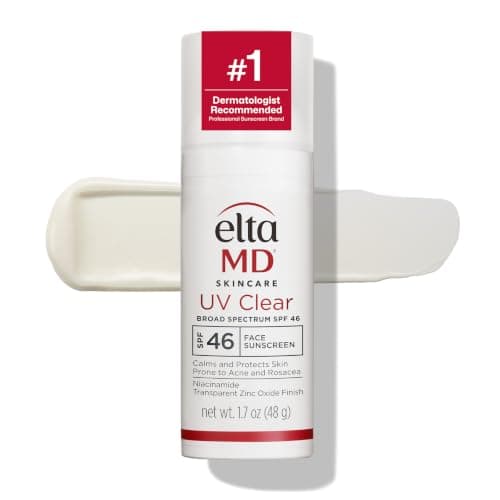
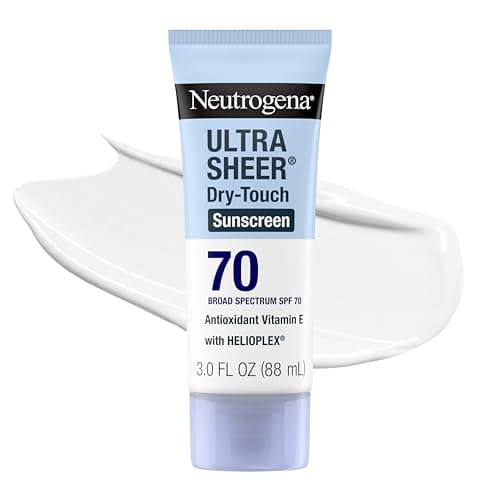
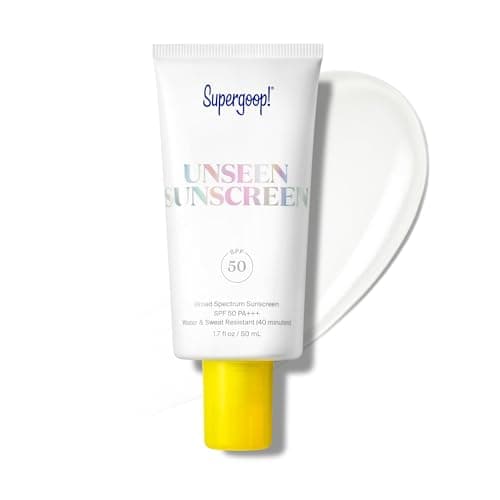
Buy Supergoop! Unseen Sunscreen SPF 50 if you can stomach the price. It is completely clear, so there is no cast on any skin tone, and the grippy primer-like finish is the one texture on this page that oily skin does not fight at 2pm. If you are acne-prone as well as oily, buy EltaMD UV Clear SPF 46 instead — 5% niacinamide is a real inclusion rather than a sprinkle, and it is the default dermatology-office recommendation for exactly this skin. If you want matte for about a fifth of the money, the Neutrogena Ultra Sheer Dry-Touch is the answer, with the caveat that it is fragranced and alcohol-forward.
Every product here carries a US OTC sunscreen label, which means the actives and their percentages are printed and checkable — the FDA requires it. So protection is not what separates these five. Finish is. For the category ranked without regard to skin type, see best face sunscreen; for zinc-and-titanium-only options, see best mineral sunscreen. This page has a different rank-1 pick than either, on purpose.
Why oily skin abandons sunscreen
Nobody stops wearing sunscreen because the SPF number was too low. They stop because of pilling under makeup, a white cast that goes gray by lunchtime, a greasy film that makes an already-shiny face look wet, or stinging. Those are all finish problems, and finish is a formulation choice rather than a protection one.
That matters more for oily skin than for any other type, because oily skin is also the type most likely to be using a retinoid or an acid — and photoprotection is the thing that makes those actives worth using. A sunscreen you wear badly beats a better one you leave in the drawer. Our page on how much sunscreen to apply covers the other half of the problem: at a proper dose, a sunscreen you dislike becomes a sunscreen you under-apply.
What we ranked on
- Finish. Cast, grease and how it behaves over the course of a day on skin that produces a lot of sebum. The single biggest predictor of whether you keep using it.
- Shine control. Whether the base contains anything that actually sets — silica, talc, a dry-touch polymer — as opposed to a dewy emulsion that adds to the problem. Cosmetic, honest about being cosmetic.
- Protection. Read off the Drug Facts panel: the filters, their percentages, broad-spectrum status and declared water resistance. We credit no water-resistance minutes that the label does not state.
- Fragrance screen. Fragrance-free or not, and whether individual fragrance allergens are declared. This is a product you reapply all day on skin that is frequently also on actives.
- Value. Price per ounce at the dose the label asks for, not the sticker price. A sunscreen used at half the recommended amount is not the SPF on the box.
What we did not rank on: oil-control claims. No sunscreen reduces sebum production. A matte finish is a surface effect from absorbent powders, and it is worth having — it is simply not a treatment, and we are not going to describe it as one.
The labels, side by side
All five figures below come off the published Drug Facts panel or ingredient listing. Where a label states no water-resistance time, we print none rather than assuming.
| Product | Filter system | Finish | Declared water resistance |
|---|
| Supergoop! Unseen SPF 50 | Organic filters, clear gel | Invisible, grippy | Not stated on the listing |
| EltaMD UV Clear SPF 46 | 9% zinc oxide + octinoxate | Weightless, slight blur | Not stated on the listing |
| Neutrogena Ultra Sheer SPF 70 | Organic filters | Dry-touch matte | 80 minutes |
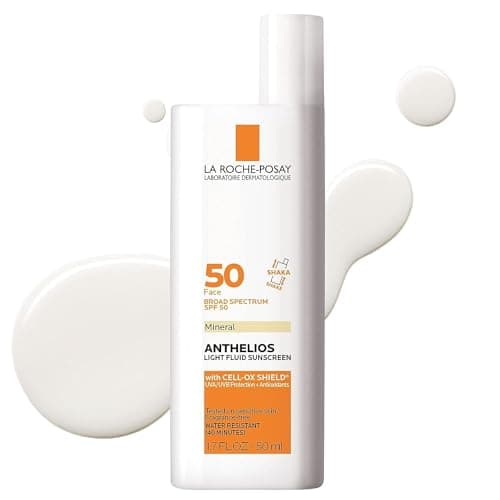
| La Roche-Posay Mineral Fluid SPF 50 | 6% titanium + 5% zinc | Matte, sets with silica and talc | Not stated on the listing |
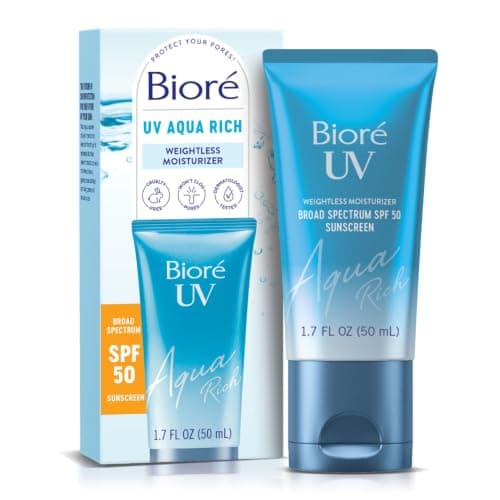
| Biore UV Aqua Rich SPF 50 | Avobenzone 3%, homosalate 10%, octisalate 5%, octocrylene 5% | Watery, slightly dewy | Not stated on the listing |
Mineral or chemical, for oily skin specifically
Mineral filters sit on the surface and have to be suspended in something, which is why zinc sunscreens tend to be thicker, leave a cast, and in a matte version feel powdery. Organic (chemical) filters dissolve into the base, so they can be thin and clear — which is why four of the five lightest finishes on this site are not mineral. If your reason for choosing mineral is sensitivity, the honest read is that the La Roche-Posay fluid is the lightest way to do it, with the label compromises listed on its card. Our chemical versus mineral sunscreen explainer goes through the whole argument without taking a side it cannot support.
The two mistakes that cost oily skin more than the product choice
Under-applying because of the finish. The SPF on the box is measured at 2 mg per square centimetre — roughly a third of a teaspoon for a face. Most people apply a quarter of that, and oily skin under-applies more than most because the finish is unpleasant. That is the real argument for buying the one you like: a well-worn SPF 46 beats a badly-worn SPF 70.
Blotting away the reapplication. Powder over sunscreen is fine. A tissue pressed to your T-zone at lunchtime removes some of the film you applied, which is a good reason to keep a stick or a powder SPF in a bag rather than deciding you are covered until 6pm.
How we picked
We did not lab-test this gear
Everyone in this category says they tested twenty products. We have not lab-tested any of these, and we say so. What we did instead: compiled the published specifications, decoded the ingredient (INCI) lists active by active, ran the math where there was math to run, and scored each product against a published rubric. The scores are judgments from documented research — not measurements we took, because we do not have a lab and we will not pretend we do. Where a number came from someone else's work, we name them in Sources.