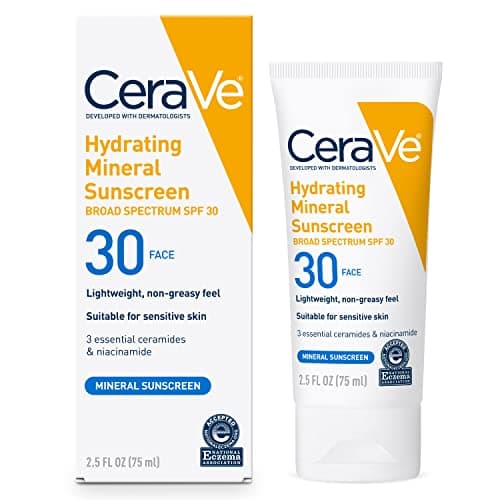
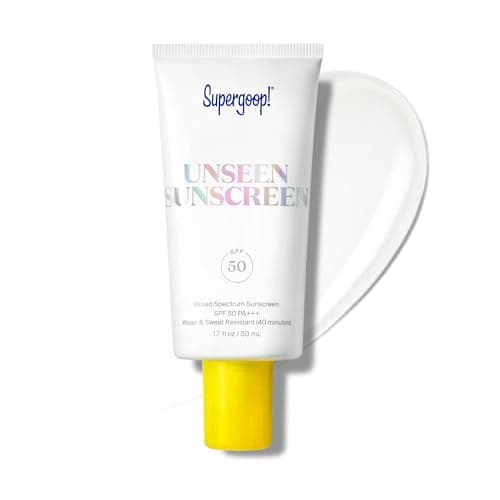
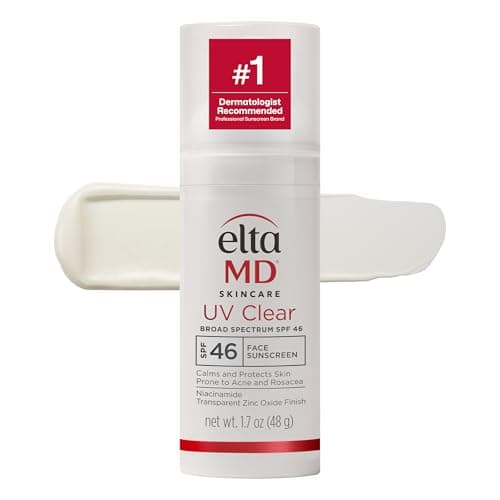
If you spend hours near a window, yes. If you are in a room without daylight, no. The distinction is physical rather than ideological: ordinary window glass blocks most UVB but transmits a large share of UVA, and UVA is the wavelength range most associated with pigmentation and photoaging. So a desk beside a south-facing window is a meaningful exposure and an interior office is not. Your screen is not the issue. Whether you commute or step outside at lunch usually settles the question anyway.
This question gets answered badly in both directions. One camp says sunscreen every single day regardless of circumstance, which is easy to remember but asks people to accept a rule with no reasoning attached. The other says indoor sunscreen is a marketing invention, which ignores how glass behaves. The accurate answer is narrower and more useful than either.
What gets through glass, and what does not
UV reaching the ground splits into two relevant bands. UVB (roughly 290-320nm) is the burning wavelength, and standard window glass absorbs most of it — which is why you do not get sunburned through a closed car window. UVA (roughly 320-400nm) penetrates deeper into skin, is far more constant across the day and the seasons, and passes through ordinary glass in substantial quantity. UVA is strongly implicated in photoaging and in driving pigmentation, including melasma.
That gives you the practical rule. Indoors, your burn risk is near zero and your pigment-and-photoaging exposure is real but proportional to how much daylight actually falls on you. A person sitting two feet from a bright window for six hours a day is accumulating meaningful UVA. A person in a windowless room is accumulating none. Our filter comparison covers which filters cover UVA properly, which is the part that matters for this specific use.
Decide in one minute
- You sit within a few feet of a window with direct or bright indirect daylight, most days. Wear sunscreen. This is the clearest yes on the page, and it is the single most common real case.
- You are treating melasma, dark spots or post-acne marks. Wear it regardless of where you sit. Pigment responds to UVA and to visible light, and treating it while exposure continues is the most common reason the treatment appears to fail — our dark spots roundup is blunt about this.
- You use a retinoid or an exfoliating acid. Wear it. Both increase photosensitivity, and the point is not the burn but the marking.
- You drive during daylight. Wear it. A car side window transmits more UVA than a windscreen, and the left arm and left cheek of long-distance drivers is a well-documented asymmetry.
- You leave the building at any point — commute, lunch, school run, dog. Wear it, because that is outdoor exposure and the indoor question is moot.
- You are genuinely in an interior room all day and go out after dark. You do not need sunscreen. We would rather say that plainly than sell you a habit you do not need.
The blue light question, answered honestly
Screens are not a meaningful skin exposure. The visible light emitted by a laptop or phone is orders of magnitude weaker than daylight through the same window, and the research people cite for "blue light skin damage" generally uses high-intensity visible light at doses screens do not produce. Visible light is relevant to pigmentation — which is a real finding, and the reason tinted mineral sunscreens with iron oxides are genuinely useful for melasma — but the source that matters is the sun, not your monitor. If you are buying a product on a blue-light-from-screens claim, you are buying the wrong thing for the right reason.
What to look for, if the answer is yes
For indoor wear specifically, the requirements are slightly different from a beach sunscreen. You want strong UVA coverage, because that is the band getting through the glass; a finish you will tolerate every day, because compliance is the whole game; and no need for water resistance, which frees you to pick on texture. If you are treating pigment, a tint with iron oxides adds visible-light coverage that an untinted sunscreen does not have. Three picks below, chosen on exactly those terms.
Cheaper than sunscreen: move the desk
It is worth saying, because nobody selling sunscreen will. If the only reason you need indoor sunscreen is a bright window beside your desk, turning the desk ninety degrees, or sitting a few feet further back, or closing a blind for the brightest two hours of the day, reduces the exposure for nothing. UV intensity falls off sharply with distance from the glass and with angle. We would rather tell you that than sell you a bottle you could have avoided.
UV-filtering window film is the other option and it works, though it is a landlord conversation in most cases.
If the answer is yes, the amount matters more than the product
Roughly a quarter teaspoon for a face, every morning, is the figure that makes an SPF number mean anything — and almost nobody applies that much. Reapplication indoors is a much weaker requirement than outdoors: if you are not sweating, swimming or towelling your face, a proper morning application is reasonable for a day at a desk. Our how much sunscreen to apply guide has the measurements, and it is the more important page of the two.
Who should wear it indoors regardless
| If | Then | Because |
|---|
| You are treating melasma or dark spots | Daily, tinted if possible | UVA and visible light both drive pigment. Iron oxides in a tinted mineral sunscreen cover the visible-light part — the mineral roundup ranks those. |
| You use a retinoid or an acid | Daily | Both raise photosensitivity. The risk indoors is marking rather than burning, and marking is the slower problem to undo. |
| You have had skin cancer, or a family history of it | Daily, and ask your dermatologist | This is a clinical conversation and your own doctor outranks any website. |
| You take a photosensitising medication | Daily, and ask your prescriber | Several common drug classes raise UV sensitivity substantially. |
| You drive in daylight | Daily | Side windows transmit considerably more UVA than windscreens, and the asymmetry shows on drivers' faces. |
The one-line version
Sunscreen is the highest-value product in skincare and the one with the best evidence behind it, and we would never talk anyone out of wearing it. But the honest answer to this particular question is conditional, and a page that pretends otherwise is just selling. Near a window, wear it. In an interior room, do not. Everywhere outdoors, always — which is what the sunscreen roundup is for.