Skip to content
Barrier & Bloom

Roundups · Best Skincare

The best pimple patches, and the one blemish they cannot help

A hydrocolloid patch is a wound dressing wearing a cute box. On an open, weeping whitehead it is genuinely useful. On a deep, closed bump it is a sticker. Five picks ranked on the four things that decide which is which.

By Stephen V.Updated How we review
#ad

We earn a commission when you buy through our Amazon links, at no extra cost to you. It never changes a verdict, and we say so when the cheaper product is the better buy. How this works.

Buy the Mighty Patch Original, and buy it understanding what it is for. It is the thickest, grippiest, most reliably adhesive hydrocolloid dot in the category, it comes in two useful sizes in one box, and it costs less per patch than most of the prettier options. What it does is absorb fluid out of a blemish that has already opened, flatten the lump, and physically stop you touching it for eight hours. What it does not do — what no patch on this page does — is treat a deep, closed, painful bump with nothing in it to draw out. For that kind of blemish, a patch is a sticker with good marketing.

That distinction is the whole page, so here it is once more plainly: a hydrocolloid patch works on exudate. Given a whitehead that has come to a head, or a spot you have already — against all advice — squeezed, it will pull the fluid into its gel matrix, go cloudy and white, and leave behind something noticeably flatter and less red. Given a cystic nodule sitting under intact skin, there is nothing for it to absorb and nothing for it to do. Patches sold for "cystic acne" are selling you the first case and letting you imagine the second.

What a pimple patch actually is

It is a wound dressing. Hydrocolloid dressings have been standard in wound care for decades: a gel-forming layer — carboxymethylcellulose, pectin and gelatin are the usual agents — bonded to a thin, flexible, water-resistant outer film. When the gel layer meets wound fluid it swells into a soft mass, holds the surface moist, and seals it off. That is the entire technology. The acne version is the same material cut into a 10 or 12 millimeter dot and sold in a box with a star on it.

The evidence base splits neatly along that history, and we would rather tell you than let the packaging imply otherwise. For chronic and acute wounds, hydrocolloids are well-established and comparatively well-studied. For acne specifically, a 2025 narrative review in the Journal of Clinical Medicine looked for the direct evidence and found very little of it: one small pilot randomized trial from 2006 in twenty people with mild to moderate acne, which reported reductions in severity and inflammation over a week, and a 2024 conference abstract describing a two-week randomized comparison in which patches plus gentle washing improved the appearance of extracted pimples more than washing alone. That is a plausible, consistent, genuinely thin literature. It supports what we wrote above — these things flatten and calm a blemish that has opened — and it does not support anything grander.

There is a second mechanism that nobody advertises and that we suspect does at least as much work: the patch stops you touching your face. A dot of adhesive over a spot is a physical commitment device. You cannot pick what you cannot reach, and picking is the single most reliable way to turn a three-day blemish into a three-month mark. If you are the kind of person who knows that about yourself, that alone is a good enough reason to keep a box in a drawer.

One safety note from the same review, because it is the only real downside in the category: there are published case reports of allergic contact dermatitis to hydrocolloid dressings, usually traced to colophony (rosin), the tackifier that makes the adhesive grip. It is uncommon. If a patch leaves a red, itchy square that outlasts the blemish it covered, that is the likely culprit and the answer is a different brand rather than a different size.

Microdarts are a different product

Half this category is now "microdart" or "micropoint" patches, and they are not thicker hydrocolloid dots. They are arrays of tiny dissolving spikes, loaded with salicylic acid and niacinamide, designed to breach the surface of a blemish that has not opened and release those actives inside it. The logic is sound and it is the opposite of the logic above: a plain hydrocolloid patch is trying to take something out, and a microdart patch is trying to put something in.

That makes microdarts the only option here with anything to offer an early-stage, closed bump — the tender swelling on day one, before there is a head. They also cost several times more per patch, they tingle or sting for the first few minutes, and they come in counts of six or eight rather than thirty-six. Our honest read: keep a small box for the handful of blemishes a year that matter, and run plain hydrocolloid for everything else. We have ranked one microdart patch below for exactly that use.

What we ranked on

  • Absorbency. How much fluid the gel layer can take before it saturates and lifts. Thicker is better here, which is why the most discreet patches are also the least effective on a genuinely weeping spot.
  • Adhesion. Whether it is still on your face in the morning, including on a nose, a chin, or oily skin in summer. A patch that slides off at 2 a.m. does nothing and leaves you touching your face at 2 a.m.
  • Size range. A box with one 12 mm dot in it is the wrong box. Blemishes come in a range, patches should too, and a patch much wider than the spot peels at the edges because there is nothing under it to adhere to but skin oil.
  • Discretion. Hydrocolloid goes opaque white as it absorbs. That is the patch working and it is also the reason most of these are nighttime products. Daytime wear is a real, separate requirement, and it is a trade against absorbency rather than a free upgrade.
  • Cost per patch. Priced qualitatively, not in dollars, because the live number sits on the buy row and our method page says we will not freeze a price into prose. The spread in this category is wide: the cheapest sensible box costs a fraction of a dollar per dot, and the priciest costs well over a dollar.

We did not score on "shrinks zits in one use." Every box says it, it is a claim about appearance rather than about acne, and it is true in exactly the one case we opened this page with.

The short answer

Quick picks

#ProductBest forScorePrice
01
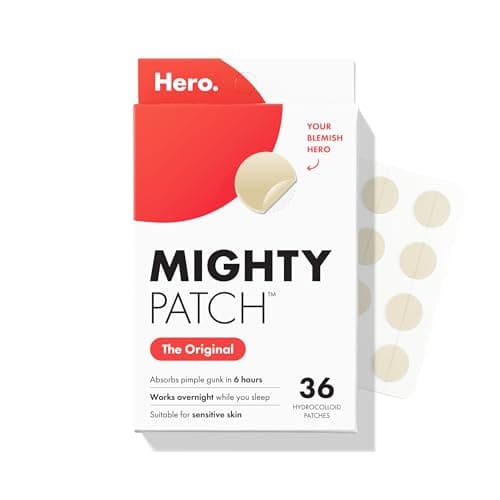
Hero Cosmetics Mighty Patch Original Acne Patches, 36 ct
Mighty Patch Original Acne Patches, 36 ct

The default, and for once the default is right. The thickest gel layer and the best adhesive in the category, in two sizes per box, at a price per patch most of the prettier options cannot match. If you buy one box of patches, buy this one.

Best overall
7.8
$11.97Amazon
02
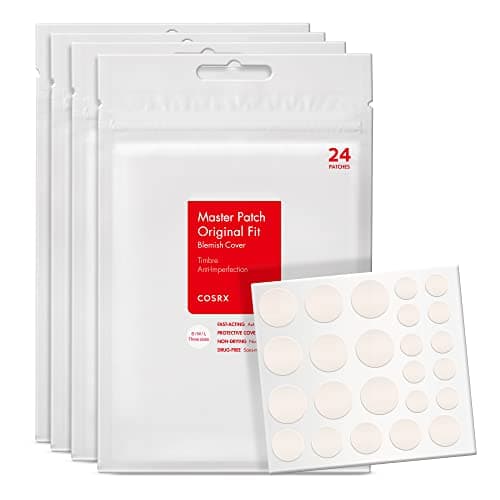
COSRX COSRX Acne Pimple Patches, 3 Size, 96 ct
COSRX Acne Pimple Patches, 3 Size, 96 ct

Three diameters in one sheet set and nearly a hundred patches in the box, which makes this the one to buy if you use patches often. Thinner and less sticky than the Mighty Patch, and the small 7 mm dots are the best thing in the category for a tiny whitehead.

Best value and best size range
8.0
$11.55Amazon
03
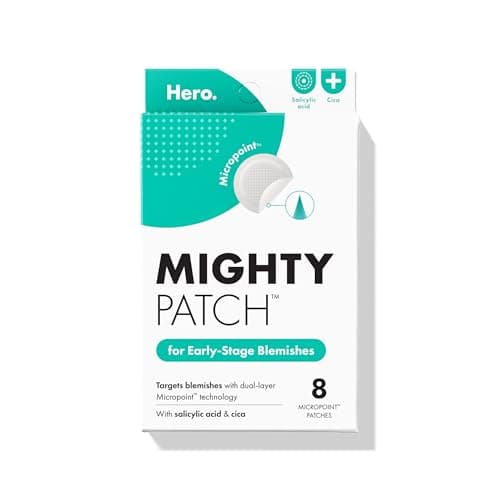
Hero Cosmetics Mighty Patch Micropoint Acne Patches, 8 ct
Mighty Patch Micropoint Acne Patches, 8 ct

The only pick here with anything to offer a blemish that has not opened. An array of dissolving microdarts carrying salicylic acid and niacinamide into an early-stage bump, rather than a gel layer waiting for fluid. Expensive per patch and worth keeping a small box of anyway.

Best for an early-stage closed bump
6.4
$8.79Amazon
04
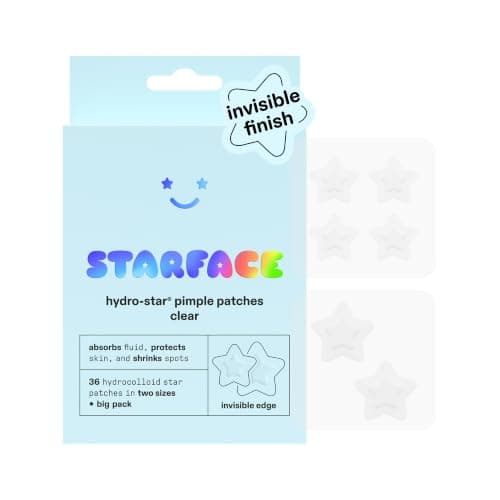
Starface Starface Hydro-Star Clear Pimple Patches, Multisize, 36 ct
Starface Hydro-Star Clear Pimple Patches, Multisize, 36 ct

The clear, two-size version of the brand that made pimple patches a visible accessory - and quietly the most useful thing it sells. Thin, genuinely low-profile hydrocolloid in two diameters, which is the honest answer for anyone who needs a patch on during the day.

Best for daytime wear
7.2
$12.93Amazon
05
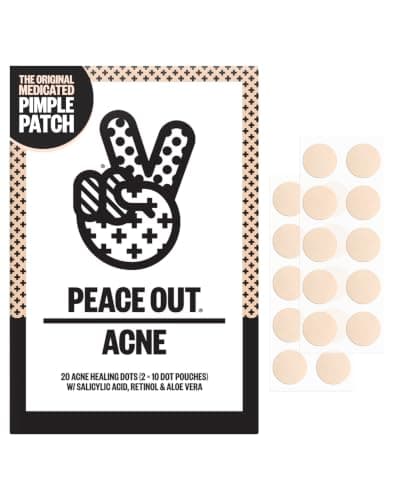
Peace Out PEACE OUT Acne Healing Dots, 20 ct
PEACE OUT Acne Healing Dots, 20 ct

A competent hydrocolloid dot dosed with salicylic acid, vitamin A and aloe, priced like a prestige skincare product. The actives are the pitch and they are also the part we are least convinced by - a few hours under an occlusive patch is not a treatment course. Ranked last on value, not on quality.

Best stocked at a beauty counter
6.0
$15.20Amazon

#ad · Live prices from the Amazon Product API, as of October 21, 2026. Where we have no verified live price, we show none — a gap beats a number that has rotted.

In detail

The picks, in full

01
Hero Cosmetics Mighty Patch Original Acne Patches, 36 ct

Best overall

Mighty Patch Original Acne Patches, 36 ct

Hydrocolloid only2 sizes (12 mm + 10 mm)36 patchesFragrance-free
7.8/10

The default, and for once the default is right. The thickest gel layer and the best adhesive in the category, in two sizes per box, at a price per patch most of the prettier options cannot match. If you buy one box of patches, buy this one.

Absorbency
9
Adhesion
9
Size range
7
Discretion
5
Value
9

Pros

  • Noticeably thicker gel layer than the thin daytime and novelty patches - it keeps absorbing where they saturate
  • Best adhesion here: stays on a nose and an oily chin through a full night
  • Two sizes in one box, which is what the real range of blemishes requires
  • No actives at all, so nothing to sting, react with a retinoid, or bleach a pillowcase
  • Lowest cost per patch of any pick on this page

Cons

  • Goes opaque white as it works, so it is a nighttime product and reads as one in daylight
  • Plain hydrocolloid: nothing for a closed bump with no fluid in it
  • The 36-count box is the smallest size, and larger counts are better value per patch if you use them regularly

Don't buy this if…

…you need to wear it to work under makeup - take the Starface Clear or the Invisible daytime version instead.

$11.97View on Amazon

$12.998% off

Price as of October 21, 2026. Prices change — Amazon's at checkout is the one that counts.

#ad · we may earn a commission from this link to Mighty Patch Original Acne Patches, 36 ct

02
COSRX COSRX Acne Pimple Patches, 3 Size, 96 ct

Best value and best size range

COSRX Acne Pimple Patches, 3 Size, 96 ct

Hydrocolloid only3 sizes (7/10/12 mm)96 patchesFragrance-free
8.0/10

Three diameters in one sheet set and nearly a hundred patches in the box, which makes this the one to buy if you use patches often. Thinner and less sticky than the Mighty Patch, and the small 7 mm dots are the best thing in the category for a tiny whitehead.

Absorbency
7
Adhesion
7
Size range
10
Discretion
6
Value
10

Pros

  • Three genuine sizes, including a 7 mm dot nothing else here matches for a small spot
  • Far and away the most patches per box of any pick on this page
  • Thin enough to be less obvious than the Mighty Patch while still being real hydrocolloid
  • Long-running Korean staple - this exact product predates the whole US patch boom

Cons

  • Adhesive is the weak point: edges lift overnight on oily skin or a nose more often than the Mighty Patch
  • Thinner gel layer saturates sooner on a genuinely weeping blemish
  • Sheets are easy to mangle getting the smallest dots off the backing

Don't buy this if…

…you mostly need patches for large, actively draining spots - the thicker Mighty Patch holds more before it gives up.

$11.55View on Amazon

$13.7016% off

Price as of October 21, 2026. Prices change — Amazon's at checkout is the one that counts.

#ad · we may earn a commission from this link to COSRX Acne Pimple Patches, 3 Size, 96 ct

03
Hero Cosmetics Mighty Patch Micropoint Acne Patches, 8 ct

Best for an early-stage closed bump

Mighty Patch Micropoint Acne Patches, 8 ct

Dissolving microdartsSalicylic acid + niacinamide8 patchesFragrance-free
6.4/10

The only pick here with anything to offer a blemish that has not opened. An array of dissolving microdarts carrying salicylic acid and niacinamide into an early-stage bump, rather than a gel layer waiting for fluid. Expensive per patch and worth keeping a small box of anyway.

Absorbency
5
Adhesion
9
Size range
5
Discretion
8
Value
5

Pros

  • Addresses the one case plain hydrocolloid cannot: a tender, closed, day-one swelling
  • Delivers two actives with a real evidence base for acne rather than relying on absorption
  • Strong adhesive and a thin profile - less visible than the Original
  • Dissolves into the blemish, so there is no residue to peel off in the morning

Cons

  • Highest cost per patch on this page by a wide margin, and only eight in the box
  • Tingles or stings for the first minutes, which some people will not tolerate
  • Overkill - and a waste of money - on an ordinary whitehead a plain dot would flatten
  • Needs a full six to eight hours to dissolve properly, so it is strictly overnight

Don't buy this if…

…your skin is already irritated from a retinoid or an acid, or you want something to use on three spots a week - the cost per patch makes that an expensive habit.

$8.79View on Amazon

$12.9932% off

Price as of October 21, 2026. Prices change — Amazon's at checkout is the one that counts.

#ad · we may earn a commission from this link to Mighty Patch Micropoint Acne Patches, 8 ct

04
Starface Starface Hydro-Star Clear Pimple Patches, Multisize, 36 ct

Best for daytime wear

Starface Hydro-Star Clear Pimple Patches, Multisize, 36 ct

Hydrocolloid only2 sizes36 patchesClear, low-profile
7.2/10

The clear, two-size version of the brand that made pimple patches a visible accessory - and quietly the most useful thing it sells. Thin, genuinely low-profile hydrocolloid in two diameters, which is the honest answer for anyone who needs a patch on during the day.

Absorbency
6
Adhesion
8
Size range
7
Discretion
9
Value
6

Pros

  • The least conspicuous real hydrocolloid patch here - close to invisible on bare skin until it starts absorbing
  • Two sizes in the box, unlike the single-size star patches the brand is known for
  • Thin enough to sit under makeup without a visible edge
  • Good adhesive for how thin it is

Cons

  • Thin means it saturates fastest of any pick here - it clouds over and needs changing sooner
  • Still turns milky white once it has absorbed anything, so the invisibility is temporary
  • Costs more per patch than the COSRX or the Mighty Patch Original for less gel
  • No actives, so the same closed-bump limit applies

Don't buy this if…

…the spot is large or actively weeping and you want to apply once and forget it - that is the Mighty Patch Original.

$12.93View on Amazon

Price as of October 21, 2026. Prices change — Amazon's at checkout is the one that counts.

#ad · we may earn a commission from this link to Starface Hydro-Star Clear Pimple Patches, Multisize, 36 ct

05
Peace Out PEACE OUT Acne Healing Dots, 20 ct

Best stocked at a beauty counter

PEACE OUT Acne Healing Dots, 20 ct

Hydrocolloid + activesSalicylic acid + retinol20 patchesOne size
6.0/10

A competent hydrocolloid dot dosed with salicylic acid, vitamin A and aloe, priced like a prestige skincare product. The actives are the pitch and they are also the part we are least convinced by - a few hours under an occlusive patch is not a treatment course. Ranked last on value, not on quality.

Absorbency
8
Adhesion
8
Size range
4
Discretion
6
Value
4

Pros

  • Good gel layer and reliable adhesive - as a plain patch it performs
  • The only pick here combining a hydrocolloid dot with a leave-on active rather than microdarts
  • Widely stocked offline, which matters at 11 p.m. the night before something
  • Thin, flexible edge that sits flat on a curved surface like a chin or a jawline

Cons

  • Several times the cost per patch of the COSRX for no measurable absorbency advantage
  • One size only, which is the wrong answer for a category where blemishes vary
  • We are skeptical of the active story: a surface-applied dose under a six-hour patch is not comparable to a nightly salicylic acid or retinoid
  • Added actives mean added sting risk on already-irritated skin, unlike the plain picks

Don't buy this if…

…you are buying patches for the hydrocolloid rather than the branding - the COSRX does the same job for a fraction of the cost per dot.

$15.20View on Amazon

$19.0020% off

Price as of October 21, 2026. Prices change — Amazon's at checkout is the one that counts.

#ad · we may earn a commission from this link to PEACE OUT Acne Healing Dots, 20 ct

Which blemish are you looking at?

Everything useful about this category follows from one question, so answer it before you open the box.

  • A whitehead that has come to a head, or a spot that is already open. This is the case patches are for. Plain hydrocolloid, overnight, one patch, do not squeeze first. You should see a flatter, paler, less angry spot in the morning and a cloudy white disc on the patch.
  • A tender, closed swelling on day one. Hydrocolloid has nothing to absorb here. A microdart patch is the only thing on this page with a mechanism for it, and a nightly benzoyl peroxide or salicylic acid product is the better long-run answer.
  • A deep, painful nodule or cyst. No patch helps. This is the one that scars, and it is a reason to see a dermatologist rather than a reason to buy a thicker sticker.
  • Blackheads and closed comedones. A patch will not lift a blackhead; the plug is not fluid and it is not loose. See how to get rid of blackheads for the things that actually work on those.
  • Lots of small bumps across the forehead or cheeks. Patching twenty spots is not a plan. That is a routine problem, and the acne routine page is the honest starting point.

How to use one so it works

Patches fail for mechanical reasons far more often than for formulation reasons, and all of them are avoidable.

  • Clean, dry, bare skin. Apply the patch before serum, moisturizer, oil or sunscreen — not after. Hydrocolloid adhesive will not grip through a layer of emollient, and a patch applied over moisturizer is the single most common reason people conclude patches do not stick.
  • Match the patch to the spot. Pick a diameter slightly larger than the blemish, not three times larger. An oversized patch has nothing but skin oil under most of its area and peels from the outside in.
  • Press the edges, then leave it alone. Six to eight hours is the usual window. Checking on it every hour breaks the seal.
  • One patch, one use. It is a dressing holding absorbed fluid. Do not re-stick it, and do not keep one on for two days.
  • Change it when it goes white. An opaque, puffy patch has reached capacity. If a spot saturates two patches in a row, that is a spot with a lot going on, and it is worth looking at the rest of your routine rather than the rest of the box.
  • Do not use them over an active retinoid or acid on the same spot. Occlusion increases penetration, which is useful for a dressing and not useful for a tretinoin-class active. Our layering guide covers the general version of this.

Patches are management, not treatment

This is the sentence the category would rather we left out. A pimple patch does nothing about why the blemish appeared. It cannot reduce oil production, it cannot clear a follicle, and it cannot prevent the next one. It is a good, cheap, low-risk way to make a specific blemish look and feel better tomorrow, and that is a legitimate thing to want.

Treatment is the boring, nightly part: a gentle cleanser, something keratolytic or antimicrobial used consistently, and sunscreen so the marks left behind fade instead of darkening. Benzoyl peroxide and salicylic acid are the over-the-counter workhorses, and adapaleneis the strongest thing you can buy for acne without a prescription. The American Academy of Dermatology's own acne guidance leads with that kind of routine, not with spot interventions. If you are patching three or four spots a week, the patches are not the problem to solve.

The other thing worth saying out loud: post-inflammatory marks — the flat red or brown shadows a healed spot leaves — are a separate project from the spot itself, and they are mostly a sunscreen and pigment question. Our dark-spot page handles those, and purging versus breaking out is the page for working out whether a new active is causing spots or revealing them.

What to ignore on the box

  • "Shrinks zits in one use." True in the narrow sense — a drained, flattened blemish is smaller — and not a claim about acne.
  • "For cystic acne." A cyst is closed. There is nothing in the mechanism that reaches it.
  • "Medical-grade" and "hospital-grade" hydrocolloid. Neither phrase is regulated or meaningful. The material in every patch here is the same family of gel-forming agents.
  • Patch counts that mix sizes you will not use. A 72-count box that is mostly 12 mm dots is not better value than a 96-count box with a usable 7 mm size in it.
  • Vitamin-sounding extras in a six-hour patch. Tea tree, centella, vitamin A, vitamin C. Pleasant, unobjectionable, and not the reason the patch works.
How we picked

We did not lab-test this gear

Everyone in this category says they tested twenty products. We have not lab-tested any of these, and we say so. What we did instead: compiled the published specifications, decoded the ingredient (INCI) lists active by active, ran the math where there was math to run, and scored each product against a published rubric. The scores are judgments from documented research — not measurements we took, because we do not have a lab and we will not pretend we do. Where a number came from someone else's work, we name them in Sources.

Questions

Frequently asked

Do pimple patches actually work?
On the right blemish, yes, in a specific and limited way. A hydrocolloid patch absorbs fluid from a spot that has already opened or come to a head, flattens it, keeps the surface moist and stops you picking it. The direct clinical evidence for acne is thin — a 2025 review in the Journal of Clinical Medicine found one small 2006 pilot trial and a 2024 conference abstract — but it is consistent with that modest claim. What patches do not do is treat acne or help a closed, deep bump.
Do pimple patches work on cystic acne?
No, and boxes that imply otherwise are overreaching. A cyst sits under intact skin with no opening and nothing a gel layer can draw out. Hydrocolloid needs exudate to do anything at all. A painful nodule that lasts weeks is a dermatologist conversation, partly because it is the type most likely to scar.
Should I pop the pimple before putting a patch on?
No. We understand why people do - a patch genuinely works better on an open spot - but squeezing is also how a blemish becomes a mark that lasts months. If a spot has come to a visible head it will usually open on its own under an overnight patch. If it has not, leave it and use a microdart patch or your normal acne treatment instead.
How long do you leave a pimple patch on?
Six to eight hours is the normal window, which is why most of these are nighttime products. Take it off when it has gone opaque and puffy, which means the gel has reached capacity. One patch per use - do not re-stick it, and do not leave one on for a second day.
Can you wear a pimple patch under makeup?
The thin clear ones, yes - the Starface Hydro-Star Clear is the pick here for that, and Hero sells a dedicated thin daytime version too. Be realistic about the trade: thin means less gel, so it saturates sooner and the white cloudiness arrives faster. A thick overnight patch under foundation reads as a visible disc.
Are microdart patches better than regular hydrocolloid patches?
They are different, not better. A plain hydrocolloid patch pulls fluid out of an open blemish. A microdart patch pushes salicylic acid and niacinamide into a closed one. Microdarts are the only option on this page with a mechanism for a tender day-one bump, and they cost several times more per patch, so the sensible setup is a big box of plain patches plus a small box of microdarts.
Is it bad to use pimple patches every day?
Using one on a new spot every day is fine - it is a dressing, not a drug. Using them every day because you have a new spot every day is a signal that the underlying routine is not working, and that is where the attention belongs. The one real adverse reaction to watch for is allergic contact dermatitis to the adhesive, usually to colophony: a red, itchy square that outlasts the blemish means switch brands.

Keep reading

Receipts

Sources

We do not run a testing lab, and we do not pretend to. Where a measured number came from someone else's work, we name them and link them. Where we could not verify something, we say so on the page rather than quietly leaving it out. Read our full method.