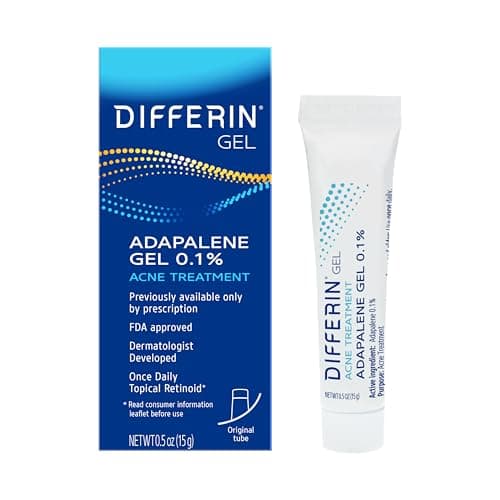
Verdict: this is the largest gap between price and pharmacological seriousness anywhere in skincare. Adapalene 0.1% is a genuine retinoid — a synthetic third-generation one, FDA-approved for acne, available without a prescription since 2016 — and it costs about ten dollars. It clears comedonal acne, improves texture over months, and it is the one product on this site we would call a treatment rather than skincare. It also has a real purging phase, a real drying effect, and a hard contraindication in pregnancy. Buy it for the right reasons and it is extraordinary value; buy it casually and you will have an unpleasant six weeks.
Our method, stated plainly: we did not lab-test this gel. We decoded the published ingredient list and drug facts panel, compiled the documented specifications, and compared it against the other retinoids in the category — the method described in full on how we review. It is worth adding that adapalene, unlike most of what we cover, is a regulated over-the-counter drug rather than a cosmetic, so its label carries actual drug facts rather than marketing.
Who it's for
Comedonal and mild-to-moderate inflammatory acne — blackheads, whiteheads, the persistent small bumps that no cleanser touches. It is also, incidentally, an excellent anti-aging retinoid: because it is a true retinoid with no conversion step, it acts on texture and fine lines the same way a prescription retinoid does. That dual action is why it appears in both our acne roundup and our retinol roundup.
Who it is not for: anyone pregnant or trying to conceive — topical retinoids are avoided entirely, and this is the strongest one you can buy without a prescription. Anyone whose skin is currently raw, sunburned or eczematous. Anyone who has never used a retinoid and wants an easy introduction; start with an encapsulated retinol and work up. And anyone with hormonal cystic acne, which forms too deep for a topical to resolve and warrants a doctor.
The ingredient list, decoded
The active is adapalene 0.1%, a naphthoic acid derivative that binds selectively to specific retinoic acid receptors. That selectivity is the design story: it delivers retinoid effects on follicular keratinization with less of the general irritation that tretinoin produces, which is precisely why it was the one chosen to go over the counter.
The base is deliberately spare: carbomer 940 as the gelling agent, edetate disodium as a chelator, methylparaben as preservative, poloxamer 182, propylene glycol, purified water and sodium hydroxide for pH. It is oil-free and fragrance-free. There is nothing here to soothe or moisturize — this is a drug vehicle, not a skincare formula, and that is why a moisturizer over the top is mandatory rather than optional.
The first six weeks, honestly
Weeks one to two: little visible change, possibly some dryness and tightness. Weeks two to six: the purge. Adapalene accelerates the surfacing of microcomedones that were already forming beneath the skin, so a genuine increase in breakouts — in the areas you normally break out — is expected. Peeling around the nose and mouth is common. This is the phase where most people quit, and quitting here means enduring the cost and getting none of the benefit. Weeks eight to twelve: clearing. The published expectation for adapalene is meaningful improvement at around twelve weeks, and the manufacturer says so on the box.
To distinguish purging from a genuine reaction: purging happens where you normally break out and resolves; a reaction spreads to new areas or brings burning, swelling and persistent rawness. Our purging vs breakout guide walks through the distinction properly.
How to survive it
- A pea-sized amount for the entire face. Not per zone. More does not work faster; it only irritates.
- Every third night to start, on completely dry skin, building to nightly over six to eight weeks.
- Moisturizer every single time. A ceramide lotion before and after — the sandwich method — cuts the irritation substantially.
- Nothing else active. No acids, no scrubs, no benzoyl peroxide in the same sitting while you adjust.
- Sunscreen daily, without exception. Retinoids increase photosensitivity; see our sunscreen picks.
How it compares
Against over-the-counter retinols — CeraVe, RoC, Neutrogena — adapalene is simply stronger, because it requires no conversion in the skin. Against prescription tretinoin, it is somewhat gentler and better tolerated for many people, which is the trade its receptor selectivity buys. Against benzoyl peroxide, it treats a different aspect of acne (keratinization rather than bacteria), and the two are frequently used together on alternating schedules. Against azelaic acid, it is far more potent and far less comfortable.
The verdict in one line
The best value in the entire category if you have comedonal acne and the patience for a twelve-week runway — and the wrong first retinoid for anyone who wants a gentle introduction.