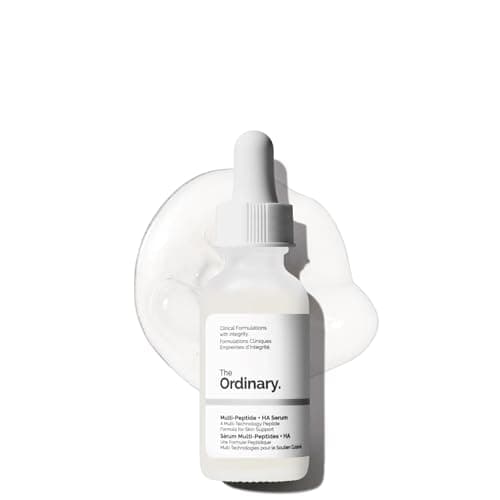
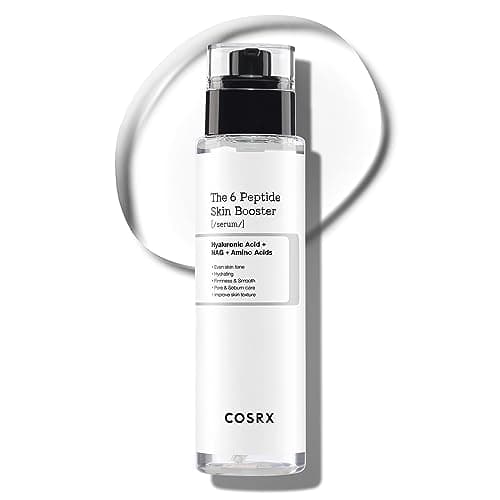
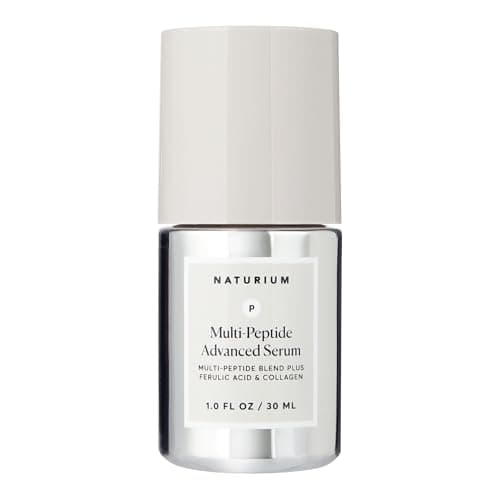
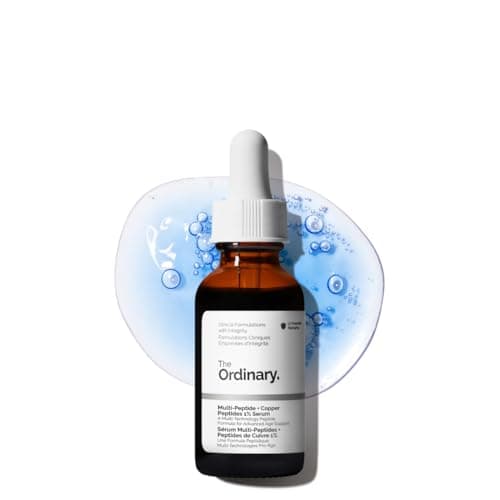
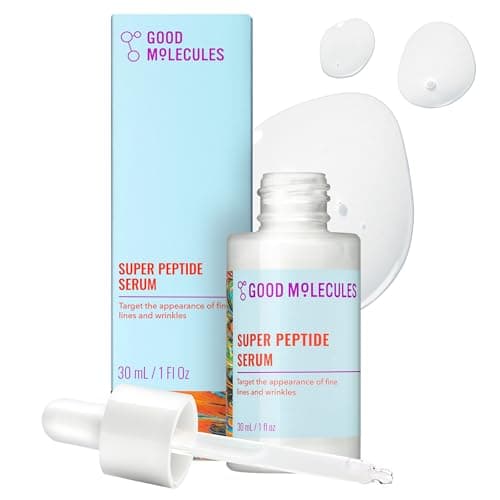
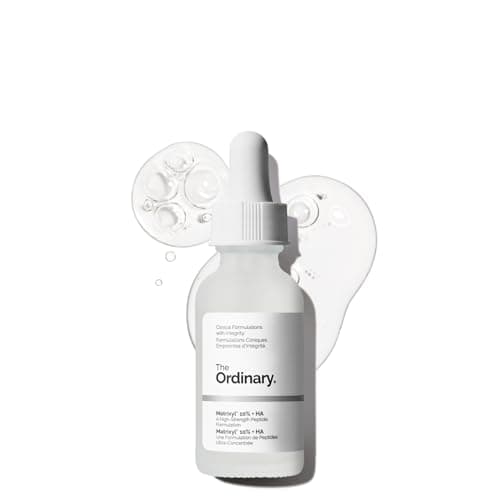
Almost every peptide serum on the shelf shares one problem: it will not tell you how much peptide is in it. Peptides work at very low concentrations, which conveniently means a brand can name an impressive-sounding one, use a trace, and never publish a number. Exactly one product in this roundup states a percentage on the label, it is also the cheapest thing here, and that is why it wins.
What peptides actually are: short chains of amino acids used as signaling molecules. The theory is that a fragment resembling a piece of broken collagen reads to your skin as damage, prompting it to build more. It is an elegant mechanism and a plausible one. It is also, in most commercial products, considerably less proven than the packaging implies — the honest breakdown of the four peptide families and what each has behind it is in our peptides guide. This page assumes you have decided to buy one anyway, which is a perfectly reasonable decision: peptides are gentle, they layer with almost everything, and they are the sensible option for skin that cannot tolerate a retinoid.
So we ranked on the things you can actually verify from a label. First, are the peptides named individually — "palmitoyl tripeptide-1" tells you something, "peptide complex" tells you nothing. Second, is a concentration disclosed, which almost nobody does. Third, where the peptides sit on the ingredient list, because a peptide listed after the preservatives is present in trace amounts. Fourth, whether the rest of the formula earns its keep on its own, since most peptide products are decent moisturizers first. And fifth, routine compatibility — one popular pick here comes with a manufacturer warning that rules out half your shelf.
Two expectations before you scroll. Peptides are slow: collagen remodeling takes months, and anything you notice in week two is hydration, not new collagen. And peptides are not a retinoid replacement in strength, only in tolerability — if your skin can handle a retinoid, that is still the better-evidenced choice, and our anti-aging roundup ranks those. Prices below are pulled live and date-stamped.
Concentration opacity is the whole problem
Peptides are active at very low concentrations. That is a real formulation fact, and it is also the perfect cover story: a brand can print an impressive peptide name on the front, include a fraction of a percent, and defend it on the grounds that peptides work at low levels anyway. Because cosmetic ingredient lists only have to be in descending order down to 1%, and peptides are almost always below that line, the label cannot settle it either.
There are only two things you can do about this. The first is to look for the rare product that publishes a number — in this roundup that is the Matrixyl bottle, at a stated 10% combined, and the copper formula, at a declared 1% GHK-Cu. The second is to read where the peptide falls on the list. If it appears after the phenoxyethanol and the xanthan gum, as in the budget pick here, it is present in trace quantities. That does not make the product bad. It makes it a hydrating serum with a peptide name on it, and it should be priced accordingly. Our guide to reading an ingredient list explains the 1% line in full.
Named peptides beat "peptide complex"
A named peptide is a checkable claim. Palmitoyl tripeptide-1 and palmitoyl tetrapeptide-7 are the two halves of Matrixyl 3000; palmitoyl tripeptide-38 is Matrixyl Synthe'6; acetyl hexapeptide-8 is Argireline; copper tripeptide-1 is GHK-Cu. You can go and read what has been published on each. "Peptide complex", "youth peptide blend" and "collagen-boosting peptides" are not ingredients, they are copy, and they are usually there because the specific peptide is either unremarkable or barely present.
The four families, briefly, and what each is for:
- Signal peptides (Matrixyl types) have the most credible case for firmness and fine lines. Every product here contains at least one.
- Copper peptides (GHK-Cu) carry a trace mineral and have the most interesting wound-healing literature — and the most layering restrictions.
- Neurotransmitter-inhibiting peptides (Argireline, SYN-AKE) are the "topical Botox" family. They are sold hardest and the expression-line claims are the thinnest.
- Enzyme-inhibiting peptides are the least studied of the four in cosmetic use and rarely the reason to buy anything.
"Collagen" on the front of a peptide bottle
Two of the products here have collagen in the name or the formula, and they are instructive in opposite directions. The COSRX booster says Collagen on the label and contains none, which is correct — hydrolyzed collagen is far too large a molecule to reach the layer where collagen is actually made, so leaving it out and using peptides instead is the sensible formulation. The Naturium serum does the reverse: it includes hydrolyzed collagen in the ingredient list, where it functions as a decent surface humectant and a marketing story, not as anything that rebuilds structure. Neither is a scandal. Both are reasons to buy on the peptide list rather than on the word collagen.
Watch the layering restrictions before you buy
This is the practical trap in the category and nobody puts it in a headline. DECIEM's own guidance for the copper peptide serum advises against combining it with direct acids, direct vitamin C, resveratrol and ferulic acid, salicylic acid, retinoids and strong antioxidants. Read that list against a normal routine and you will notice it excludes most of what people already own. The product is not defective — copper peptides genuinely are reactive with strong antioxidants and low-pH actives — but it means buying it is a decision about your whole week, not just about one bottle.
Every other serum on this page layers freely. If you are running an exfoliating acid or a vitamin C serum already, pick one of those and keep your routine intact.
Where a peptide serum actually belongs
After cleansing, before moisturizer, morning or night — peptides are not light-sensitive and they do not need a night to themselves (except the copper one). They are the reasonable choice in three specific situations: your skin cannot tolerate a retinoid, you are pregnant or breastfeeding and retinoids are off the table, or you want to add something gentle to a routine that is already working. They are the wrong choice if you are looking for the strongest available anti-aging active, because that is a retinoid and it is not close.
The comparison most people are actually making before they buy one is peptides against a retinoid, and it is worth making explicitly: our peptides vs retinol page puts the two categories side by side on evidence, tolerance and the three situations where the peptide is the right call.
Set the timeline honestly: twelve weeks. Collagen remodeling is slow and anything visible in the first fortnight is hydration from the glycerin and hyaluronate. If you want the firmer evidence base instead, the retinol roundup ranks the strengths to start at, and the peptides guide lays out exactly how the two compare.