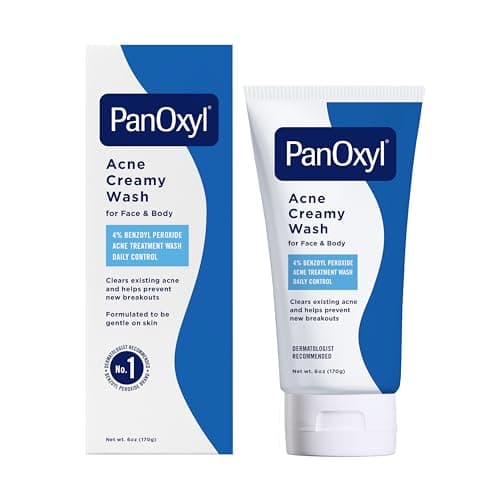
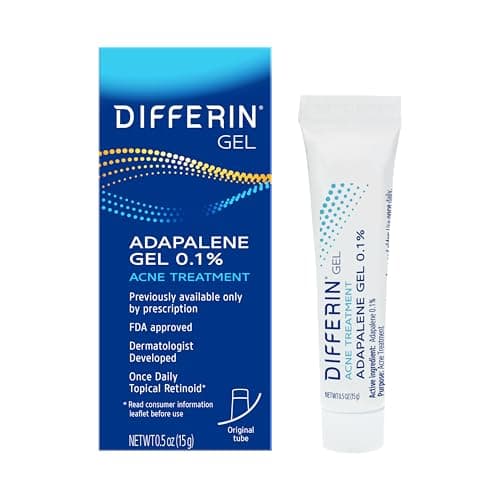
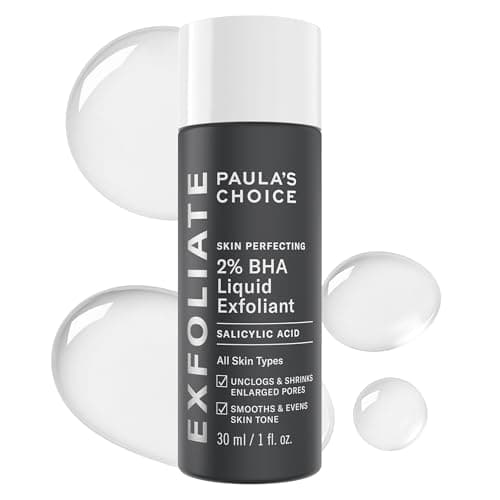
Look at your face first. If the problem is blackheads, closed bumps and rough texture, use salicylic acid — Paula's Choice 2% BHA is the pick. If the problem is red, sore, raised spots, use benzoyl peroxide — PanOxyl Acne Creamy Wash 4%. Most people have some of both, which is why the fourth pick on this page is adapalene: an over-the-counter retinoid that works on the clogging and the inflammation at once, and the single most useful bottle in the aisle for mixed acne.
These two actives are shelved together and sold interchangeably, and they do not do the same job at all. One is an exfoliant that works inside the pore. The other is an antibacterial that works on the organism feeding the inflammation. Choosing by brand or by which bottle is cheaper is how people spend six months on the wrong active.
What each one does
Salicylic acid is a beta hydroxy acid, and its trick is being oil-soluble. That is the whole reason it matters in acne: it dissolves into sebum, so it gets down inside a pore and loosens the plug of dead cells and oil sitting in it. It is keratolytic — it breaks up the stuff blocking the follicle — and mildly anti-inflammatory. What it is poor at is killing bacteria. Our salicylic acid guide goes through the strengths and the leave-on versus wash-off question, and AHA vs BHA explains why the oil-soluble one is the acne acid.
Benzoyl peroxide is an antibacterial, and it is legally a drug. It releases oxygen species inside the follicle that kill Cutibacterium acnes, the organism whose overgrowth drives the inflammatory cascade behind a red, sore spot. It is also comedolytic and anti-inflammatory in its own right, and — importantly — bacteria do not develop resistance to it, which is why dermatologists pair it with antibiotics. Because it is an OTC monograph drug, the percentage and the directed contact time are legally printed on the Drug Facts panel, which makes this the one category you can actually check. Our benzoyl peroxide roundup ranks the category off those registered labels.
Match the active to the lesion
| What is on your face | What it is | Which active |
|---|
| Blackheads on the nose and chin | Open comedones — oxidised plugs | Salicylic acid |
| Small closed bumps you can feel but barely see | Closed comedones | Salicylic acid, or adapalene |
| Rough, uneven texture across the cheeks | Retained dead cells plus micro-clogging | Salicylic acid |
| Red, raised, tender spots with a visible head | Inflammatory papules and pustules | Benzoyl peroxide |
| Deep, painful lumps that take weeks | Nodulocystic acne | Neither alone — see a dermatologist |
| Back and chest breakouts | Usually inflammatory, over a large area | Benzoyl peroxide wash |
| Some of all of the above | Mixed acne, which is most people | Adapalene, or a BPO wash plus a BHA on alternate nights |
The practical differences that decide it
- Benzoyl peroxide bleaches fabric. Towels, pillowcases, the collar of a white shirt. This is not a minor annoyance — it is the single most common reason people abandon it. Use white towels and old pillowcases.
- Salicylic acid is the better maintenance product. A 2% leave-on used a few times a week keeps pores clear indefinitely with very little drama. Benzoyl peroxide is a harder product to live with long-term.
- Format changes the dose more than the percentage does. A wash is on your face for twenty seconds to two minutes; a leave-on sits there for hours. A 10% wash can deliver less active time than a 2.5% gel, which is why our benzoyl peroxide roundup ranks on contact time rather than on strength.
- Dryness arrives differently. Benzoyl peroxide dries and can peel from the first week. Salicylic acid is gentler but will over-exfoliate if you use it daily on skin that does not need it.
- Benzoyl peroxide has a storage caveat. It degrades with heat, and the AAD advises keeping it at room temperature or cooler and replacing it every few months. Do not leave the tube in a hot car or a sunlit bathroom.
The short answer
Quick picks
| # | Product | Best for | Score | Price |
|---|
| 01 | Paula's Choice 2% BHA Liquid ExfoliantThe salicylic acid to buy, and the right first move if your acne is blackheads, closed bumps and texture rather than red sore spots. 2% in a well-judged leave-on liquid, a stated percentage, fragrance-free, and the most consistently well-regarded product in the category. Three nights a week is plenty to start. | Best for blackheads, bumps and texture | | $15.00·Amazon |
| 02 | PanOxyl Acne Creamy Wash, 4% Benzoyl PeroxideThe benzoyl peroxide to start with, and the answer when the complaint is red, sore spots. 4% in a creamy, non-foaming base whose own Drug Facts directions call for one to two minutes on the skin — the longest directed contact time of any wash we have checked, which is what actually determines how much active the follicle sees. | Best for red, inflamed spots | | $10.19·Amazon |
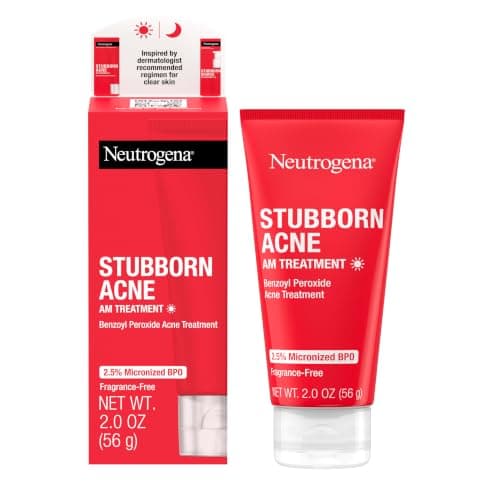
| 03 | Neutrogena Stubborn Acne AM Face TreatmentThe leave-on benzoyl peroxide, at the strength the evidence actually supports. 2.5% on the Drug Facts panel in a gel that stays on the face, which buys hours of contact instead of seconds. If one spot or one area keeps coming back, this is the targeted version of the active. | Best leave-on for recurring spots | | $12.97·Amazon |
| 04 | Differin Adapalene Gel 0.1%The answer to the question most people are really asking. Adapalene is a retinoid, not a third version of the two actives above, and it works on the clogging and the inflammation at the same time — which is why it is the better single purchase for mixed acne. It was prescription-only until 2016 and it is still the most effective thing in the aisle. | Best single product for mixed acne | | $12.97·Amazon |
#ad · Live prices from the Amazon Product API, as of October 19, 2026. Where we have no verified live price, we show none — a gap beats a number that has rotted.
In detail
The picks, in full
Best for blackheads, bumps and texture
Paula's Choice 2% BHA Liquid Exfoliant
2% salicylic acidBHA (oil-soluble)4 fl ozFragrance-free
The salicylic acid to buy, and the right first move if your acne is blackheads, closed bumps and texture rather than red sore spots. 2% in a well-judged leave-on liquid, a stated percentage, fragrance-free, and the most consistently well-regarded product in the category. Three nights a week is plenty to start.
- Effectiveness
- 9
- Formulation
- 9
- Gentleness
- 7
- Transparency
- 9
- Value
- 8
Pros
- +Strength is stated, which is still not universal in this category
- +Leave-on format gives the acid real contact time inside the pore
- +Works on texture as well as on comedones, which a BPO wash does not
- +Easy to live with long-term — no bleaching, no peeling phase
Cons
- −Does comparatively little for inflamed, bacterial spots
- −Daily use over-exfoliates plenty of faces; start at three nights
- −Priciest per ounce of the four here
Don't buy this if…
…your acne is red, raised and sore. This is the wrong mechanism for that — buy the benzoyl peroxide below.
Best for red, inflamed spots
PanOxyl Acne Creamy Wash, 4% Benzoyl Peroxide
4% benzoyl peroxideCreamy baseShort-contact useOTC acne drug
The benzoyl peroxide to start with, and the answer when the complaint is red, sore spots. 4% in a creamy, non-foaming base whose own Drug Facts directions call for one to two minutes on the skin — the longest directed contact time of any wash we have checked, which is what actually determines how much active the follicle sees.
- Cleansing
- 8
- Gentleness
- 5
- Formula
- 8
- Texture
- 7
- Value
- 9
Pros
- +Longest directed contact time of the washes, which is the variable that matters
- +Creamy base is less stripping than the foaming 10% version
- +Cheapest per ounce on this page, and sold everywhere
- +Rinse-off format limits the dryness a leave-on causes
Cons
- −Bleaches towels, pillowcases and clothing — no way around it
- −Drying in the first fortnight; pair it with a moisturizer
- −Degrades with heat, so it needs sensible storage and replacing
Don't buy this if…
…your acne is purely blackheads and texture. A wash that kills bacteria is not treating a clogging problem.
Best leave-on for recurring spots
Neutrogena Stubborn Acne AM Face Treatment
Benzoyl peroxide 2.5% (Drug Facts)Leave-on gel8 inactive ingredients2.0 oz
The leave-on benzoyl peroxide, at the strength the evidence actually supports. 2.5% on the Drug Facts panel in a gel that stays on the face, which buys hours of contact instead of seconds. If one spot or one area keeps coming back, this is the targeted version of the active.
- Strength vs evidence
- 10
- Contact time
- 9
- Base formula
- 6
- Size vs shelf life
- 9
- Value
- 8
Pros
- +2.5% leave-on is the best-supported strength-and-format combination
- +Short inactive list for a drugstore acne gel
- +Hours of contact time rather than the seconds a wash gets
- +Small tube, which suits a product that degrades over months
Cons
- −Leave-on benzoyl peroxide is the drier option by a distance
- −Bleaching risk is worse than a wash because it stays on
- −Base formula is unremarkable
Don't buy this if…
…your breakouts cover large areas like the back or chest. A wash reaches those; a small tube of gel does not.
Best single product for mixed acne
Differin Adapalene Gel 0.1%
0.1% adapaleneOTC prescription-strengthOil-free gelFragrance-free
The answer to the question most people are really asking. Adapalene is a retinoid, not a third version of the two actives above, and it works on the clogging and the inflammation at the same time — which is why it is the better single purchase for mixed acne. It was prescription-only until 2016 and it is still the most effective thing in the aisle.
- Efficacy
- 9
- Tolerability
- 5
- Formula
- 8
- Texture
- 6
- Value
- 10
Pros
- +Treats comedones and inflammatory lesions in one product
- +Prescription-strength and prescription-evidence, sold over the counter
- +Cheapest long-run cost of anything here — a tube lasts months
- +Also improves post-acne texture over time, which neither other active does
Cons
- −A proper retinisation period: dryness and flaking for two to six weeks
- −Needs nightly use and real patience — twelve weeks before judging it
- −Not for use in pregnancy, like every topical retinoid
Don't buy this if…
…you are pregnant or breastfeeding, or you want something that works this week. This is the slow, high-ceiling option.
Can you use both?
Yes, carefully, and the sensible way is to separate them rather than to layer them. Benzoyl peroxide as a wash in the morning and salicylic acid as a leave-on two or three nights a week is a well-tolerated arrangement that covers both mechanisms. What goes wrong is using both as leave-ons every day, which produces a dry, irritated face that is more likely to break out, not less.
If you are adding adapalene, give it the routine on its own for the first month. Then either a benzoyl peroxide wash in the morning or the BHA a couple of nights a week — not both, not immediately. Our acne routine page sets the sequence out night by night.
How long to give each one
- Benzoyl peroxide: two to four weeks for inflamed spots to settle noticeably, and it keeps improving for a couple of months.
- Salicylic acid: two to four weeks on blackheads and texture. If nothing has changed by six weeks, the active is not your problem.
- Adapalene: twelve weeks, and it is normal for things to look slightly worse at weeks two to four. That is purging rather than a breakout, and quitting during it is the most common mistake in the category.
Our timelines guide sets the same expectations for every other category, and the rule across all of them is the same: twelve weeks before you judge an active, and one change at a time.
Two things neither active fixes
Deep, painful cystic lesions. Nodules and cysts that last weeks and scar are not an over-the-counter problem. They respond to prescription treatment, and the cost of waiting is permanent scarring. See a dermatologist rather than a fourth bottle.
The marks left behind. The flat brown or red patches after a spot has gone are post-inflammatory pigment, and no acne active clears them quickly — that is the whole subject of our dark spots roundup, and sunscreen does more for them than anything on this page. If your main grievance is marks rather than spots, you are on the wrong page.
If you want the full ranking of either category
This page is a comparison, not a roundup. For the full benzoyl peroxide field ranked off FDA-registered Drug Facts labels, see best benzoyl peroxide. For the exfoliant category including the AHAs, see best chemical exfoliant. And for a complete acne routine built around whichever active you land on, best skincare for acne ranks the whole shelf.
How we picked
We did not lab-test this gear
Everyone in this category says they tested twenty products. We have not lab-tested any of these, and we say so. What we did instead: compiled the published specifications, decoded the ingredient (INCI) lists active by active, ran the math where there was math to run, and scored each product against a published rubric. The scores are judgments from documented research — not measurements we took, because we do not have a lab and we will not pretend we do. Where a number came from someone else's work, we name them in Sources.
Questions
Frequently asked
Which is better, salicylic acid or benzoyl peroxide?+
Neither — they treat different lesions. Salicylic acid is oil-soluble, gets into the pore and clears blackheads, closed bumps and texture. Benzoyl peroxide kills the bacteria driving red, sore, inflamed spots. Look at what is actually on your face and pick accordingly; if it is a mix, adapalene handles both.
Can I use salicylic acid and benzoyl peroxide together?+
Yes, if you separate them. A benzoyl peroxide wash in the morning and a 2% salicylic acid leave-on two or three nights a week is well tolerated. Using both as daily leave-ons is how people end up with a dry, irritated face that breaks out more.
Which is better for hormonal acne?+
Hormonal acne is usually inflammatory and clustered along the jaw, so benzoyl peroxide is the more useful of the two — but the honest answer is that persistent hormonal acne is often a prescription conversation rather than a shelf one. A topical active manages it; it does not address the driver.
Does salicylic acid kill acne bacteria?+
Not meaningfully. It is a keratolytic exfoliant with mild anti-inflammatory activity — it clears the plug rather than the organism. If bacterial inflammation is what is driving your spots, benzoyl peroxide is the active with that mechanism.
Is 10% benzoyl peroxide better than 2.5%?+
Not for a leave-on. The classic comparison found 2.5% worked about as well as 10% with less irritation, which is why 2.5% is the sensible leave-on strength. Washes are a different calculation, because a wash is only on the skin for seconds to a couple of minutes — there, a higher percentage with the directed contact time is defensible.
Which one is safe during pregnancy?+
Topical benzoyl peroxide and salicylic acid are both commonly listed as usable in pregnancy, while topical retinoids including adapalene are the clear avoid. Specifics are a question for your own doctor or midwife — our pregnancy-safe page covers the whole routine with that caveat throughout.
Receipts
Sources
We do not run a testing lab, and we do not pretend to. Where a measured number came from someone else's work, we name them and link them. Where we could not verify something, we say so on the page rather than quietly leaving it out. Read our full method.