Explainers · Learn
Does skincare expire? Yes — and the date on the box is not the useful one
How to read the little open-jar symbol, how long each product type really lasts once opened, and which actives quietly stop working long before anything looks wrong.
We earn a commission when you buy through our Amazon links, at no extra cost to you. It never changes a verdict, and we say so when the cheaper product is the better buy. How this works.
Yes, skincare expires — in two separate ways that get confused. A product can become unsafe, because its preservative system has been exhausted and it is growing something. Or it can become ineffective, because the active has oxidized into an inert compound. The second happens far more often, is invisible, and is the one worth understanding.
The two dates on the packaging
The PAO symbol— a small open jar with a number and the letter M, like "12M" — is the Period After Opening. It means the manufacturer expects the product to remain stable and safe for twelve months after you first open it. This is the number that matters for the great majority of skincare, and it starts running the day the seal breaks, not the day you buy it.
A printed expiry date appears on products legally classed as over-the-counter drugs — sunscreens and acne treatments among them — where the regulator requires a demonstrated shelf life for the active ingredient. On a sunscreen, this one is serious: an expired sunscreen may not deliver its stated SPF, and there is no way to tell by looking.
Many cosmetics carry neither, which is legal — under FDA rules, expiration dating is not required for most cosmetics. Absence of a date is not a sign of quality either way.
Realistic shelf lives
| Product | After opening | Why |
|---|---|---|
| Vitamin C serum (pure ascorbic acid) | 3–6 months | Oxidizes on contact with air and light. Turns yellow, then brown. |
| Retinol / retinal | 6–12 months | Degrades with light and air. Opaque, airless packaging extends this. |
| Sunscreen | Use by the printed date; 12 months once opened | Filters degrade. This is a protection issue, not a cosmetic one. |
| Moisturizer in a pump | 12 months | No finger contact, so the preservative system stays ahead. |
| Moisturizer in a tub | 6–9 months | Every dip introduces organisms. The format is the limiting factor. |
| Cleanser | 12–24 months | Robustly preserved, rinsed off, low risk. |
| Exfoliating acids (AHA/BHA) | 12–24 months | Chemically stable. Among the longest-lived actives. |
| Niacinamide serum | 12 months | Stable in water; the base is usually what ages first. |
| Mascara / eye products | 3 months | Contact with the eye area. The one to be strict about. |
| Anything without a preservative | Days | See our DIY skincare guide. |
How to tell if something has actually gone off
Color change is the most reliable signal. Vitamin C serum going from clear to yellow to orange-brown is the textbook case — the ascorbic acid has oxidized into dehydroascorbic acid and then further, and it is no longer doing what you bought it for. A white cream turning yellow is the same story in a different formula.
Separation — a watery layer sitting on top, or an oil phase splitting out — means the emulsion has failed. Shaking it does not fix it. Texture change, from smooth to grainy, lumpy or unusually thin, points the same way.
Smellis the most obvious and the least reliable, because fragrance masks it. A fragrance-free product that develops a sour, rancid or "off crayon" note has spoiled.
Anything visible growing — dark specks, fuzz, cloudiness in a clear product. Bin it without deliberating.
The uncomfortable part: an oxidized active looks and smells completely normal in most formulas. A retinol serum that has spent a year on a sunny windowsill is not dangerous. It is just no longer a retinol serum.
What actually makes products die faster
- Storing them in the bathroom. Heat and humidity accelerate degradation and challenge preservative systems. A shower room is the worst place in the house for skincare and the place everyone keeps it.
- Sunlight. Retinoids and vitamin C in particular. A clear bottle on a windowsill is a slow disposal method.
- Jars and dipping fingers. The reason a tub cream has a shorter safe life than the identical formula in a pump. Use a small spatula if you like the tub.
- Leaving the lid off, especially on anything that oxidizes.
- Buying in bulk. Three sunscreens on sale is only a saving if you get through them before the printed date.
Does refrigerating skincare help?
For a few specific products, modestly. Cool, dark storage slows the oxidation of vitamin C and, to a lesser extent, retinoids, and it slows microbial growth in anything already opened. That is the honest case for a skincare fridge, and it is a narrower case than the marketing makes.
What refrigeration does not do: preserve an unpreserved product indefinitely, improve absorption, or extend a PAO date. It also does not suit everything — some emulsions separate when cold, and thick creams become unpleasant to spread. A drawer away from the shower is a genuine upgrade over a bathroom shelf and costs nothing.
A sensible habit
Write the month you opened it on the bottom of the bottle with a marker. Ten seconds, and it converts the PAO symbol from an abstraction into a usable date. Do it for your sunscreen, your vitamin C and your retinol at minimum — those are the three where using a dead product has a real cost, because you keep applying it and believing it is working.
Two related questions come up whenever shelf life does. The first is whether cold storage helps enough to justify buying something for it — skincare fridge vs mini fridge answers that without the marketing. The second is the suspicion that a product has quietly stopped working, which is usually a plateau, a season or an oxidised bottle rather than tolerance: does skincare stop working?
Under $40
Two cheap fixes for the packaging problem
Almost everything that shortens a product's life is contact — fingers, air, heat. Neither of these extends a PAO date, because nothing does. They just stop you shortening it: one keeps hands out of the tub, and the other lets you take a week's worth of your routine on a trip instead of subjecting the full bottle to a hot car and a hotel bathroom.
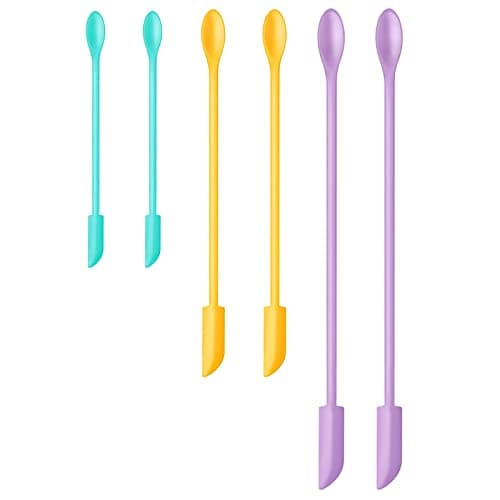
barsone
Silicone Jar Spatulas (6-pack)
Keeps fingers out of tub creams. Every dip introduces organisms, which is the whole reason an identical formula lasts roughly 6-9 months in a jar and about 12 in a pump.
Skip it if everything on your shelf is in a pump or a tube — then there is nothing to scoop and nothing to fix.
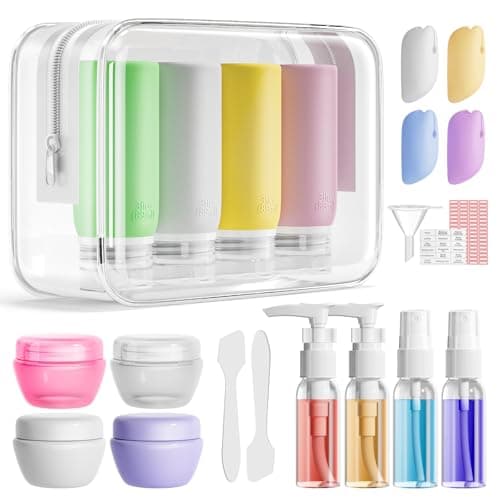
Muslish
Silicone Travel Bottles, TSA-sized (21-piece)
Decants a working routine into carry-on sizes, which is the difference between keeping your actives going on a trip and defaulting to hotel soap for a week.
Skip it if you meant to decant for storage rather than travel. Air and hands are what age a product, so fill these for the trip and bin the remainder after.
#ad · Live Amazon prices as of October 18, 2026. Where we have no verified live price we show none and the button checks it for you. We may earn a commission, at no extra cost to you — it never changes what we recommend.
How we picked
We did not lab-test this gear
Everyone in this category says they tested twenty products. We have not lab-tested any of these, and we say so. What we did instead: compiled the published specifications, decoded the ingredient (INCI) lists active by active, ran the math where there was math to run, and scored each product against a published rubric. The scores are judgments from documented research — not measurements we took, because we do not have a lab and we will not pretend we do. Where a number came from someone else's work, we name them in Sources.
Questions
Frequently asked
Does skincare expire?
What does 12M mean on skincare packaging?
Can I use expired sunscreen?
Why did my vitamin C serum turn orange?
Should I keep skincare in the fridge?
Keep reading
Related
- Best skincare fridgesThe honest case for cold storage, and its limits.
- Vitamin C, explainedThe active that expires fastest and most visibly.
- DIY skincare at homeWhy an unpreserved homemade product lasts days.
- Retinol, explainedWhy packaging matters as much as percentage here.
- Best face sunscreensThe one product where an expiry date has real consequences.
- Cooluli mini skincare fridge reviewThe cold-storage option, and the few products it genuinely helps.
Receipts
Sources
- U.S. FDA — Shelf life and expiration dating of cosmetics
- U.S. FDA — Sunscreen: how to help protect your skin from the sun
- American Academy of Dermatology — How to store skin care products
We do not run a testing lab, and we do not pretend to. Where a measured number came from someone else's work, we name them and link them. Where we could not verify something, we say so on the page rather than quietly leaving it out. Read our full method.