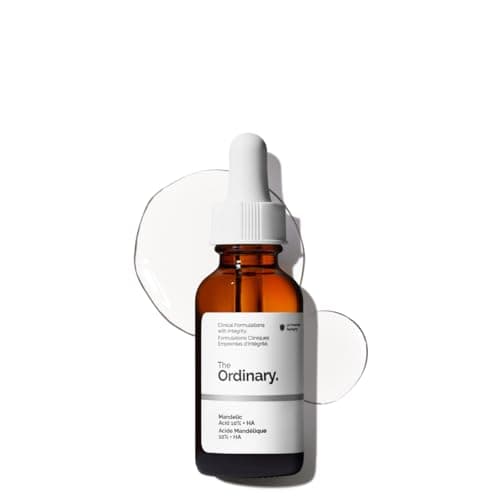
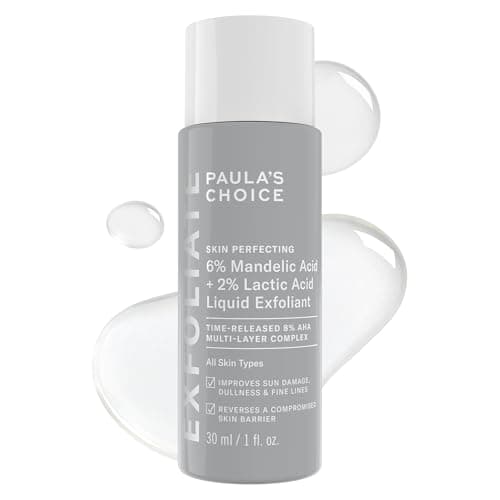
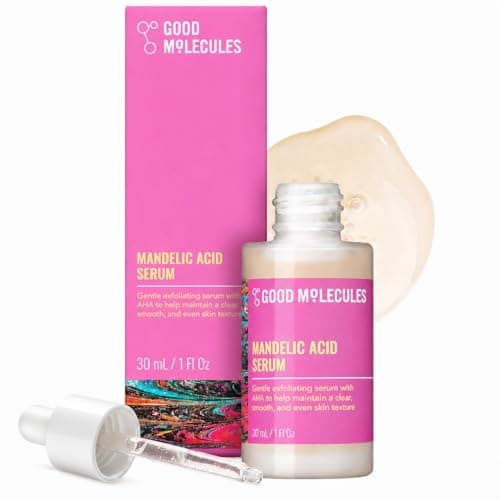
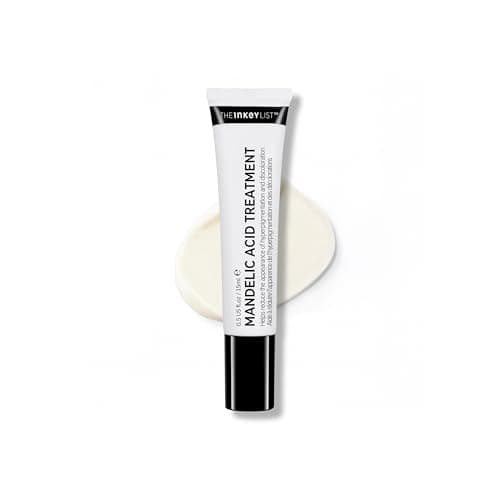
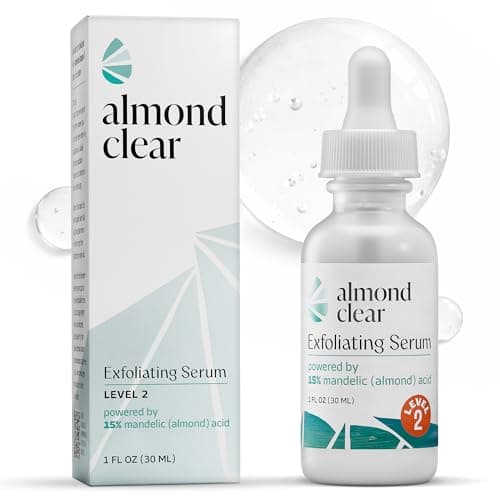
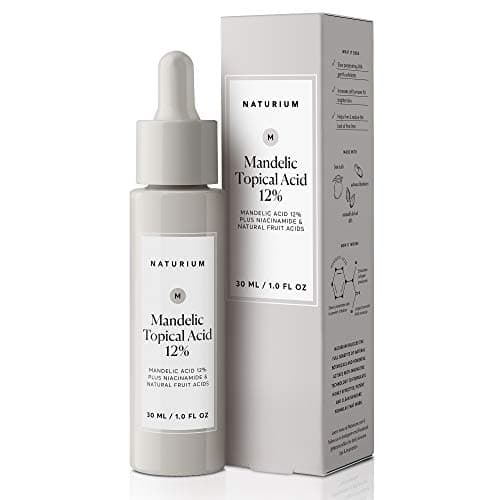
Buy the Naturium Mandelic Topical Acid 12%. It is the highest stated mandelic strength here, the number is printed rather than implied, and it carries niacinamide in the same bottle for the redness an acid can provoke — the right pick for anyone who has tried glycolic acid and found it too much. If you want to find out whether this acid suits you for the price of a sandwich, The Ordinary Mandelic Acid 10% + HA is the cheapest honest entry in the category. And if your problem is on your back, chest or shoulders rather than your face, skip straight to Almond Clear Level 2, which is formulated for exactly that.
Mandelic acid is the AHA almost nobody starts with and quite a lot of people should. Our mandelic acid guide covers the chemistry; this page is the shopping list, and it exists because the guide had no commercial destination of its own. If you have not settled on an acid family at all, start with AHA versus BHA instead — and note that our chemical exfoliant roundup ranks ACROSS the families, where this page ranks within one.
Why molecule size is the whole argument
Alpha hydroxy acids all do the same job — loosen the bonds holding dead cells at the surface so they shed more evenly — and they differ mainly in how fast they get in. That is largely a function of molecular weight. Glycolic acid is the smallest AHA at roughly 76 g/mol, which is why it works quickly and why it stings. Lactic acid sits in the middle at about 90. Mandelic acid is roughly 152 g/mol — about twice the size of glycolic — so it penetrates more slowly and more evenly, and the irritation per unit of exfoliation is lower.
Slower is not a euphemism for weaker. It means the exposure is spread out instead of arriving all at once, which matters for three groups in particular:
- Reactive and rosacea-prone skin, where glycolic is often simply intolerable. See our sensitive-skin roundup before layering anything.
- Deeper skin tones, where aggressive exfoliation carries a real risk of post-inflammatory hyperpigmentation — the mark left behind can outlast the thing you were treating. Our dark spots roundup covers that pigment problem directly.
- Acne-prone skin, because mandelic acid is the one AHA with meaningful antibacterial activity reported alongside its exfoliating action. It is still not a substitute for the actives in our salicylic acid versus benzoyl peroxide comparison, but it is the AHA that does something in acne rather than just around it.
What we ranked on
Four criteria, in this order. They are the reason the ranking looks different from a star-rating average.
- Is the strength stated?This is the single most useful thing a label can do, and three of the six products here do it. “Mandelic complex” is a blend name, not a dose, and a product that will not tell you its percentage cannot be compared with one that will. Our ingredient-list checker explains how far the INCI order gets you when the front of the box stays quiet.
- Is it mandelic acid, or mandelic plus something faster? Several products blend in lactic or glycolic acid. That is a legitimate formula — it is not the gentlest-AHA product you thought you were buying.
- Leave-on or wash-off, and at what size. Contact time does more than percentage. A half-ounce bottle at full price is a shorter course of treatment than the number on the shelf suggests.
- The fragrance screen. Applied to skin you are deliberately exfoliating, added fragrance is the most avoidable irritant on the list.
What we did not rank on: marketing claims about brightening, any “clinically proven” line that does not name a trial, and user star averages, which in acid categories mostly measure how many people used too much too soon.
How to start, and how often
Two nights a week, on consecutive weeks, before you change anything. That is the whole protocol, and the most common way people fail with this acid is deciding that gentle means nightly. Mandelic is slower, not harmless.
- Nights, not mornings. Exfoliated skin is more sun-sensitive, and the product itself is better off away from daylight.
- Sunscreen the next day is not optional. Every acid page on this site says this and it remains the single most important sentence: see our sunscreen roundup.
- Moisturizer after, every time. A ceramide moisturizer over an acid is the standard pairing for a reason.
- Do not stack it with a retinoid on the same night. Alternate instead — skin cycling is the formal version of that schedule.
- Patch test first, properly: five to seven days on one spot, which is the whole method.
Mandelic against the other acids
| Acid | Approx. molecular weight | Best for | Main drawback |
|---|
| Glycolic (AHA) | ~76 g/mol | Fast surface resurfacing, dullness | The most irritating of the AHAs |
| Lactic (AHA) | ~90 g/mol | Dry and mature skin; also humectant | Still faster-penetrating than mandelic |
| Mandelic (AHA) | ~152 g/mol | Reactive skin, deeper skin tones, acne-prone | Slower visible payoff; fewer products, fewer stated strengths |
| Salicylic (BHA) | ~138 g/mol, oil-soluble | Blackheads and congestion inside the pore | Does little for surface dullness |
Our individual guides go deeper on each: glycolic, lactic, mandelic and salicylic. If you want one acid and no reading, the honest shortcut is: oily and congested, salicylic; dry and dull, lactic; reactive or prone to marks, mandelic.
Who should skip this category entirely
If your barrier is currently compromised — stinging at products that never used to sting, tight after cleansing, flaking without obvious cause — an acid is the wrong purchase this month. Fix that first with our barrier guide and come back. If you are pregnant or breastfeeding, note that topical salicylic and glycolic acids are usually listed as usable while retinoids are not — our pregnancy-safe page covers the whole routine, and the specifics belong with your own clinician. And if what you actually want is to clear blackheads rather than improve texture, the blackheads guide starts with the oil-soluble acid instead.
How we picked
We did not lab-test this gear
Everyone in this category says they tested twenty products. We have not lab-tested any of these, and we say so. What we did instead: compiled the published specifications, decoded the ingredient (INCI) lists active by active, ran the math where there was math to run, and scored each product against a published rubric. The scores are judgments from documented research — not measurements we took, because we do not have a lab and we will not pretend we do. Where a number came from someone else's work, we name them in Sources.