Skip to content
Barrier & Bloom

Education · Ingredients

Mandelic acid, explained

The largest common AHA molecule, which makes it the slowest and the kindest. Why that suits reactive skin, deeper skin tones and anyone who has failed with glycolic.

By Stephen V.Updated How we review
#ad

We earn a commission when you buy through our Amazon links, at no extra cost to you. It never changes a verdict, and we say so when the cheaper product is the better buy. How this works.

Mandelic acid is an alpha hydroxy acid derived from bitter almonds, and its defining property is size. Its molecule is roughly twice the size of glycolic acid's, so it moves into the skin more slowly and less deeply. That sounds like a disadvantage and is usually the opposite: slower penetration means less irritation, which means you can keep using it — and consistency is what actually produces results with any acid.

If glycolic acid left your face red and stinging, if you have rosacea-prone or genuinely reactive skin, or if your skin marks easily after any irritation, mandelic is the acid worth trying next. It is also mildly antibacterial, which gives it a secondary use on blemish-prone skin that a pure AHA would not have.

Why molecule size decides everything here

All AHAs work the same way — they weaken the bonds holding dead surface cells together so those cells release. What differs is how quickly the acid gets in. A small molecule like glycolic passes through the stratum corneum fast, which produces quick visible smoothing and a proportionally higher chance of stinging, redness and, on medium to deep skin tones, the post-inflammatory pigmentation that irritation triggers.

Mandelic's larger molecule diffuses in gradually and distributes more evenly. You get a gentler curve: less dramatic at four weeks, comparable at four months, and far more likely to still be in your routine at month six. That last point is the one that matters.

Who it is genuinely for

  • Reactive and rosacea-prone skin — the acid most likely to be tolerated, though anyone with rosacea should introduce any exfoliant cautiously and stop at the first sign of flushing.
  • Medium and deeper skin tones — lower irritation means lower risk of the post-inflammatory hyperpigmentation that makes aggressive exfoliation counterproductive. This is the single strongest argument for mandelic.
  • Blemish-prone skin that cannot tolerate benzoyl peroxide — the mild antibacterial character is a genuine bonus, though it is not a substitute for a real acne treatment.
  • Anyone who quit acids after a bad experience — this is the honest second attempt.

The strengths worth buying

Mandelic is normally sold at 5% to 12% for at-home use, and those numbers are not directly comparable to glycolic percentages. A 10% mandelic is roughly in the tolerability territory of a 5% glycolic, because the molecule is doing the moderating. Ten percent is the standard useful strength; 12% with supporting ingredients is a reasonable step up. Anything above that is a professional peel.

As with every AHA, the vehicle needs to be acidic — around pH 3.5 to 4 — or the acid is inert. And as with every AHA, the bottle should be opaque or the acid should be stable in light; mandelic in a clear dropper bottle left on a sunny windowsill degrades.

How to use it

At night, after cleansing, before moisturizer. Two to three nights a week, indefinitely. Because it is gentle, the temptation is to use it nightly — resist that for at least the first two months, because "gentle" and "harmless in unlimited quantity" are not the same statement.

Alternate with a retinoid rather than layering. Follow with sunscreen every morning without exception — mandelic increases UV sensitivity like any AHA, and if your reason for choosing it was avoiding post-inflammatory marks, a sunburn undoes the entire point. Our dark spots roundup covers that relationship in detail.

Honest limits

Mandelic is slow. If you are eight weeks in and disappointed, that is the ingredient working as designed rather than failing. It will not clear blackheads (that is a job for salicylic acid), it will not treat moderate or severe acne, and the antibacterial claim — while real — is modest and should not replace a proper acne routine. What it does is let skin that cannot tolerate other acids exfoliate at all, which for a lot of people is the difference between having an option and having none.

The short answer

Quick picks

#ProductBest forScorePrice
01
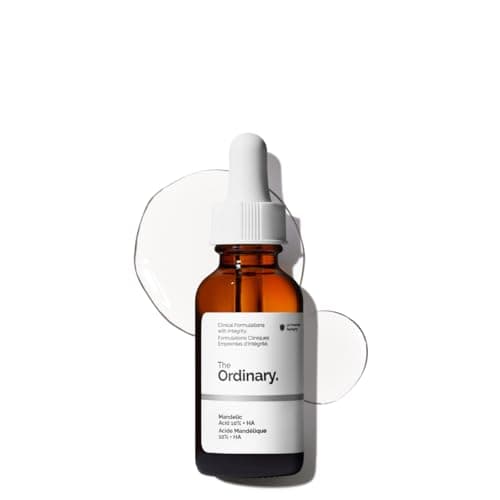
The Ordinary The Ordinary Mandelic Acid 10% + HA
The Ordinary Mandelic Acid 10% + HA

The standard reference bottle: 10% mandelic in an appropriately acidic base with hyaluronic acid, for under ten dollars. If you want to find out whether mandelic suits you, this is the cheapest honest way to do it.

Best starting point
8.6
$7.80Amazon
02
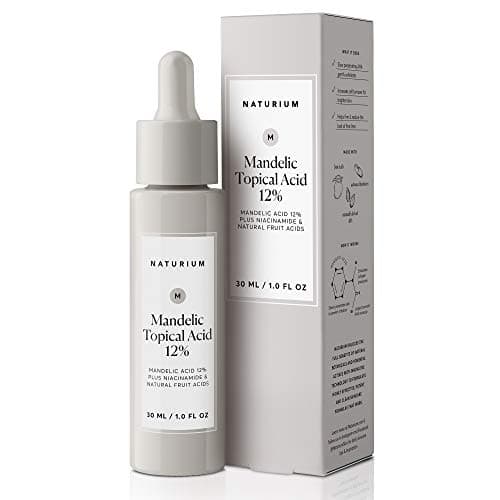
Naturium Naturium Mandelic Topical Acid 12%
Naturium Mandelic Topical Acid 12%

A step up in both strength and supporting formulation — 12% mandelic with niacinamide and additional fruit acids, in a more cosmetically elegant base. Worth the extra money if you have plateaued at 10%.

Best step up
8.0
$16.00Amazon

#ad · Live prices from the Amazon Product API, as of Aug 28, 2026. Where we have no verified live price, we show none — a gap beats a number that has rotted.

In detail

The picks, in full

01
The Ordinary The Ordinary Mandelic Acid 10% + HA

Best starting point

The Ordinary Mandelic Acid 10% + HA

10% mandelic acidHyaluronic acid1 fl ozFragrance-free
8.6/10

The standard reference bottle: 10% mandelic in an appropriately acidic base with hyaluronic acid, for under ten dollars. If you want to find out whether mandelic suits you, this is the cheapest honest way to do it.

Ingredients
9
Efficacy
7
Gentleness
10
Texture
8
Value
9

Pros

  • The most tolerable exfoliating serum we would recommend to reactive skin
  • Very low cost for a three-month trial
  • Stated strength and an appropriate pH range

Cons

  • Faint yeasty smell that some people notice and dislike
  • Genuinely slow — this is a three-month ingredient

Don't buy this if…

you want visible resurfacing quickly. Mandelic trades speed for tolerability and does not pretend otherwise.

$7.80View on Amazon

Price as of Aug 28, 2026. Prices change — Amazon's at checkout is the one that counts.

#ad · we may earn a commission from this link to The Ordinary Mandelic Acid 10% + HA

02
Naturium Naturium Mandelic Topical Acid 12%

Best step up

Naturium Mandelic Topical Acid 12%

12% mandelic acidNiacinamideFruit acids1 fl oz
8.0/10

A step up in both strength and supporting formulation — 12% mandelic with niacinamide and additional fruit acids, in a more cosmetically elegant base. Worth the extra money if you have plateaued at 10%.

Ingredients
8
Efficacy
8
Gentleness
8
Texture
9
Value
7

Pros

  • Niacinamide is a sensible partner, calming as the acid exfoliates
  • Noticeably nicer texture than the budget option
  • Slightly higher strength without moving to a harsher acid

Cons

  • Multiple acids in one bottle raises the irritation risk for very reactive skin
  • Roughly twice the price of the Ordinary

Don't buy this if…

you chose mandelic because everything else irritates you — start with the single-acid bottle above and only move here if 10% proves comfortable.

$16.00View on Amazon

$19.9920% off

Price as of Aug 28, 2026. Prices change — Amazon's at checkout is the one that counts.

#ad · we may earn a commission from this link to Naturium Mandelic Topical Acid 12%

How we picked

We did not lab-test this gear

Everyone in this category says they tested twenty products. We have not lab-tested any of these, and we say so. What we did instead: compiled the published specifications, decoded the ingredient (INCI) lists active by active, ran the math where there was math to run, and scored each product against a published rubric. The scores are judgments from documented research — not measurements we took, because we do not have a lab and we will not pretend we do. Where a number came from someone else's work, we name them in Sources.

Questions

Frequently asked

Is mandelic acid the gentlest AHA?
Among the common ones, yes. Its molecule is roughly twice the size of glycolic acid's, so it penetrates more slowly and irritates less. That makes it the usual recommendation for reactive skin, rosacea-prone skin and anyone who has had a bad experience with other acids.
Why is mandelic acid recommended for deeper skin tones?
Because irritation is what triggers post-inflammatory hyperpigmentation, and mandelic irritates less than the alternatives. Aggressive exfoliation on skin that marks easily can leave you with more discoloration than you started with — a gentler acid used consistently avoids that trade.
What strength of mandelic acid should I use?
10% is the standard at-home strength, and 12% with supporting ingredients is a reasonable step up. Do not compare those numbers to glycolic percentages — a 10% mandelic sits roughly where a 5% glycolic does for tolerability, because the molecule size does the moderating.
How long does mandelic acid take to work?
Longer than you would like. Texture changes at around six to eight weeks; tone and marks take three months or more. If you are four weeks in and unimpressed, that is the ingredient behaving as designed rather than failing.
Can mandelic acid treat acne?
It helps at the margin — it is mildly antibacterial as well as exfoliating, which suits mild blemish-prone skin. It is not a treatment for moderate or severe acne, and it does not reach inside pores the way salicylic acid does.

Keep reading

Receipts

Sources

We do not run a testing lab, and we do not pretend to. Where a measured number came from someone else's work, we name them and link them. Where we could not verify something, we say so on the page rather than quietly leaving it out. Read our full method.