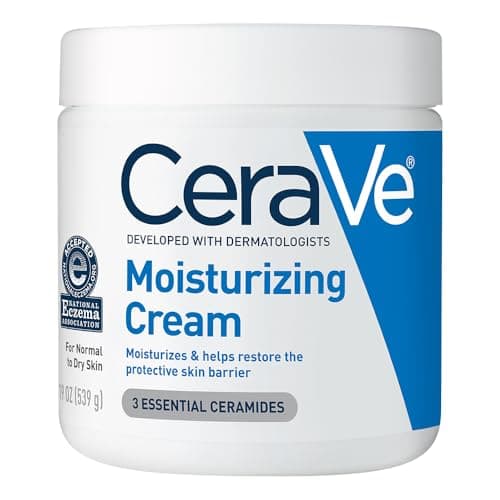
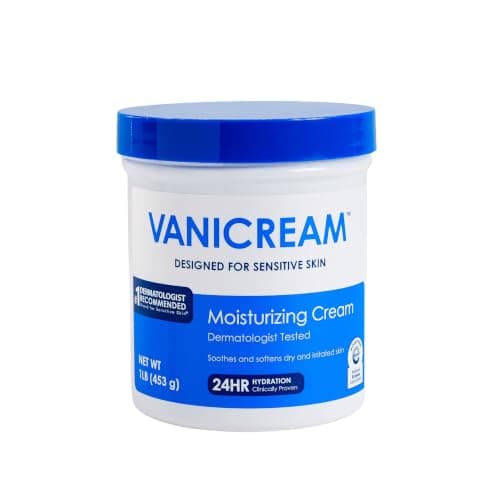
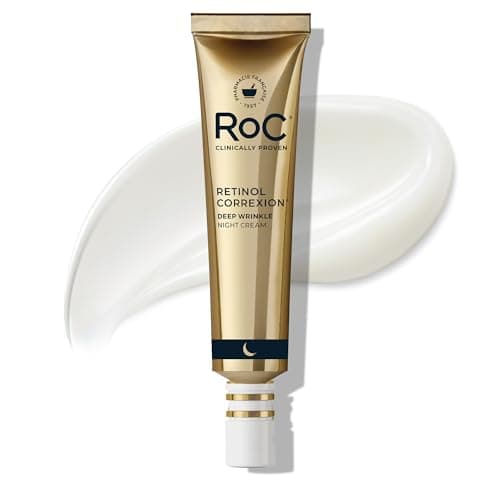
Buy the RoC Retinol Correxion Deep Wrinkle Night Cream if you want one product to be both your PM moisturizer and your anti-aging active — it is a retinol cream sold as a night cream, which is the only version of this category that earns the name. If you already own a separate retinoid, you do not need a "night" cream at all: buy a plain, well-built moisturizer and put it on at night. The budget pick is the Vanicream Moisturizing Cream, the cheapest product here that does the whole job — hold water in, stay out of the way of your actives, and contain nothing that will sting a face you have just put acid or retinol on.
That is the entire honest answer, and it is why this page exists separately from our face moisturizer roundup. The two pages rank on different criteria. A daytime moisturizer is judged on how it sits under sunscreen and makeup. A night cream is judged on three things nobody puts on the box: whether it can carry a retinoid without turning your face raw, whether it genuinely occludes, and whether you are paying for an SPF you will sleep through.
The AM/PM split, stated plainly
Most of the confusion in this category comes from one unstated assumption: that "night" describes the formula. It does not. It describes the shift pattern of the ingredients you put under it.
| Decision | Morning | Night |
|---|
| Sunscreen | Non-negotiable, and the step that does the most work | Pointless. Any SPF in a night cream is money you sleep through |
| Retinoids | Avoid — they are light-sensitive and raise irritation under UV | This is their shift. Which is why the PM cream has to tolerate one |
| Exfoliating acids | Possible, but the FDA sun-sensitivity precaution applies | Easier to schedule, easier to follow with occlusion |
| Texture | Has to layer under SPF and makeup without pilling | Can be as heavy as your skin will take. Nobody is looking |
| Vitamin C | Reasonable — it pairs with sunscreen | No advantage, and it competes with your retinoid for skin tolerance |
Read that table and the ranking below writes itself. The best night cream is the one that does the PM-specific job: tolerate a retinoid, occlude well, and spend nothing on daylight features.
What a night cream cannot do
The category's stock claim is that skin repairs itself overnight, so an overnight product gets a special opportunity. The first half is roughly true and the second half does not follow. Water loss through the skin does run higher at night and skin cell turnover does have a daily rhythm — but nothing in a cosmetic night cream times itself to that rhythm, and no over-the-counter moisturizer has been shown to work better because it was applied at 11pm rather than 8am. What is genuinely true is simpler and more useful: higher overnight water loss is a good argument for a more occlusive product at night, and the actives you are told to use at night are told to be used at night because of light, not because of sleep.
So the honest version of the overnight claim is: you occlude at night because the water loss is real, and you put the retinoid on at night because the sun is not up. That is the whole mechanism, and it is enough to buy on.
How we ranked these
Four scores, all of them PM-specific, all of them judgments from published formulations and drug labels rather than lab work we did not do:
- PM actives — does the product itself bring a PM-appropriate active (retinol, a peptide complex, niacinamide) at a concentration the brand will name?
- Occlusion — does the formula actually slow overnight water loss, or is it a light lotion sold at a cream price?
- Tolerance — can a face that has just had a retinoid on it wear this without stinging? Fragrance, essential oils and drying alcohol all cost points here.
- Value — cost per ounce against what the formula actually delivers. A night cream is a product you use 365 nights a year, so this matters more than it does in most categories.
How to build the PM step, in order
The night cream is the last decision, not the first. The order below is the one that keeps people on a retinoid long enough for it to matter, which is the only variable in this category that reliably changes a face.
- Cleanse, and stop there. One wash. If you are using a retinoid, this is not the night for an acid toner as well — see how long to wait between steps.
- Retinoid, on dry skin, pea-sized. Two or three nights a week to start. Our retinol roundup ranks the options by strength, and retinol versus retinoid explains why the word on the box matters.
- Cream over the top. This is the step this page is about. On a night you used a retinoid, go heavier than feels necessary.
- Nothing else.No vitamin C, no second acid, no "boosting" essence. Every extra product is another chance to make your skin sting and quit.
The buttering trick, and when to use it
If a retinoid is stinging, put the cream on first, wait a few minutes, then apply the retinoid over it — or sandwich it: cream, retinoid, cream. It reduces irritation at the cost of some potency, and a slightly weaker dose you use four nights a week beats a strong one you abandon in week two. We cover the ramp in detail on the anti-aging routine page.
Four things not to pay for in a night cream
- SPF. If a night cream contains sunscreen, you are buying a daytime product with the wrong label on it.
- Collagen on the ingredient list. It is too large to cross intact skin and it is not incorporated into your own fibers — the arithmetic is on our collagen guide.
- "Overnight repair" language with no named active. If the brand will not name the ingredient and its concentration, there is nothing to evaluate.
- A jar big enough to go off. Retinol degrades; a two-year supply of a retinol cream is not a saving. Buy the size you will finish.
Who should skip this category entirely
If you have oily, acne-prone skin and you already use an adapalene gel, a night cream is often the thing that undoes your routine — the occlusion that helps dry skin can be too much over a face already producing plenty of its own sebum. Use a light gel moisturizer instead; our oily-skin moisturizer roundup ranks those, and the acne page sets the order.
And if you are pregnant or breastfeeding, the retinol pick at the top of this page is out. See pregnancy-safe skincare for what replaces it.