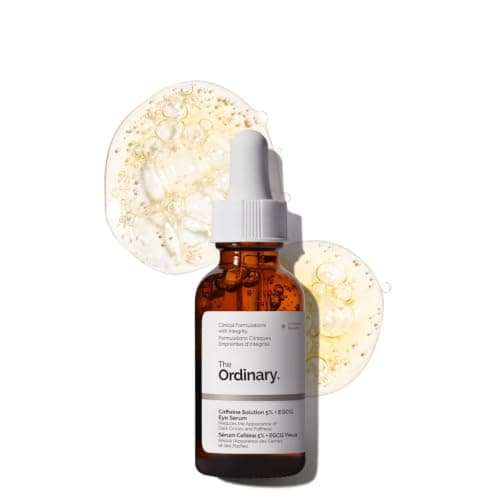
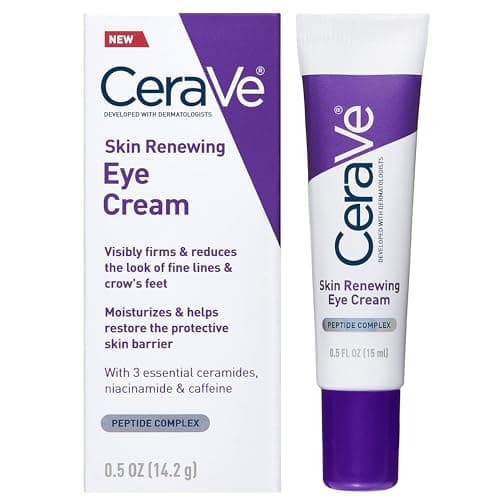
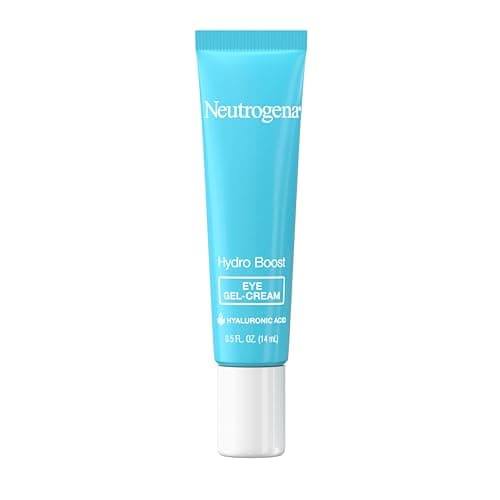
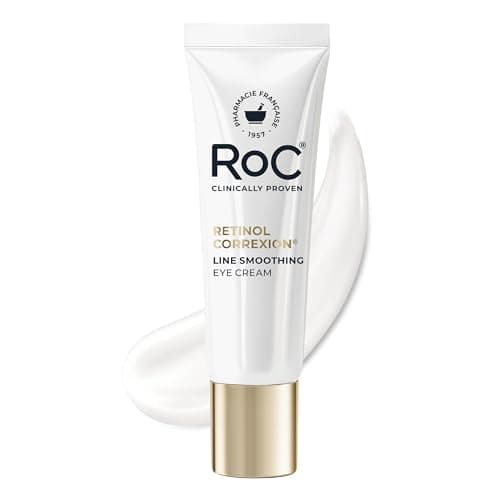
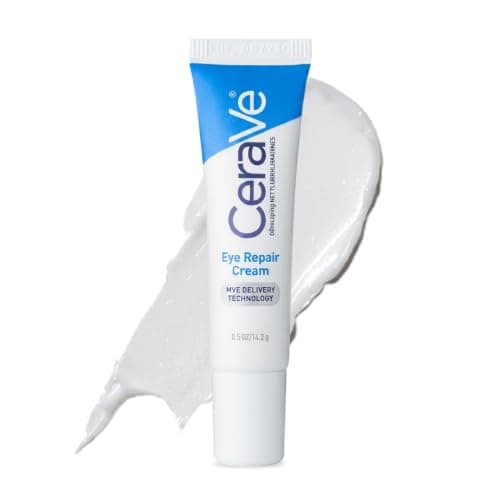
Buy the CeraVe Eye Repair Cream. Ceramides, hyaluronic acid and niacinamide in a fragrance-free base, in the one part of the face where fragrance causes the most trouble — it is the most sensible product in this price band and one of the cheapest. The budget pick is The Ordinary Caffeine Solution 5% + EGCG, the cheapest thing here that does a job: caffeine is a vasoconstrictor, which means it genuinely does something temporary and visible about puffiness, and it costs a fraction of everything else on the page.
Every price in the comparison table below comes from the live Amazon price layer and renders with its own "as of" date — we do not write prices into copy, because a number in prose rots. All five picks carried a live price under the band at the last check. If the table shows no number next to a product, that means we have no verified live price for it right now and are showing none rather than a stale one.
Why $25 is barely a constraint here
This is the honest heart of the page. In most categories a price ceiling forces a real trade-off. In eye cream it mostly does not, for three reasons:
- There is no such thing as an eye-specific active. The ingredients that do something around the eye — ceramides, niacinamide, peptides, caffeine, retinoids — are the same ingredients that do something everywhere else. Nothing in the formula is reserved for the orbital area.
- You are buying a small jar. Eye creams are sold in a fraction of the volume of a face moisturizer at a similar or higher price. Most of the premium in this category is packaging and a smaller fill, not a better formula.
- The expensive claims are the weakest ones. Price in this category tracks firming and dark-circle language, which is exactly the language with the least evidence behind it. Paying more reliably buys you a bolder claim, not a better result.
So the $25 band is not a compromise shortlist. It is close to the whole useful shortlist. Our full eye cream roundup ranks six products including one above this line, and the ordering barely changes — which is the strongest argument for capping your spend that we can make.
What is actually above the line
One product in our registry: the Vichy Mineral 89 Eye Serum, which sat just over the band at the last price check. It is a good product — a light hyaluronic-acid-forward serum rather than a cream, with a nice applicator. It is not better at anything measurable than the CeraVe at the top of this page, and the stretch buys you texture and presentation. If those matter to you, that is a legitimate reason to spend the extra; it is just not a performance reason, and we are not going to dress it up as one. It is ranked, with its full case, on the parent roundup.
What an eye cream can and cannot change
| Complaint | Can a cream under $25 help? |
|---|
| Dry, crepey texture around the eye | Yes, and this is the category's real job. Hydration and barrier support visibly improve fine crepeyness |
| Morning puffiness | Temporarily, with caffeine — a vasoconstrictor effect lasting hours, not a cure. Cold does the same thing faster |
| Fine lines | Slowly, with a retinoid, and only with the dryness that comes with it |
| Dark circles from pigment | Marginally. Pigment actives work slowly and need daily sunscreen — see the dark spots page |
| Dark circles from thin skin and visible vessels | No. That is anatomy, and no cream changes it |
| Under-eye bags from fat pad descent | No. That is structural, and it is a surgical question, not a skincare one |
Two of those six are flatly impossible, and they are the two the category advertises hardest. Knowing which one you have is worth more than any product on this page.
How we ranked these
- Value at the ceiling — scored first on this page, unlike on the parent roundup. At a fixed cap, cost per ounce and fill volume become decisive.
- Formula — named actives at usable positions, and a fragrance-free base, which matters more here than anywhere else on the face.
- Tolerance — eyelid skin is thin and the eye is right there. Stinging, migration and fragrance all cost points.
- Texture — does it sit under makeup without pilling or creasing?
The cheapest thing that works, and it is free
For puffiness, cold beats chemistry. Vasoconstriction from a chilled surface is faster and more pronounced than anything a 5% caffeine serum does, and it costs nothing if you own a spoon and a fridge. We rank the purpose-built version of this on our ice roller page — a tool under twenty dollars that does the one job this whole category advertises, immediately. If morning puffiness is your entire complaint, buy that instead of an eye cream.
You probably do not need a dedicated eye cream at all
Said plainly, because it is true: for most people, the face moisturizer they already own, applied up to the orbital bone, does the same work as a small jar at the same price. The genuine reasons to buy a dedicated product are narrow and worth knowing:
- Your face moisturizer is fragranced and your eyes react. A fragrance-free eye product is a real solution to a real problem.
- Your face moisturizer is too heavy and migrates. Cream that creeps into the eye stings and can blur vision. A thinner eye-specific texture fixes it.
- You want caffeine or a lower-dose retinoid specifically for that area. Both are legitimate, targeted purchases.
If none of those three apply to you, the honest recommendation is to spend the money on sunscreen instead. Chronic UV exposure is the dominant modifiable cause of the crepeyness people buy eye cream for, and it is the only intervention in this whole discussion with strong evidence behind it.
How to apply it so it does not sting
- A grain of rice per eye. More does not do more; it migrates.
- On the orbital bone, not the lid. Product moves inward overnight on its own.
- Pat with a ring finger, do not drag. This skin is the thinnest on the face.
- Retinoid eye products at night only, two or three nights a week to start, and a plain cream over the top on the nights it feels tight.
Who should skip this page
Anyone whose under-eye concern is a shadow cast by a hollow or a visible fat pad. That is volume and anatomy, and nothing in a jar addresses it — our full eye cream roundup goes through how to tell the difference in a mirror. And anyone pregnant or breastfeeding should treat the retinoid pick here as out; see pregnancy-safe skincare.
How we picked
We did not lab-test this gear
Everyone in this category says they tested twenty products. We have not lab-tested any of these, and we say so. What we did instead: compiled the published specifications, decoded the ingredient (INCI) lists active by active, ran the math where there was math to run, and scored each product against a published rubric. The scores are judgments from documented research — not measurements we took, because we do not have a lab and we will not pretend we do. Where a number came from someone else's work, we name them in Sources.