A collagen cream cannot add collagen to your skin, and the reason is arithmetic rather than skepticism. Native collagen is a triple-helical protein of roughly 300,000 daltons. The working rule of thumb for a molecule crossing intact skin is a few hundred daltons. That is a gap of about three orders of magnitude, and no emulsion fixes it. What a collagen cream does instead is worth knowing and genuinely useful: hydrolyzed collagen is a competent humectant and film former, so it holds water at the surface, smooths texture and makes skin look briefly plumper. That is a moisturizer, honestly described. It is just not what the word on the front of the jar implies.
This page is the ingredient guide we would want someone to read before spending money in this category. What collagen is, where it lives, why topical application runs into a wall, what the label words mean, and — the part that matters — the four things you can actually buy that change how much collagen is in your skin.
What collagen is and where it lives
Collagen is the main structural protein of connective tissue and the most abundant protein in the body. In skin, the type that matters is type I, with a smaller contribution from type III, and it sits in the dermis — the layer beneath the epidermis. Fibroblasts build it there: they secrete procollagen, which is trimmed, assembled into triple helices, bundled into fibrils and then cross-linked into the fiber network that gives skin its firmness and recoil.
Two consequences follow from that, and they are the only two facts you need to evaluate every claim in this category. First, the target is deep: anything meant to affect collagen has to influence cells below the epidermis, not sit on top of it. Second, collagen is assembled on site by a cell. It is not a material the body imports and installs. Even a collagen molecule delivered intact into your dermis would not be welded into an existing fiber; fibrils are built by fibroblasts from procollagen under enzymatic control.
The size problem, stated properly
The standard reference point here is the 500 dalton rule, proposed by Bos and Meinardi in Experimental Dermatology in 2000. Their argument was indirect and they were candid about it: almost every common contact allergen, and almost every successful topical and transdermal drug, has a molecular weight under about 500 daltons — so that is probably near the practical ceiling for a molecule crossing an intact stratum corneum.
It is a rule of thumb, not a law of physics, and we should say where it bends. There are real exceptions — tacrolimus and pimecrolimus, at roughly 800 daltons, work topically — and penetration enhancers, damaged barriers and microneedling all move the line. But the exceptions sit in the hundreds-to-low-thousands range. Native collagen is at 300,000. Nothing about the rule being approximate rescues a molecule that far past it.
Hydrolyzed collagen is the industry answer, and it is a partial one. Hydrolysis chops the protein into fragments; published and supplier figures for cosmetic grades span a wide range, from a few hundred daltons up into the tens of thousands. The smallest of those fragments are plausibly in penetrating territory. The catch is that a fragment small enough to cross is no longer collagen — it is a mixture of short peptides and amino acids, which is a completely different proposition, and the one we cover under peptides. The marketing keeps the name of the big molecule and the delivery story of the small ones.
So what does a collagen cream do?
Something real, and worth naming without sarcasm. Hydrolyzed collagen and collagen peptides are good humectants and good film formers. They attract and hold water at the surface, and they dry down into a thin flexible film that smooths the micro-texture of the stratum corneum. The visible result is skin that feels softer and looks plumper and more even for several hours. That is the same category of benefit you get from hyaluronic acid, and it is a perfectly good thing to buy.
The problem is only ever the implication. "Replenishes collagen" and "restores lost collagen" describe a mechanism that is not available. A product that said "holds water at the surface and makes skin look smoother today" would be accurate, and would sell for less.
Two things this page deliberately does not cover. Oral collagen supplements are a different argument with a different and more interesting literature — a swallowed peptide is absorbed through the gut, which has no stratum corneum — and we do not cover ingestibles. Injected collagen and collagen-stimulating fillers are medical procedures performed by clinicians; a serum is not a cheaper version of one, which is the same line we drew on PDRN.
What actually changes collagen in skin
Four levers, in the order we would spend money on them. Notice that none of them contains collagen.
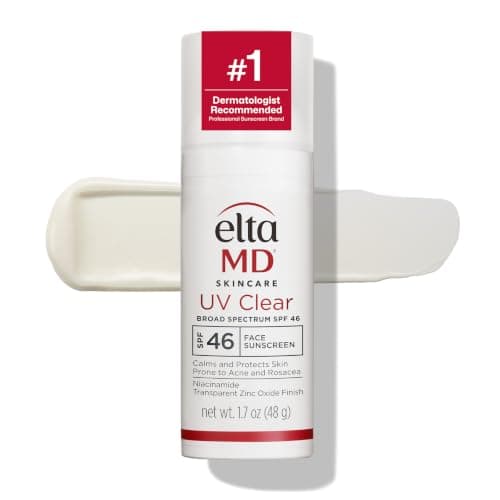
- Stop the loss first: ultraviolet light. The largest single driver of collagen loss in facial skin is sun exposure. UV both degrades existing fibers and suppresses new synthesis, which is why photoaged skin and chronologically aged skin look different under a microscope. Daily broad-spectrum sunscreen is the highest-leverage collagen intervention available over the counter, and it is the only one that is preventive rather than remedial. Our face sunscreen roundup ranks the field.
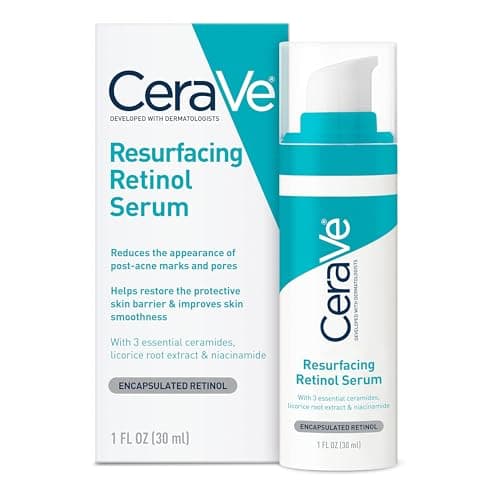
- Retinoids. The one topical class with trial data pointing directly at procollagen. A randomized, vehicle-controlled trial of 0.4% retinol over 24 weeks reported improved fine wrinkling versus vehicle, with increased procollagen I staining in a biopsy subgroup — and we should be honest that the subgroup was tiny. The broader retinoid literature, dominated by prescription tretinoin, is stronger. See retinol and retinol vs retinoid.
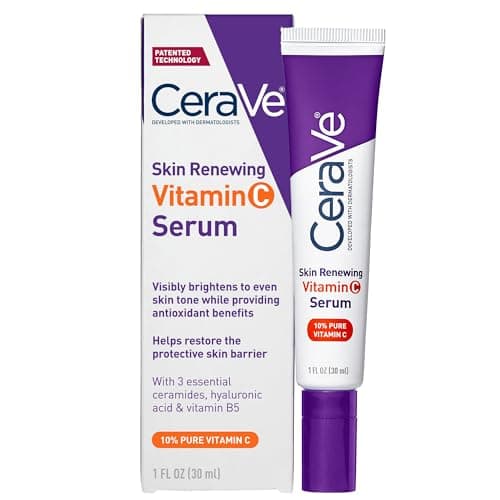
- Vitamin C. Ascorbic acid is an enzymatic cofactor for the prolyl and lysyl hydroxylases that stabilize the collagen triple helix. That is textbook biochemistry rather than a marketing claim, which is unusual in this category. What is less settled is how much a topical serum changes dermal collagen in practice; the firmer topical evidence is antioxidant and pigment-related. Still a sensible buy. See vitamin C.
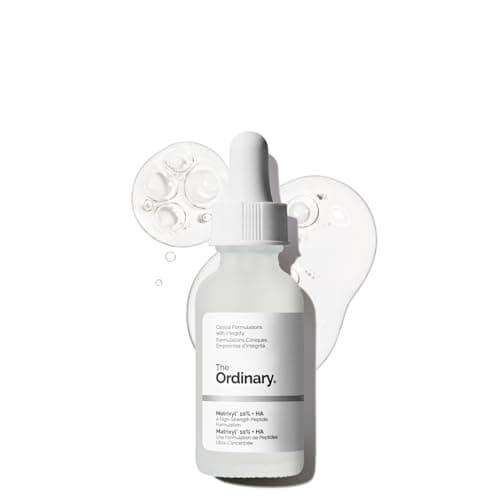
- Signal peptides. The cleverest idea here. Palmitoyl pentapeptide-4 carries the KTTKS fragment — a piece of type I procollagen at roughly 560 daltons, which is small enough for the size question to be arguable rather than settled. The proposed mechanism is that the fragment reads as evidence of damage and prompts fibroblasts to build. Plausible, under-powered, and cheap to try. See peptides and peptides vs retinol.
Reading a collagen label
- "Hydrolyzed collagen" is the normal cosmetic form, and it is the honest one on an INCI list. It is a humectant. Where it sits on the list tells you how much of the formula it is — our ingredient-list checker is the thirty-second way to find out.
- "Marine collagen" describes the source (usually fish skin or scales), not a different mechanism. It is hydrolyzed the same way and behaves the same way on skin. Relevant if you have a fish allergy, irrelevant to performance.
- "Collagen tripeptide" and "collagen amino acids" are heavily broken-down fractions. These are the small ones, so the size objection softens — and what you are buying is a peptide or amino-acid mixture, which should be judged as one.
- "Plant-based collagen" and "vegan collagen" are not collagen. Plants do not make collagen. These are blends of plant proteins and amino acids positioned as substitutes, or in a few cases genuinely bioengineered collagen-like proteins. They may be fine ingredients; they are not the same material, and a brand asserting equivalence is not evidence of it.
- "Collagen-boosting" is the tell. It is the compliant way of saying the product does not rely on the collagen in it. Turn the box over: the boosting is being done by a retinoid, a vitamin C derivative or a peptide, and you could buy that directly for less.
- Sheet masks and "collagen" masks. Pleasant, hydrating, and the collagen is doing the film-former job. A fine way to spend twenty minutes, which is the same thing we said about the category on our Japanese skincare page.
Below: the four products we would buy if the goal is more collagen. Ranked by how directly each one acts on it, which is why a sunscreen is first and a peptide serum is last.
If you still want a collagen cream
That is a reasonable thing to want, and there is a version of it we would not argue with. Buy it as a moisturizer. Judge it the way you would judge any moisturizer: does it have humectants, does it have barrier lipids, does it feel good enough that you use it twice a day, and is it priced like a moisturizer. If the answer to all four is yes, the hydrolyzed collagen in it is a pleasant extra humectant and you have lost nothing.
What we would not do is pay a premium for the word. A collagen cream at four times the price of CeraVe Moisturizing Cream is not buying four times the effect, and the ceramide-led formulas on our moisturizer roundup have a more complete barrier story than any collagen formula we have decoded.
The honest timeline
Collagen turnover is slow. The surface effects on this page — the plumping from a humectant, the glow from a well-formulated serum — show up in hours to days. Changes at the level of the dermal matrix are measured in months, and the trials that found them ran for six months or more. Our how long skincare takes to work page sets the general expectations; for collagen specifically, think in seasons.
That timeline is also why the order of the four picks above matters more than it looks. A year of daily sunscreen plus a tolerated retinoid is a genuinely different skin outcome from a year of collagen cream. The sunscreen is the unglamorous one and it is the one that does the most.
Things that do not add collagen, despite the shelf
- Collagen sheet masks. Twenty minutes of occluded hydration. Nice, not structural.
- "Collagen" drinks and gummies sold as skincare. Ingestibles are outside what this site covers, and a product straddling both claims is usually leaning on the vaguer one.
- Collagen-infused pillowcases, lip masks and under-eye patches. Film formers in costume.
- At-home devices sold on a collagen claim. Microcurrent and LED deserve a separate honest look rather than a line here, and we gave them one on are skincare devices worth it.
- Anything promising to "rebuild" collagen in two weeks. The biology does not move that fast, whatever the before-and-after photo was lit like.