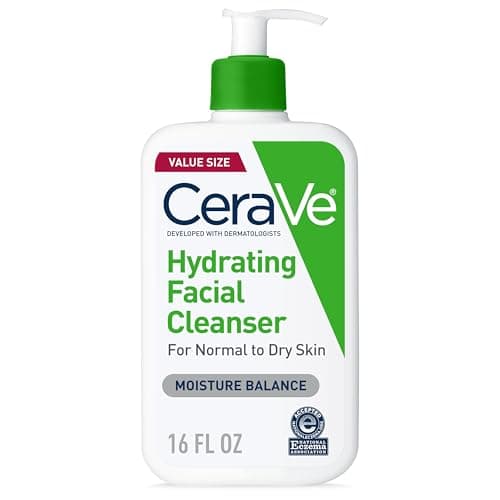
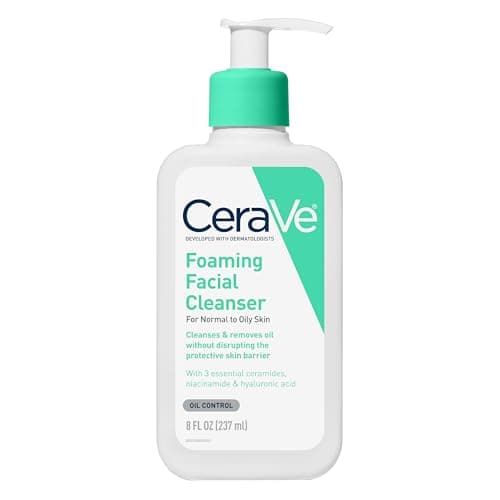
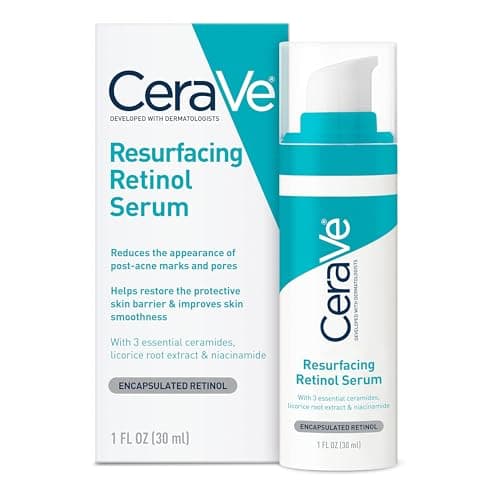
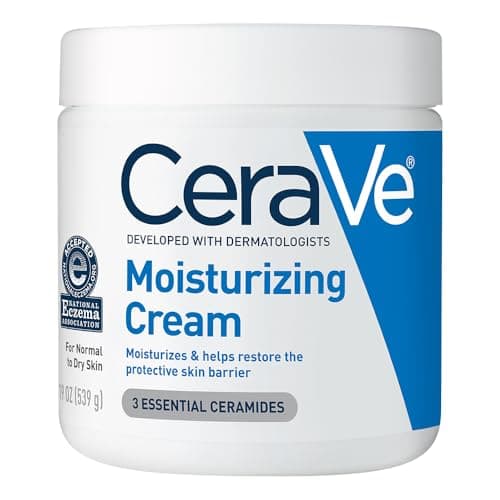
Yes — for cleansing and moisturizing, CeraVe is as good as anything at any price. The range is built on three skin-identical ceramides plus cholesterol and fatty acids, in a slow-release delivery system, almost always fragrance-free, at drugstore prices. For the two steps that most people get wrong, it is the default correct answer and we say so all over this site.
And no — CeraVe is a weak buy when you want an active.The brand's vitamin C is one of the few products we tell people to skip outright, its retinol does not disclose a strength, and nothing in the range is the strongest option for acne, pigmentation or lines. CeraVe is infrastructure. Treatments are a different shopping trip.
What CeraVe is actually built on
Three things, and they are worth knowing because they explain both the praise and the limits.
- Ceramides 1, 3 and 6-II, with cholesterol and fatty acids. These are the lipid classes your stratum corneum is literally made of, in roughly the proportions skin uses. That is why a cheap tub of it outperforms expensive creams on barrier repair rather than merely matching them. Our ceramides explainer covers the mechanism.
- MVE delivery. A multivesicular emulsion that releases those lipids over hours instead of all at once. A real formulation feature, not a marketing word.
- Fragrance-free as the default. Across most of the range, which removes the single most common avoidable irritant in skincare.
What none of that gives you is potency. Ceramides restore; they do not resurface, fade or exfoliate. Every honest criticism of CeraVe comes down to people expecting a barrier brand to behave like a treatment brand. Our CeraVe and the skin barrier page goes deeper on what barrier repair can and cannot do.
How we judged the products below
Four criteria, all readable off an ingredient list or a price per ounce. No lab, no testing claims.
- Formula. What is in it, in what order, and whether the headline ingredients are present in meaningful positions.
- Gentleness. Fragrance, surfactant strength, and whether reactive skin tolerates it twice a day.
- Does its job. Measured against what the product is for, which is where the actives in this range lose points and the basics do not.
- Value.Price per ounce, which is the brand's single strongest argument.
Is CeraVe good for men?
Yes, and the question is worth answering plainly because it gets asked a lot. Skin does not have a gender. Men's skin is on average slightly thicker with somewhat higher sebum output, which changes which texturesuits you, not which ingredients work. CeraVe is fragrance-free, which is the single biggest practical advantage over most men's grooming lines, because fragrance is what a lot of that premium is actually buying — and shaving already compromises the barrier enough without adding an irritant.
If you shave, the combination worth owning is the foaming cleanser, the moisturizing cream or one of the lighter lotions, and a sunscreen. Our best skincare for menroundup ranks the men's-brand alternatives honestly, and clean skincare for men covers the fragrance-free options specifically. Spoiler: several of them are CeraVe.
By skin type, in one table
| Question | Short answer | What to buy, or read next |
|---|
| Is CeraVe good for oily skin? | Yes, with the right products | Foaming cleanser, a lotion rather than the tub |
| Is CeraVe good for dry skin? | Yes — this is its home ground | Hydrating cleanser plus the Moisturizing Cream |
| Is CeraVe good for sensitive skin? | Usually, but it is not the strictest option | Vanicream leaves more out — see the comparison below |
| Is CeraVe good for acne? | Good support, not a treatment | A benzoyl peroxide or adapalene product does the treating |
| Is CeraVe good for eczema-prone skin? | Yes — fragrance-free and ceramide-led | Moisturizing Cream, applied far more generously than you think |
| Is CeraVe good for anti-aging? | Only the retinol, and only as a starter | Our retinol roundup for the stronger rungs |
What to skip in the range
We are not going to pretend a 20-product range is uniformly good. The brand's vitamin C serum is the one we actively steer people away from — our CeraVe products roundup ranks it last and explains why in detail, and the vitamin C form question is the context you need to see the problem. The acne line is competent but not the strongest option in its category; if acne is the goal, start at best benzoyl peroxide instead.
CeraVe versus the obvious alternatives
Against La Roche-Posay: LRP has nicer textures and better actives, CeraVe has the price. Our CeraVe versus La Roche-Posay comparison goes product by product.
Against Vanicream: Vanicream leaves more out — no fragrance, no dyes, no lanolin, no parabens, no formaldehyde releasers — and adds nothing active. If your skin reacts to things, that is the better starting point, which is why CeraVe versus Vanicream exists and why Vanicream leads our sensitive-skin roundup rather than CeraVe.
Against Cetaphil: Cetaphil is gentler and simpler; CeraVe has the better formula because of the ceramides. At similar prices, we take the ceramides.
How we picked
We did not lab-test this gear
Everyone in this category says they tested twenty products. We have not lab-tested any of these, and we say so. What we did instead: compiled the published specifications, decoded the ingredient (INCI) lists active by active, ran the math where there was math to run, and scored each product against a published rubric. The scores are judgments from documented research — not measurements we took, because we do not have a lab and we will not pretend we do. Where a number came from someone else's work, we name them in Sources.