Skip to content
Barrier & Bloom

Explainers · Learn

CeraVe vs Vanicream: two ways to be boring on purpose

Both are fragrance-free, dermatologist-recommended and cheap. One adds ceramides, the other subtracts everything. A straight comparison of what that difference means for your face.

By Stephen V.Updated How we review
#ad

We earn a commission when you buy through our Amazon links, at no extra cost to you. It never changes a verdict, and we say so when the cheaper product is the better buy. How this works.

Choose CeraVe if you want ingredients working for you; choose Vanicream if you want nothing working against you. CeraVe adds ceramides, cholesterol and fatty acids to actively support the barrier. Vanicream strips out every common irritant — fragrance, dyes, lanolin, parabens, formaldehyde releasers — and adds very little. Both are excellent. They are solving slightly different problems.

These are the two brands dermatologists name most often for barrier care at drugstore prices, and the choice between them comes up constantly. The honest answer is that most people will do well on either. The distinction only becomes decisive at the reactive end of the spectrum, and that is where this page is worth reading properly.

The two philosophies

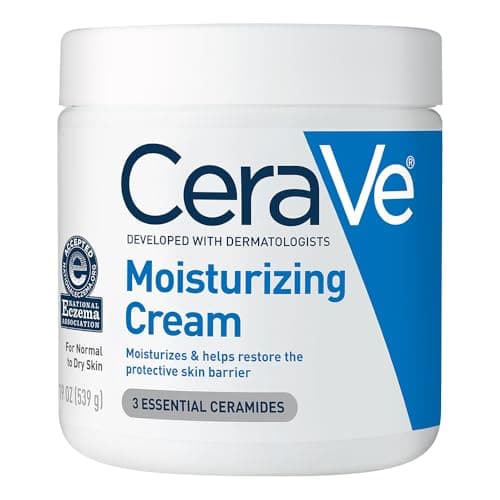
CeraVe is additive. Its formulas are built around a licensed delivery system carrying three ceramides plus cholesterol and fatty acids — the same lipid trio the skin barrier is made of. Most products in the range also carry hyaluronic acid, and several add niacinamide. The proposition is: put the missing components back.

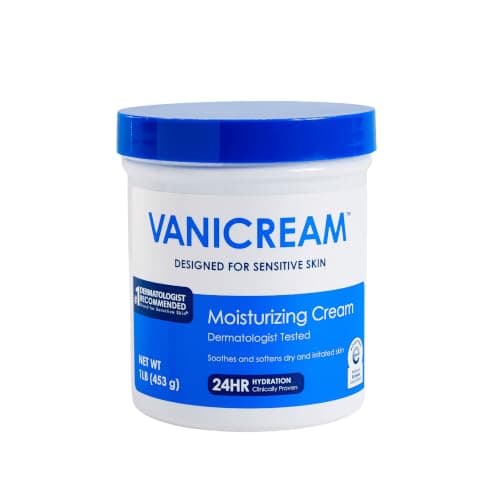
Vanicream is subtractive. Its formulas are built by removal. No fragrance, no dyes, no masking fragrance, no lanolin, no parabens, no formaldehyde releasers, no gluten. It contains ceramides and hyaluronic acid too, but the identity of the brand is what is absent rather than what is present. The proposition is: remove everything that could possibly be the problem.

Where each one wins

  • Genuinely reactive skin, eczema, contact dermatitis, post-procedure — Vanicream. When you do not know what your skin is reacting to, the shortest possible ingredient list is the safest bet, and Vanicream is built for exactly that situation.
  • Ordinary dry, dull or over-exfoliated skin — CeraVe. The ceramide load and the hyaluronic acid do more, and the range is broader if you want to build a whole routine from one brand.
  • Value per ounce — CeraVe, comfortably. The big tub of Moisturizing Cream is the best cost-per-use in barrier moisturizing that we are aware of.
  • Texture on the face specifically— Vanicream, marginally. Its daily facial moisturizer is a lighter lotion than CeraVe's cream, and it sits better under sunscreen.
  • Range depth — CeraVe by a wide margin: cleansers, sunscreens, retinol serums, eye creams. Vanicream stays deliberately narrow.

The point nobody makes: neither publishes a ceramide percentage

You will find comparisons claiming one brand has "more ceramides" than the other. Ignore them. No cosmetic brand discloses ceramide concentration, ceramides sit low on every ingredient list because effective amounts are small, and there is no published head-to-head measurement of the two. Anyone stating a comparison as fact is inventing it.

What can be verified from the labels: both contain the barrier lipid family, both are fragrance-free in their core products, both are non-comedogenic, and both carry the National Eczema Association Seal of Acceptance on several products. That is a genuine, checkable quality signal — and it is where the honest comparison has to stop. Our ceramides guide explains why the concentration question is unanswerable in general.

What about fragrance?

Both brands are fragrance-free in the products that matter, which puts them ahead of most of the drugstore. The nuance worth knowing is the difference between "unscented" and "fragrance-free": an unscented product may contain a masking fragrance to cover the raw smell of the base, while fragrance-free means none was added. Vanicream is explicit about excluding masking fragrance too, which is one of the reasons dermatologists reach for it in contact-dermatitis cases.

The practical recommendation

If your skin is dry, dull or recovering from too much exfoliation, buy the CeraVe Moisturizing Cream — it is more useful and cheaper per ounce. If your skin reacts to things and you cannot pin down what, buy the Vanicream and change nothing else for a month, which gives you a clean baseline to test from.

If you want a whole routine from one brand, CeraVe has the depth — see our best CeraVe products roundup. If you want the full breakdowns, we have single reviews of both: CeraVe Moisturizing Cream and Vanicream Moisturizing Cream.
The short answer

Quick picks

#ProductBest forScorePrice
01
CeraVe CeraVe Moisturizing Cream
CeraVe Moisturizing Cream

The additive answer. Three ceramides, cholesterol, fatty acids and hyaluronic acid in a thick fragrance-free cream, in a tub big enough to use on your whole body without thinking about it.

Best for dry or over-exfoliated skin
8.8
$18.96Amazon
02
Vanicream Vanicream Moisturizing Cream
Vanicream Moisturizing Cream

The subtractive answer. No fragrance, no masking fragrance, no dyes, no lanolin, no parabens, no formaldehyde releasers — and enough ceramides and glycerin to genuinely moisturize. The safest cream we would hand to skin that reacts to everything.

Best for reactive or eczema-prone skin
8.6
$13.19Amazon

#ad · Live prices from the Amazon Product API, as of Aug 28, 2026. Where we have no verified live price, we show none — a gap beats a number that has rotted.

In detail

The picks, in full

01
CeraVe CeraVe Moisturizing Cream

Best for dry or over-exfoliated skin

CeraVe Moisturizing Cream

3 ceramides + HAFragrance-free19 oz tubNEA Seal of Acceptance
8.8/10

The additive answer. Three ceramides, cholesterol, fatty acids and hyaluronic acid in a thick fragrance-free cream, in a tub big enough to use on your whole body without thinking about it.

Ingredients
9
Efficacy
9
Gentleness
9
Texture
7
Value
10

Pros

  • Unbeatable cost per use at this quality
  • Works on face and body, which halves what you need to own
  • Genuinely effective on cracked, flaking or acid-damaged skin

Cons

  • Too rich for oily skin on the face
  • Tub packaging means fingers in the pot unless you use a spatula

Don't buy this if…

your skin is reacting to something unidentified — start with the shorter Vanicream list instead and reintroduce complexity later.

$18.96View on Amazon

$20.497% off

Price as of Aug 28, 2026. Prices change — Amazon's at checkout is the one that counts.

#ad · we may earn a commission from this link to CeraVe Moisturizing Cream

02
Vanicream Vanicream Moisturizing Cream

Best for reactive or eczema-prone skin

Vanicream Moisturizing Cream

Free of common irritantsCeramides + glycerinFragrance-freeNEA Seal
8.6/10

The subtractive answer. No fragrance, no masking fragrance, no dyes, no lanolin, no parabens, no formaldehyde releasers — and enough ceramides and glycerin to genuinely moisturize. The safest cream we would hand to skin that reacts to everything.

Ingredients
9
Efficacy
8
Gentleness
10
Texture
8
Value
8

Pros

  • The shortest credible irritant list in a drugstore cream
  • Excludes masking fragrance, not just added scent
  • Developed with dermatology input for contact-sensitive skin

Cons

  • Slightly more expensive per ounce than the CeraVe tub
  • Plainer and less interesting — which is entirely the point

Don't buy this if…

your skin is not reactive. You are paying a small premium for exclusions you do not need, and the CeraVe does more for less.

$13.19View on Amazon

$14.7711% off

Price as of Aug 28, 2026. Prices change — Amazon's at checkout is the one that counts.

#ad · we may earn a commission from this link to Vanicream Moisturizing Cream

How we picked

We did not lab-test this gear

Everyone in this category says they tested twenty products. We have not lab-tested any of these, and we say so. What we did instead: compiled the published specifications, decoded the ingredient (INCI) lists active by active, ran the math where there was math to run, and scored each product against a published rubric. The scores are judgments from documented research — not measurements we took, because we do not have a lab and we will not pretend we do. Where a number came from someone else's work, we name them in Sources.

Questions

Frequently asked

Is CeraVe or Vanicream better?
Neither is better in general — they solve slightly different problems. CeraVe adds ceramides and hyaluronic acid to actively support the barrier and costs less per ounce. Vanicream removes every common irritant and is the safer choice when your skin is reacting to something you cannot identify.
Which has more ceramides, CeraVe or Vanicream?
Nobody can tell you, because neither brand publishes concentrations and no independent head-to-head measurement exists. Both contain the barrier lipid family. Any comparison stating a ceramide percentage for either brand is inventing the number.
Is Vanicream good for eczema?
It is one of the products most often recommended for eczema-prone skin, and several Vanicream products carry the National Eczema Association Seal of Acceptance. Its exclusion of masking fragrance as well as added fragrance is why dermatologists reach for it in contact-dermatitis cases. It is not a treatment for a flare — that is a prescription conversation.
Can I use both brands in one routine?
Yes, and plenty of people do — a CeraVe cleanser with a Vanicream moisturizer, for instance. There is nothing about either range that conflicts with the other. Brand loyalty is not a skincare strategy.
What is the difference between unscented and fragrance-free?
Unscented can mean a masking fragrance was added to cover the base's raw smell. Fragrance-free means no fragrance was added at all. If you are reacting to products, this distinction matters, and it is one of the specific things Vanicream is explicit about excluding.

Keep reading

Receipts

Sources

We do not run a testing lab, and we do not pretend to. Where a measured number came from someone else's work, we name them and link them. Where we could not verify something, we say so on the page rather than quietly leaving it out. Read our full method.