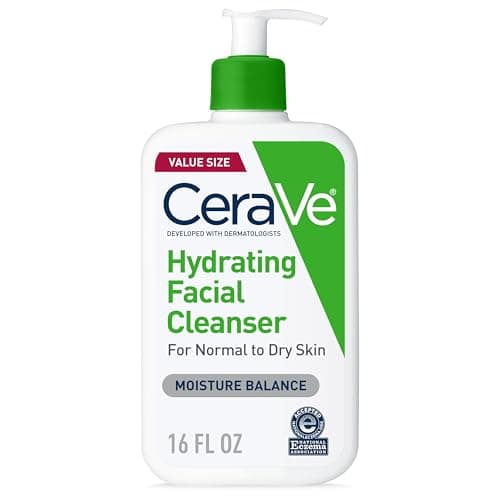
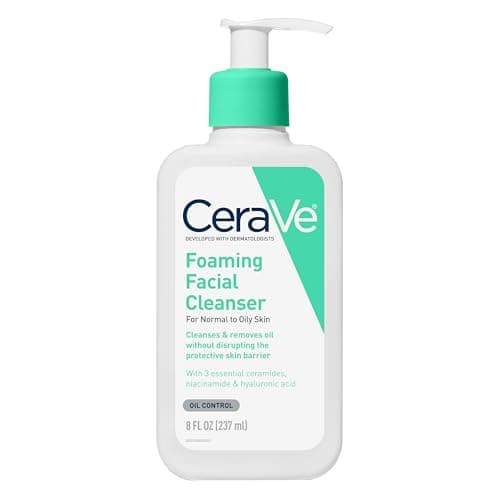
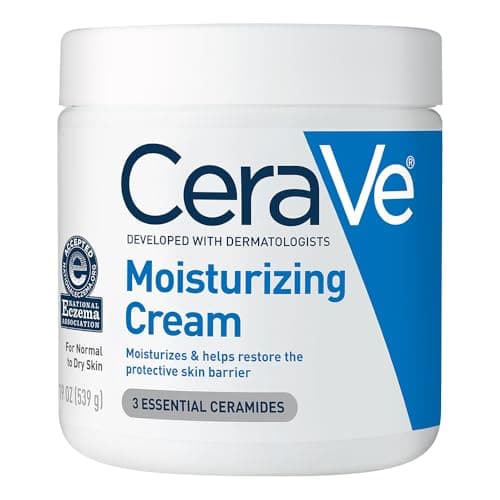
Yes, in the specific and limited sense that matters. CeraVe supplies three of the lipids your skin barrier is built from — ceramides NP, AP and EOP — alongside cholesterol and phytosphingosine, and putting those back into a depleted barrier is what "barrier repair" means in practice. What it does not do is heal, rebuild or permanently change your skin. It tops up a layer that everyday washing, weather and time keep depleting, and it does that well and cheaply.
We get a lot of search traffic from people asking this in longer forms: how much ceramide is in it, whether there are clinical studies, whether it suits oily or sensitive skin, whether dermatologists actually recommend it. This page answers those directly, including the places where the honest answer is "nobody publishes that". If you want the underlying science rather than the brand, our ceramides guide covers it, and the damaged barrier guide covers what to do when yours is genuinely compromised. For the question that follows this one almost every time — whether the pharmacy-priced version of the same idea is worth the money — CeraVe vs La Roche-Posay compares the two lines product by product.
What the barrier is, in one paragraph
The outermost layer of your skin is cells embedded in a lipid matrix — the usual analogy is bricks and mortar, where the mortar is the part that does the waterproofing. That mortar is roughly ceramides, cholesterol and free fatty acids, with ceramides making up around half of it by weight. When that matrix is depleted — by over-washing, harsh surfactants, acids used too often, cold dry air, or simply age — water escapes faster and irritants get in more easily. That is the tight, stinging, reactive state people describe as a "damaged barrier".
A barrier product works by supplying the missing mortar. This is why CeraVe includes cholesterol and phytosphingosine rather than ceramides alone: the barrier is a mixture, and replenishing one component of a three-part mixture is a less complete job than replenishing all three. That formulation choice is the genuinely good idea in the product, and it is more meaningful than the ceramide count on the front of the tub.
The concentration question, answered honestly
This is the single most common thing people ask us about CeraVe, usually phrased as some version of "what is the concentration of ceramides in CeraVe moisturizers, and is it enough?" The honest answer is uncomfortable: nobody publishes it. Not CeraVe, and not any competitor either. There is no brand in the mainstream ceramide market that states a ceramide percentage on the label or in its published materials, so any article that gives you a number is either quoting a patent filing that may not describe the current formula, or making it up.
What you can do instead is read the position on the ingredient list. Cosmetic lists are in descending order of concentration down to 1%, and below that line the order means nothing. In CeraVe's moisturizers the ceramides sit well below that line — which is expected and not a scandal, because barrier lipids are active at low percentages, but it does mean the label cannot settle the question either. Our guide to reading an ingredient list explains the 1% rule in full.
So the comparison people want — is CeraVe's ceramide concentration higher than brand X's — cannot be answered by anyone, including us. Anybody who tells you otherwise is guessing. What can be compared is which lipids are present, whether cholesterol and fatty acids are included alongside them, whether there is fragrance in the formula, and what it costs. Those are the four things worth choosing on, and CeraVe does well on all four.
What the evidence actually is
People ask whether there are clinical studies or dermatologist recommendations behind CeraVe's barrier claims. There is evidence, and it is worth being precise about what kind it is.
- The ingredient science is solid and independent. That the barrier is built from ceramides, cholesterol and fatty acids, and that replenishing them improves barrier function, is established dermatology that has nothing to do with any brand.
- The product-level trials are mostly manufacturer-sponsored. Studies showing a specific CeraVe formula improved hydration or barrier measures are generally run or funded by the manufacturer. That does not make them worthless — it means they should be read as supportive rather than as independent proof, and head-to-head trials against other ceramide brands are thin on the ground.
- The National Eczema Association Seal of Acceptance is real but often misread. CeraVe Moisturizing Cream carries it. The seal means the manufacturer voluntarily submitted the product for evaluation of its suitability for eczema and sensitive skin — it is a suitability review, not an efficacy trial, and it is not a ranking against other products.
- "Developed with dermatologists" is a development claim, not a result. It is true, and it is not the same as a trial outcome.
Put together: the mechanism is well supported, the specific product evidence is decent but not independent, and the honest summary is that CeraVe is a sensibly formulated, extremely cheap way to do a thing that genuinely works. That is a good enough reason to buy it. It is not a reason to believe it outperforms every other ceramide moisturizer, because that comparison has not been made.
Which CeraVe for which skin type
The other recurring question is whether the ceramides suit oily, dry or sensitive skin. The ceramides themselves suit all three — barrier lipids are not a skin-type-specific ingredient, and oily skin can absolutely have a leaky barrier, which is exactly what tight, stinging skin after washing indicates. What has to match your skin type is the vehicle the ceramides arrive in.
| Skin type | What to use | Why |
|---|
| Dry / very dry | The Moisturizing Cream, in the tub | The richest vehicle, with the most occlusive seal. Heavy on purpose, and the reason the tub exists rather than a lotion. |
| Oily | The foaming cleanser, plus a light lotion rather than the tub | Same lipids, less occlusion. The mistake is skipping moisturizer to control shine, which strips the barrier and increases oil production. |
| Sensitive / reactive | The hydrating cleanser and the cream, both fragrance-free | CeraVe is fragrance-free across these lines, which is the property that matters most on reactive skin. |
| Acne-prone | Foaming cleanser plus a light moisturizer, and treat the acne separately | Ceramides do not cause or clear breakouts. They keep a retinoid or benzoyl peroxide routine tolerable, which is a real contribution. |
| Combination | The cream where you are dry, the lotion where you are not | One brand, two textures, applied in different amounts. Simpler than owning two systems. |
If you want the full ranked field rather than a skin-type table, our best CeraVe products roundup ranks the range, and CeraVe vs Vanicream is the head-to-head for people deciding between the two big fragrance-free brands.
What CeraVe cannot do
Three things worth setting straight, because the barrier framing gets stretched a long way in marketing and in the questions we receive.
The flip side is worth reading as one piece rather than as a caveat: is CeraVe good? sets out what the brand is excellent at, what it is merely adequate at, and the one product in the range we tell people to skip.
- It does not permanently repair anything. Barrier support is maintenance, not a cure. Stop using it and your barrier returns to whatever your skin, habits and climate produce on their own.
- It will not fix a barrier you keep damaging. If a foaming cleanser twice a day, an acid four nights a week or a retinoid you are not tolerating is doing the damage, no moisturizer out-runs that. Remove the cause first — the damaged barrier guide sequences the recovery.
- It is not a treatment for a skin condition. Persistent eczema, rosacea or dermatitis needs a doctor, not a better moisturizer. Barrier support helps alongside treatment; it does not replace it.
And one thing worth saying in CeraVe's favor, since this page has been careful throughout: the reason it turns up as our top pick on so many roundups is not brand loyalty. It is that a fragrance-free, three-ceramide, cholesterol-containing moisturizer at drugstore prices is genuinely hard to beat, and the expensive alternatives mostly buy you a nicer texture. Where something beats it, we say so.