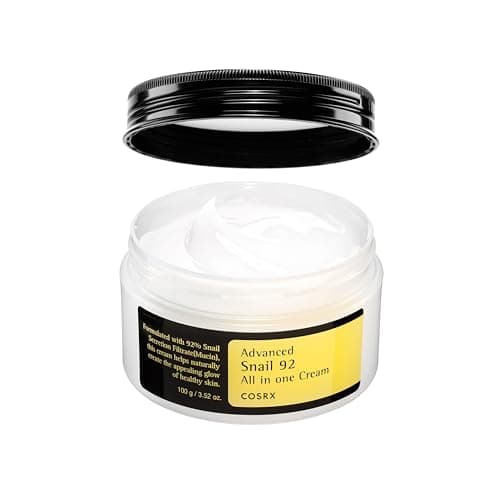
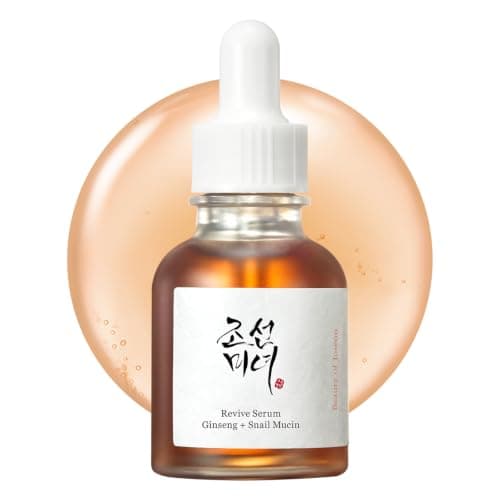
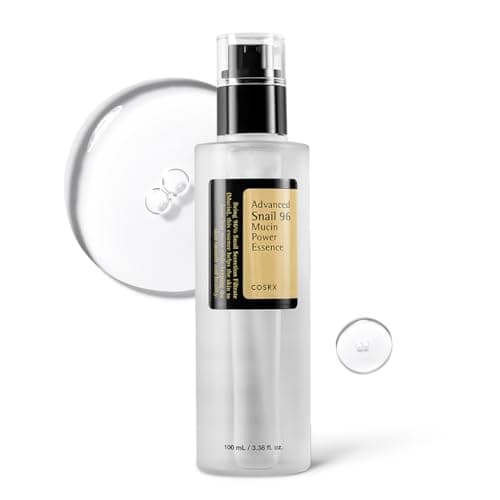
Buy the COSRX Advanced Snail 96 Mucin Power Essence. It holds the highest declared filtrate percentage of the three, the rest of the formula is close to empty in a good way, and it is also the cheapest product on this page — so it is the top pick and the budget pick at the same time, which does not happen often and is worth saying plainly rather than inventing a reason to rank something else first. If you want the same ingredient as a moisturizer rather than a watery layer, the COSRX Snail Mucin 92% Face Moisturizer is the one to get. If you want snail mucin inside a more interesting formula, the Beauty of Joseon Revive Serum pairs it with ginseng root extract.
That is the shopping answer. The rest of this page is the part the category does not tell you: what snail secretion filtrate is, what it is good at, and where the claims run ahead of the published work.
What is actually in the bottle
The INCI name is snail secretion filtrate. It is the filtered mucus a snail produces, and the useful parts of it are not exotic: water-binding glycoproteins and glycosaminoglycans, allantoin (a well-established soothing agent that also shows up in plenty of fragrance-free dermatology creams), small amounts of glycolic acid, and trace peptides and proteins. In other words it is a naturally occurring humectant blend with a soothing ingredient in it.
That composition explains exactly what people reliably report and nothing more. It holds water at the surface, which makes skin feel plumper and look more even for a few hours. It is slippery in a way most people find pleasant. It plays nicely with almost everything, so it is easy to slot into a routine. All three of those are real, and they are the reasons this category deserves to exist.
What the evidence does and does not support
We are going to be blunt, because this category is where otherwise careful people start repeating things. The direct human literature on topical snail filtrate is thin. What exists is dominated by laboratory and cell-culture work plus small, often manufacturer-adjacent studies. There is no large, independent, randomized trial showing that snail filtrate outperforms a conventional humectant such as glycerin or sodium hyaluronate on any clinically meaningful endpoint.
So here is how we would phrase each common claim honestly:
| The claim | Our honest read |
|---|
| Hydrates and plumps skin | Supported by composition and by consistent user experience. This is a humectant and it behaves like one |
| Soothes irritation | Plausible. Allantoin is a recognized soothing ingredient, and that part is not controversial |
| Repairs the skin barrier | Overstated. Holding water at the surface helps a barrier work; it is not the same as rebuilding its lipids. For that, see ceramides |
| Fades acne scars and dark spots | Not supported. If pigment is your complaint, the actives with real trial data are on the dark spots page |
| Stimulates collagen / reverses wrinkles | No. The cell-culture work gets quoted as if it were clinical. It is not, and we will not launder it |
None of that makes snail mucin a bad buy. It makes it a hydrator, which is a job worth paying for and one that most people's routines are missing. It just is not a treatment, and buying it instead of a retinoid or a sunscreen is a straightforwardly bad trade.
How we ranked these
- Filtrate share — the declared percentage, and where the filtrate sits in the ingredient list. A product that leads with it is doing something different from one that sprinkles it in at the bottom.
- Formula discipline — how much else is in there. In a hydrating layer, short is good: no fragrance, no essential oils, no drying alcohol.
- Texture fit — essence, serum or moisturizer. The right answer depends on where the gap in your routine is, not on which is better.
- Value — cost per ounce. This is a daily-volume product; price per use is the number that matters.
Where snail mucin goes in a routine
It is a hydrating layer, so it goes on damp skin after cleansing and before your moisturizer — the same slot an essence or a hyaluronic acid serum occupies. The one rule that matters: a humectant needs something over it. Left bare on dry skin in dry air, a water-binding layer can end up pulling moisture out of the skin rather than into it. That is the same mechanism we cover on the hyaluronic acid page, and it applies identically here.
A workable PM order, if you are adding this to an existing routine:
- Cleanse
- Treatment active, if tonight is a treatment night (retinoid or acid, never both)
- Snail essence, on skin that is still slightly damp
- Moisturizer, to seal it in
Percentage: what 96% does and does not mean
A declared 96%means snail secretion filtrate is 96% of the formula by weight — and because the filtrate is itself mostly water, that is not the same as 96% "active". It is still a meaningful number: it tells you the filtrate is the product rather than a label decoration, and it lets you compare two bottles honestly. Compare that with a serum that lists snail filtrate eleventh, behind the preservatives. Percentage is the only lever a shopper has in this category, which is why we score it first and why the one product here that does not publish a figure loses points for it.
Is it cruel? The question deserves a straight answer
Commercial filtrate is generally described as collected without killing the snail, typically by letting snails move over a surface or mesh and then filtering and sterilizing what they leave. That is the industry account, and we have no independent way to audit any specific supplier's practice. If animal-derived ingredients are a line you do not cross, this whole category is out and that is a perfectly coherent position — we keep a separate lower-impact skincare page and the honest substitute for a snail essence is a well-built glycerin-and-hyaluronic-acid hydrator, which does the same job for less money.
Who should not bother
- Anyone with a shellfish or mollusc allergy. Snail is a mollusc. The cross-reactivity question has not been settled, so patch test or skip — our patch testing guide has the method.
- Anyone whose actual problem is a damaged barrier. Hydration is not lipid replacement. Start at the damaged barrier page instead.
- Anyone buying it to treat acne or scarring. It is a soothing hydrator, and the evidence for anything more is not there.