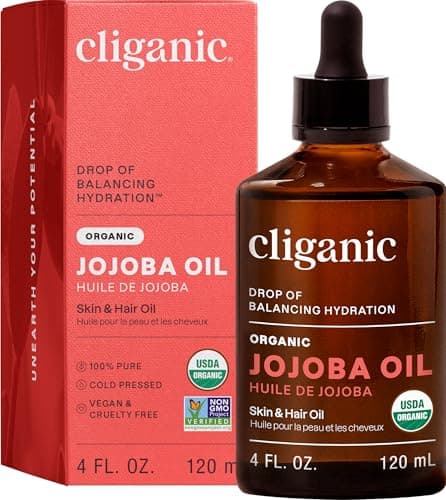
Buy Cliganic Organic Jojoba Oil: one declared ingredient, certified organic, cold-pressed, in the largest format here. It works as a face oil, a body oil and a hair-ends oil, which means one bottle replacing three, and it is the cheapest per ounce of anything on this page. If you want something that absorbs faster, The Ordinary 100% Plant-Derived Squalane has an ingredient list that is literally one word. And the pick that will annoy people: CeraVe Moisturizing Cream, because a big tub of a cheap cream that does your face and your body and gets finished has a better per-use story than three boutique jars that do not.
Before the picks, the honest framing.We did not audit anyone's supply chain, carbon accounting, water use or the recyclability of their specific bottle in your specific municipality. We cannot — nobody selling you an opinion on this page can, including the people who imply otherwise. What we can do is rank on four things that are readable off a label, and name the words that mean nothing.
What we ranked on
- Ingredient count. Fewer ingredients means fewer processing streams, fewer inputs, and fewer things to react to — reviews of allergic contact dermatitis from cosmetics put fragrance and preservative systems at the top of the culprit list, and a one-ingredient oil has neither.
- Multi-use. Does one bottle replace two? A product that serves as your face oil and your body oil halves the packaging for that job. This is the single biggest lever available to a shopper.
- Format efficiency. Bottles per year. A 4 oz bottle you finish in six months beats four 1 oz droppers, on every axis including price.
- Claim verifiability.Is the front of the bottle making a claim you can check? "Certified organic" and "100% plant-derived" are checkable. "Clean", "green" and "non-toxic" are not.
- Value. Because the genuinely low-impact routine is a short one you can afford to keep using, not a shelf of things you bought once.
The greenwashing glossary
None of the terms in the left column has a legal definition in US cosmetics. That does not make a product carrying them bad; it makes the word uninformative.
| Word on the front | What it legally means |
|---|
| Clean | Nothing. There is no standard and no list |
| Natural | Nothing. Petrolatum is natural; so is poison ivy |
| Non-toxic | Nothing. Dose makes the toxin, not origin |
| Chemical-free | Nothing, and it is not even possible — water is a chemical |
| Reef safe | Nothing. Unregulated, and applied inconsistently |
| Certified organic (USDA) | Something — an audited certification with a published standard |
| Cruelty-free (Leaping Bunny) | Something — a third-party certification scheme |
| Vegan | Usually accurate, rarely audited; a formulation claim, not an impact one |
One more that catches people: "recyclable". Most cosmetic packaging is technically recyclable and practically is not, because pumps, droppers and small mixed-material containers are rejected at sorting. A glass bottle with a plastic pump is two materials pretending to be one. Buy larger containers and fewer of them — that is the part of this you control.
The short answer
Quick picks
| # | Product | Best for | Score | Price |
|---|
| 01 | Cliganic Organic Jojoba OilOne ingredient, certified organic, cold-pressed, and the largest bottle on this page - which is the whole argument in one product. It serves as a face oil, a body oil and a hair-ends oil, so it is one bottle doing three jobs, and jojoba's wax esters are stable enough that a big bottle is not a liability. | Best overall, and best bottles-per-year | | $9.98·Amazon |
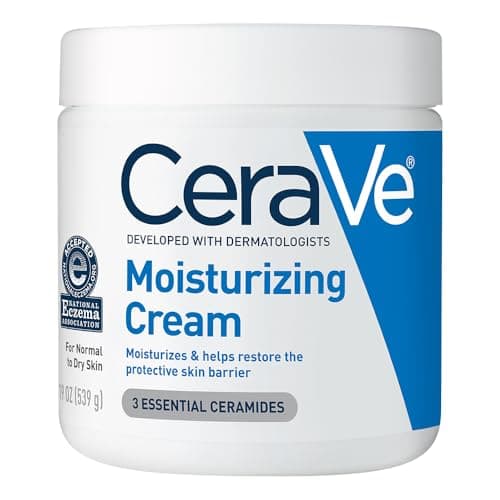
| 02 | CeraVe Moisturizing CreamThe pick that argues with the premise, and we stand behind it: one large tub that moisturizes a face and a whole body, at a price that means you actually finish it, replaces several smaller jars. It makes no environmental claim at all - which, on a page about unverifiable claims, counts in its favor. | Best one-tub-replaces-several | | $18.96·Amazon |
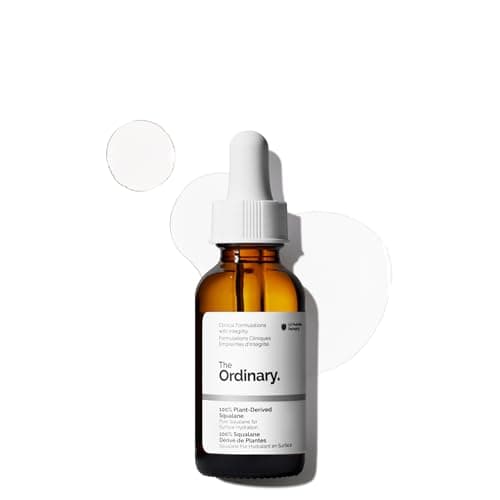
| 03 | The Ordinary 100% Plant-Derived SqualaneThe shortest ingredient list in skincare: one word. It is also the plant-derived version of a molecule that was historically taken from shark liver, which is the single most concrete sourcing question in this category and the one this label answers on the front. | Best single-ingredient pick | | $10.40·Amazon |
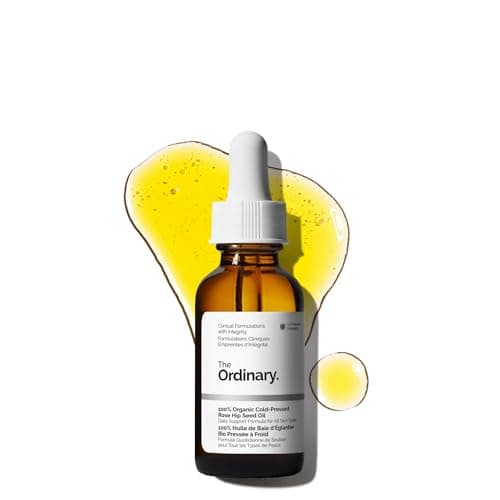
| 04 | The Ordinary 100% Organic Cold-Pressed Rose Hip Seed OilOne declared ingredient, organic and cold-pressed, and the clearest illustration on this page that low-impact and low-ingredient are not the same thing: a polyunsaturated seed oil oxidizes faster than anything else here, and an oil you throw away half-used is not a low-impact purchase. | Best organic single-ingredient oil | | $10.90·Amazon |
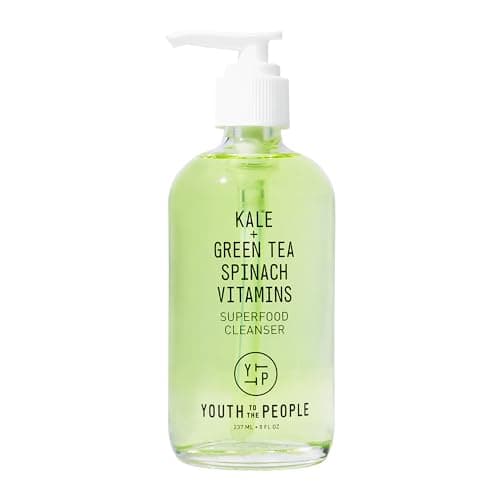
| 05 | Youth To The People Superfood Antioxidant CleanserThe cleanser that removes sunscreen and light makeup in one wash, which is the only reason it is here: it replaces a double cleanse, so it is one bottle instead of two. Vegan per the listing. It is also the most expensive thing on this page and the one with the longest botanical list. | Best one-step cleanse | | $39.00·Amazon |
#ad · Live prices from the Amazon Product API, as of October 18, 2026. Where we have no verified live price, we show none — a gap beats a number that has rotted.
In detail
The picks, in full
Best overall, and best bottles-per-year
Cliganic Organic Jojoba Oil
1 ingredientFragrance-freeLiquid wax ester4 oz
One ingredient, certified organic, cold-pressed, and the largest bottle on this page - which is the whole argument in one product. It serves as a face oil, a body oil and a hair-ends oil, so it is one bottle doing three jobs, and jojoba's wax esters are stable enough that a big bottle is not a liability.
- Ingredient count
- 9
- Multi-use
- 9
- Format efficiency
- 10
- Claim verifiability
- 9
- Value
- 10
Pros
- +By a wide margin the lowest price per ounce here, in the largest format
- +Cold-pressed, certified organic and declared as a single ingredient
- +Wax esters are oxidatively stable, so a big bottle is not a liability the way a big bottle of seed oil would be
- +Structurally close to skin's own surface lipids, which is the mechanism behind its reputation on oily skin
Cons
- −Heavier and slower to absorb than squalane - noticeably more of a film
- −Sold as a general-purpose face, hair and skin oil, so nothing about the packaging is face-specific
- −A 4 oz bottle is far more than a face alone needs, and every open bottle has a shelf life
Don't buy this if…
…you want something that disappears in seconds. This sits on skin longer than squalane does, which is the trade for the price and the staying power.
Best one-tub-replaces-several
CeraVe Moisturizing Cream
3 ceramidesHyaluronic acidMVE deliveryFragrance-free
The pick that argues with the premise, and we stand behind it: one large tub that moisturizes a face and a whole body, at a price that means you actually finish it, replaces several smaller jars. It makes no environmental claim at all - which, on a page about unverifiable claims, counts in its favor.
- Ingredient count
- 5
- Multi-use
- 10
- Format efficiency
- 10
- Claim verifiability
- 8
- Value
- 10
Pros
- +One tub genuinely covers face and body, which removes a second product from the routine
- +Enormous format, so the packaging-per-use figure is the best here
- +Fragrance-free, which removes the most common contact-allergy culprit
- +Cheap enough that it gets used up rather than abandoned half full
Cons
- −A long synthetic ingredient list - this pick wins on format and finishing, not on brevity
- −Thick and slow to absorb; too heavy for oily skin in summer
- −Plastic tub, and the lid is a second material
Don't buy this if…
…your definition of eco-friendly is a short botanical ingredient list - on that criterion the single-ingredient oils here beat it outright.
Best single-ingredient pick
The Ordinary 100% Plant-Derived Squalane
1 ingredientFragrance-freeFully saturated1 fl oz
The shortest ingredient list in skincare: one word. It is also the plant-derived version of a molecule that was historically taken from shark liver, which is the single most concrete sourcing question in this category and the one this label answers on the front.
- Ingredient count
- 10
- Multi-use
- 9
- Format efficiency
- 6
- Claim verifiability
- 9
- Value
- 8
Pros
- +The published INCI is a single word: Squalane. There is nothing to audit and nothing to react to
- +Labeled 100% plant-derived, which answers the one sourcing question worth asking about this molecule
- +Saturated hydrocarbon, so it is chemically stable - no rancidity clock running
- +Absorbs faster and sits lighter than any seed oil here
Cons
- −Pure emollient - no antioxidants, no actives, nothing that changes pigmentation, texture or lines
- −The smallest bottle here, so the low sticker price is not the low price per ounce
- −Glass dropper is fiddly and the bottle is easy to over-pour from
Don't buy this if…
…you want the oil to do something. Squalane makes everything underneath it feel better and treats nothing.
Best organic single-ingredient oil
The Ordinary 100% Organic Cold-Pressed Rose Hip Seed Oil
1 ingredientFragrance-freeHigh in polyunsaturates1 fl oz
One declared ingredient, organic and cold-pressed, and the clearest illustration on this page that low-impact and low-ingredient are not the same thing: a polyunsaturated seed oil oxidizes faster than anything else here, and an oil you throw away half-used is not a low-impact purchase.
- Ingredient count
- 10
- Multi-use
- 6
- Format efficiency
- 5
- Claim verifiability
- 9
- Value
- 9
Pros
- +One declared ingredient, Rosa Canina Seed Oil, organic and cold-pressed
- +Unrefined, so the lipid profile people want in a rosehip oil is intact
- +Sensible small bottle, which for this particular oil is the right format rather than a limitation
- +Fragrance-free, which is uncommon among products sold on a tone-and-texture promise
Cons
- −The least stable oil here - polyunsaturated fats oxidize fastest, and an oxidized oil is not doing your barrier any favors
- −Rosehip is not a retinoid and is not a substitute for one
- −Wants a cool, dark cupboard, not a windowsill
Don't buy this if…
…you are a slow finisher. Buy the jojoba instead - the bottle that goes rancid in a cupboard is the worst purchase on this page by every measure.
Best one-step cleanse
Youth To The People Superfood Antioxidant Cleanser
Gel cleanserAntioxidant extractsRemoves makeupVegan
The cleanser that removes sunscreen and light makeup in one wash, which is the only reason it is here: it replaces a double cleanse, so it is one bottle instead of two. Vegan per the listing. It is also the most expensive thing on this page and the one with the longest botanical list.
- Ingredient count
- 4
- Multi-use
- 8
- Format efficiency
- 7
- Claim verifiability
- 6
- Value
- 5
Pros
- +Removes sunscreen and light makeup in a single wash, which removes a product from the routine
- +Vegan per the listing, and sold in glass rather than plastic
- +Gentle enough for twice-daily use despite the cleansing power
Cons
- −Three to four times the price per ounce of a drugstore equivalent
- −Botanical extracts are a real risk for reactive or fragrance-sensitive skin
- −A glass bottle with a plastic pump is two materials, whatever the shelf copy implies
Don't buy this if…
…your skin is sensitive - botanical extracts are exactly the category of ingredient reactive faces object to, and a short-list cleanser is both gentler and cheaper.
The sunscreen question, which is the one with research behind it
If there is a genuinely substantive environmental argument in skincare, it is about UV filters rather than packaging. Published toxicological work on oxybenzone (benzophenone-3) reports effects on coral planulae and cultured cells, alongside documented environmental contamination in Hawaii and the US Virgin Islands — which is the research behind the state-level restrictions on oxybenzone and octinoxate sunscreens. The magnitude of the real-world contribution from swimmers versus other sources is still argued, and we are not going to pretend it is settled.
What that means practically: if you are swimming in a reef environment, a mineral sunscreen with zinc oxide or titanium dioxide avoids the two filters the legislation targets. Ignore the words "reef safe" on the front of a box — they are unregulated — and read the Drug Facts panel instead. Our best mineral sunscreen page ranks those options on their actual filter declarations, and chemical versus mineral sunscreen covers the trade-offs without taking a side it cannot support.
What it does not mean: stop wearing sunscreen. The right response is choosing a filter system, not skipping photoprotection.
The four changes that beat any purchase
- Own fewer products and finish them. A four-product routine used to the end has a smaller footprint than a twelve-product shelf, by a margin no packaging choice can close. It is also better for your skin, which is the argument best skincare for beginners makes from the other direction.
- Buy the largest size of anything stable. Jojoba, squalane, ceramide creams and cleansers keep. Buy big. Vitamin C and seed oils do not — buy small, and see does skincare expire for which is which.
- Choose multi-use over single-use. One oil for face, body and hair ends. One cream for face and body. One cleanser that removes sunscreen without a first cleanse.
- Stop replacing things that work. The least sustainable habit in skincare is the twelve-week product cycle, and it is driven by expecting results on a timeline skin does not run on — how long skincare takes to work is the honest version of that timeline.
What we did not rank, and why
No carbon figures, no water-use figures, no recycled-content percentages, no supply-chain assessments. We have no way to verify any of them, and a number we cannot check is worse than no number — which is the same rule that governs how we review everything else on this site. If a brand publishes an audited figure, that is a reason to believe the brand; it is not something we can independently confirm, so it does not move a ranking here.
How we picked
We did not lab-test this gear
Everyone in this category says they tested twenty products. We have not lab-tested any of these, and we say so. What we did instead: compiled the published specifications, decoded the ingredient (INCI) lists active by active, ran the math where there was math to run, and scored each product against a published rubric. The scores are judgments from documented research — not measurements we took, because we do not have a lab and we will not pretend we do. Where a number came from someone else's work, we name them in Sources.
Questions
Frequently asked
What is the best eco-friendly skincare product?+
Cliganic Organic Jojoba Oil on our criteria: one declared ingredient, certified organic, cold-pressed, in the largest format here, and usable on face, body and hair ends so one bottle replaces three. If you want faster absorption, The Ordinary 100% Plant-Derived Squalane has a one-word ingredient list.
Does eco-friendly skincare mean anything?+
Not as a regulated term. There is no legal definition of clean, natural, green, non-toxic or reef safe in US cosmetics, and no body auditing those words. Certifications like USDA Organic and Leaping Bunny do mean something because they have published standards behind them. Everything else is a marketing decision.
Is natural skincare better for the environment?+
Not automatically. A botanical extract needs land, water and processing; a synthetic emollient can be made in one step with a known input. Plenty of plant-derived ingredients are genuinely good choices - jojoba and plant-derived squalane are two of them - but the word natural on its own tells you nothing about impact.
What does reef safe sunscreen actually mean?+
Legally, nothing - the phrase is unregulated and used inconsistently. What has research behind it is the specific concern about oxybenzone and octinoxate, which is why some jurisdictions restrict them. If reef exposure matters to you, read the Drug Facts panel and choose a zinc oxide or titanium dioxide sunscreen rather than trusting the front of the box.
Is skincare packaging recyclable?+
Technically more often than practically. Pumps, droppers and small mixed-material containers are usually rejected at sorting, and a glass bottle with a plastic pump is two materials. The lever you actually control is buying larger containers and fewer of them.
Does a shorter ingredient list mean a better product?+
Not better, but more checkable - and fewer ingredients does mean fewer things to react to, with fragrance and preservative systems leading the contact-allergy lists. A one-ingredient oil is the most transparent thing you can buy. It is also the least capable: it treats nothing.
Is squalane from sharks?+
It historically was, and some squalene still is. That is exactly why the 100% plant-derived label on The Ordinary's version is worth reading - it answers the one sourcing question that genuinely matters for this molecule, on the front of the bottle.
Receipts
Sources
We do not run a testing lab, and we do not pretend to. Where a measured number came from someone else's work, we name them and link them. Where we could not verify something, we say so on the page rather than quietly leaving it out. Read our full method.