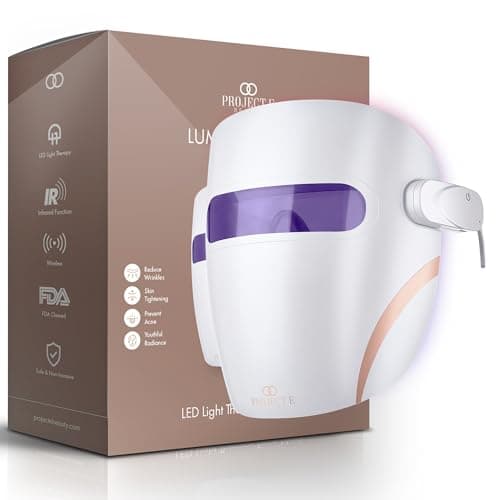
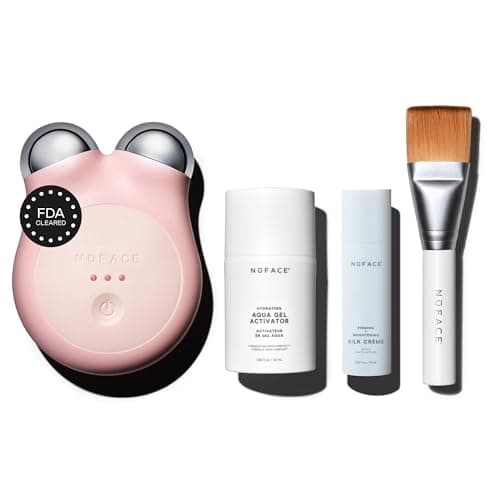
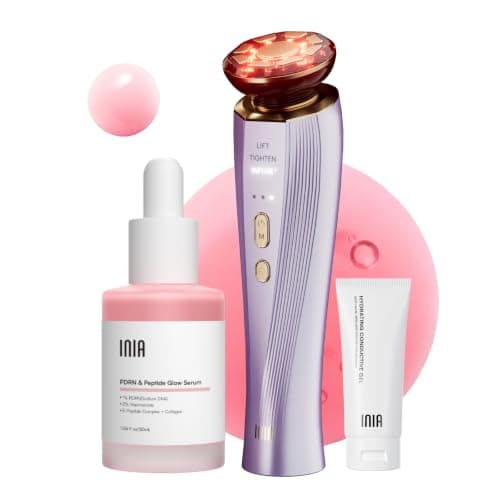
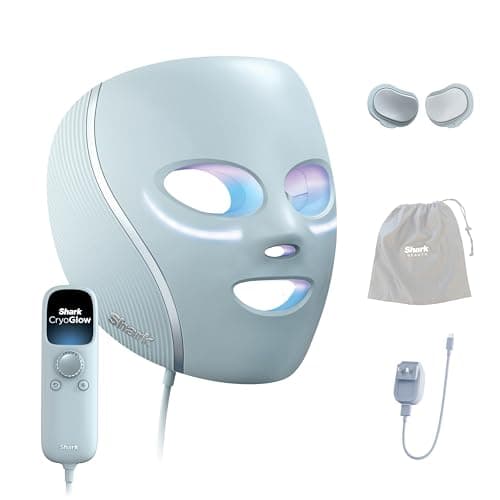
Buy the LED mask. Of the two big-ticket at-home device categories, red and near-infrared phototherapy has the larger published literature behind it, the lower weekly commitment, and no recurring cost — and the effect it produces does not vanish the month you get busy. Our pick is the Shark CryoGlow, because it is the one mask that also brings a genuinely useful under-eye cooling function, from a brand that undercuts the boutique specialists. Buy microcurrent instead only if you will genuinely run it three to five times a week, indefinitely, and you want a visible lift this month rather than a slower change over six.
This is the most expensive decision on the whole device shelf, and the two categories are usually sold with the same photographs and the same vocabulary. They work nothing alike. One is light at specific wavelengths; the other is a low-level electrical current aimed at facial muscle. Getting the mechanism straight is what makes the choice easy.
LED: light at a dose, with the better paper trail
An LED mask delivers red (roughly 630-660nm), near-infrared (around 830-850nm) and sometimes blue (around 415nm) light. Red and near-infrared are the wavelengths with the most dermatological literature behind them — Ablon's 2018 review in the Journal of Clinical and Aesthetic Dermatology is the usual summary — and the mechanism proposed is photobiomodulation: light absorbed by mitochondria, with downstream effects on fibroblast activity. Blue light has a separate, narrower case around acne bacteria.
What matters when buying is dose, which means two numbers the good manufacturers publish and the bad ones do not: how many LEDs, and at which wavelengths. A mask with 200 diodes and three wavelengths is not the same product as one with 700 and six, whatever the photography implies. The honest expectation is a slow, modest improvement in fine lines and tone over three to six months of consistent use — not a result you will photograph in week two. Our LED face mask roundup ranks the category on exactly those published counts.
Microcurrent: a real effect with a short half-life
A microcurrent device passes a very low-level current through facial tissue, and the effect people buy it for is a visible lift in the hours and days after a session. That effect is real and most owners can see it. The two things the marketing does not lead with are that it reverses— within weeks of stopping, you are back where you started — and that it needs a conductive gel, which is a genuine recurring cost on top of a device that already costs more than most people's entire routine.
The published base is also thinner. Most of what exists on at-home microcurrent comes from or around the manufacturers, and the independent work is limited. We rank the category in the microcurrent roundup and score every pick in it below seven out of ten for exactly that reason. It is not a scam. It is a subscription to a look, priced as a purchase.
The five questions that decide it
- Will you use it three to five times a week forever? If no, LED. This is the single most useful filter in the category and most buyers fail it.
- Do you want an effect this month or a change over six? Microcurrent for the former, LED for the latter.
- Can you live with a recurring cost? Conductive gel is not optional on a microcurrent device. LED masks have no consumables at all.
- Is acne part of the problem? Then LED, for the blue-light channel — and read our benzoyl peroxide roundup first, because a ten-dollar wash will out-perform a three-hundred-dollar mask on active acne.
- Do you have a photosensitising condition or take a photosensitising medication? Then neither, until you have asked your own clinician. This is not a question for a website.
What neither device does
Neither category removes pigment, neither treats a scar, and neither substitutes for the two interventions with the largest effect on how a face ages: daily sunscreen and a retinoid used consistently. A sensible way to think about the money is that a year of good sunscreen and a decent retinoid costs a small fraction of either device on this page and has a far better evidence base than both. If you are choosing between the device and the products, buy the products.
On dark spots specifically, neither light nor current is the tool — the pigment roundup covers what actually works, and the answer is a topical active plus sunscreen, for months.
Head to head, on the five things that matter
| | LED mask | Microcurrent |
|---|
| Mechanism | Red / near-infrared / blue light absorbed by skin tissue | Low-level electrical current through facial muscle |
| Published support | The larger literature, including independent reviews | Thinner, and much of it manufacturer-adjacent |
| Time to visible effect | Three to six months of consistent use | Hours after a single session |
| What happens if you stop | You keep what you gained | It reverses within weeks |
| Weekly commitment | Three to five short sessions, hands free | Three to five sessions, both hands occupied |
| Recurring cost | None | Conductive gel, permanently |
| Best for | Tone and fine lines over time; acne, via blue | A visible short-term lift, if you will do the work |
If this budget feels absurd — and it might
It is reasonable to look at both of these numbers and decide the whole category is not for you. The device shelf has a cheap end that is far more honest about what it does: our best skincare devices under $50 page ranks six tools that each do one describable physical thing, and the evidence ranking across every device category lays out which of them has anything behind it. Spending nothing on devices and everything on sunscreen is a defensible strategy, and we would not argue with it.