Buy the mask. If you want red light therapy at home and you are choosing between a full-face LED mask and a handheld red-light wand, the mask is the one that delivers a dose resembling what the research used — our pick is the Shark CryoGlow, for anyone who will realistically sit still for ten minutes a few times a week. The wand is a worse version of the same idea with one genuine exception: if what you want is a cheap, targeted tool for the eye area and the nasolabial folds, and you accept that it is a nice ritual rather than a treatment, the Solawave wand is a reasonable object to own.
This is a different question from the one our LED versus microcurrent page answers. That page compares two mechanisms — photobiomodulation against electrical muscle stimulation — and concludes that LED wins because its effect persists when you stop. This page assumes you have already chosen light and are standing in front of two shapes of product at wildly different prices. The deciding variable is not the wavelength on the box. It is dose.
Why dose settles it
Red-light effects on skin are dose-dependent in the same way a sunscreen is: the useful quantity is irradiance multiplied by time across the area you are treating. A mask puts dozens to a couple of hundred diodes across the whole face at once, so the whole face receives the session. A wand puts a handful of diodes behind a window about the size of two postage stamps, and the only way to cover a face with it is to move it, which divides your already-smaller output across a dozen stops of a few minutes each.
The arithmetic is unkind. To give a cheekbone the same exposure a mask gives it in one ten-minute session, a wand has to sit on that cheekbone for most of those ten minutes — and then you still have the forehead, the other cheek, the jaw and the upper lip. In practice nobody does this. People trace the wand around their face for three or four minutes in total, which is a pleasant habit and not a dose. That is the whole case, and it is why we rank two masks above the best wand on the market.
The four questions that decide it for you
- Will you sit still? A mask is hands-free and boring, which is exactly why it gets used — you put it on and do nothing. A wand needs an engaged hand for the whole session. Be honest about which of those you will still be doing in March.
- Is the target your whole face or one spot? Whole face, mask, no contest. One stubborn area — the eye corners, a fold beside the mouth — and a wand reaches it with contact and warmth a rigid mask cannot.
- Does it need to travel? A rigid mask is an awkward object in a suitcase. A wand fits in a wash bag, charges by USB and is the only one of the two you will take anywhere.
- What is the budget, really? Masks are the single most expensive category on this site. If the realistic number is small, a cheap mask is still a better buy than a wand — and if it is smaller than that, our devices under $50 page is a more honest place to spend it.
Side by side
| | Full-face LED mask | Handheld red light wand |
|---|
| Area treated per session | The whole face at once | A window of roughly two square inches at a time |
| Hands free? | Yes — strap it on and ignore it | No, the entire session is hand-held |
| Session length | 3-10 minutes, set by the device | However long you keep going, which is the problem |
| Realistic dose to the cheek | Full session | A fraction of the session, divided across stops |
| Reaches eye corners and folds | Only as well as the shell fits your face | Yes — contact, pressure and warmth |
| Travels | Badly | Easily |
| Running cost | None | None, unless it needs conductive gel for a microcurrent mode |
| Typical price bracket on this site | The highest of any category | A fraction of a mask |
One thing neither form factor fixes: eye safety deserves attention in both. Masks with proper eye cut-outs or closed shells are designed for it; pointing a bright wand at an open eye is not a good idea in any price bracket.
The short answer
Quick picks
| # | Product | Best for | Score | Price |
|---|
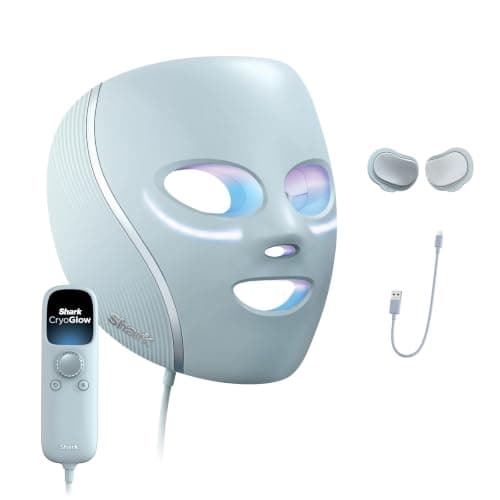
| 01 | Shark CryoGlow LED Face MaskThe mask that wins this comparison, and the reason the wand loses: a full-face shell with red, blue and infrared programs plus under-eye cooling, so one short session treats everything a wand would need twenty minutes of tracing to reach. The under-eye cooling is also the one mask feature that answers the wand's best argument — targeted work on the eye area. | Best overall — full-face dose, hands-free | | $299.00·Amazon |
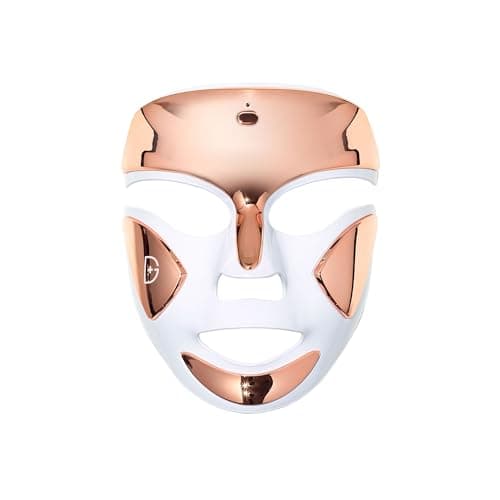
| 02 | Dr. Dennis Gross DRx SpectraLite FaceWare ProThe mask to buy if you want the shortest possible session: 162 diodes at 633 nm and 415 nm, three minutes, FDA-cleared, and the most frictionless device in the category. It is the strongest argument against a wand on convenience grounds alone — three minutes hands-free against twenty minutes of tracing. | Best for the shortest session | | $455.00·Amazon |
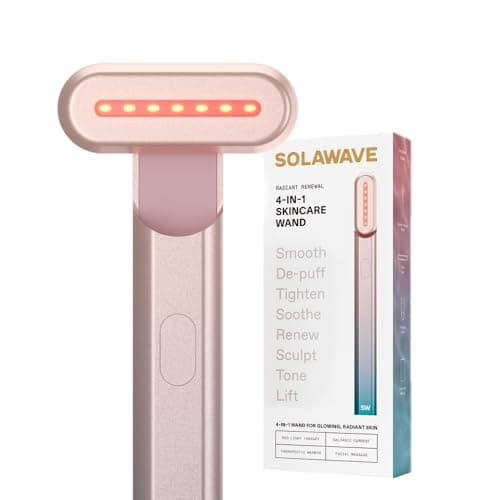
| 03 | Solawave 4-in-1 Red Light Therapy WandThe best version of the thing we are arguing against, and a genuinely nice object. Red light, microcurrent, warmth and vibration in one rechargeable wand at a fraction of a mask's price. Buy it for targeted work around the eyes and the mouth, for travel, and because a five-minute massage with warmth is pleasant — not because it will dose a whole face. | Best wand — targeted areas and travel | | $160.55·Amazon |
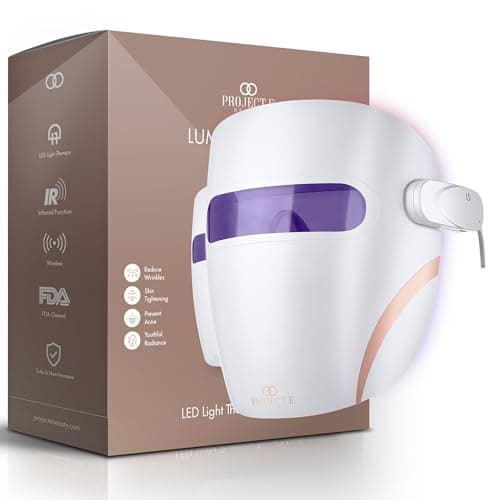
| 04 | Project E Beauty LED Light Therapy MaskThe budget mask, and the pick that settles the real-world version of this comparison: if your budget is wand money, a cheap mask still covers a whole face while a wand covers two square inches. Seven color modes is marketing — red and blue are the two with support behind them — but the form factor is the right one. | Best if your budget is wand-sized | | $159.00·Amazon |
#ad · Live prices from the Amazon Product API, as of October 18, 2026. Where we have no verified live price, we show none — a gap beats a number that has rotted.
In detail
The picks, in full
Best overall — full-face dose, hands-free
Shark CryoGlow LED Face Mask
Red + blue + IRUnder-eye coolingTargeted programsRigid shell
The mask that wins this comparison, and the reason the wand loses: a full-face shell with red, blue and infrared programs plus under-eye cooling, so one short session treats everything a wand would need twenty minutes of tracing to reach. The under-eye cooling is also the one mask feature that answers the wand's best argument — targeted work on the eye area.
- Dose delivered
- 9
- Evidence
- 8
- Convenience
- 8
- Build
- 8
- Value
- 7
Pros
- +Whole face receives the full session, which is the entire point of the category
- +Under-eye cooling covers the area people buy wands for
- +Separate red, blue and infrared programs rather than one undifferentiated glow
- +Nothing to buy again — no gel, no refills, no subscription
Cons
- −The most expensive thing on this page by a wide margin
- −Rigid shell does not suit every face shape and will not pack
- −Still needs three or four sessions a week, indefinitely, to hold an effect
Don't buy this if…
…you will not commit to the schedule. An unused mask is the most expensive ornament in skincare, and a wand you actually use beats a mask in a drawer.
Best for the shortest session
Dr. Dennis Gross DRx SpectraLite FaceWare Pro
Red 633nm + blue 415nm162 LEDs3-minute sessionFDA-cleared
The mask to buy if you want the shortest possible session: 162 diodes at 633 nm and 415 nm, three minutes, FDA-cleared, and the most frictionless device in the category. It is the strongest argument against a wand on convenience grounds alone — three minutes hands-free against twenty minutes of tracing.
- Dose delivered
- 8
- Evidence
- 8
- Convenience
- 10
- Build
- 9
- Value
- 5
Pros
- +Three-minute program removes every excuse not to use it
- +Published wavelengths, which is rarer in this category than it should be
- +Flexible shell sits closer to the face than a rigid shield
- +FDA-cleared, which is a claims-and-safety statement and worth having
Cons
- −No infrared and no cooling, so it is a narrower device than the CryoGlow
- −Price is in the same uncomfortable bracket
- −The clearance is not a finding that it works — read it for what it is
Don't buy this if…
…you want infrared wavelengths or any treatment of under-eye puffiness. This is red and blue only.
Best wand — targeted areas and travel
Solawave 4-in-1 Red Light Therapy Wand
Microcurrent + red lightTherapeutic warmthVibrationRechargeable
The best version of the thing we are arguing against, and a genuinely nice object. Red light, microcurrent, warmth and vibration in one rechargeable wand at a fraction of a mask's price. Buy it for targeted work around the eyes and the mouth, for travel, and because a five-minute massage with warmth is pleasant — not because it will dose a whole face.
- Dose delivered
- 4
- Evidence
- 6
- Convenience
- 9
- Build
- 7
- Value
- 8
Pros
- +Reaches the eye corners, brow and nasolabial folds a rigid mask glides over
- +Packs anywhere, charges by USB, no mask-shaped suitcase problem
- +Warmth and vibration make it a tool people actually enjoy using
- +Costs a fraction of any mask on this page
Cons
- −Treatment window is tiny, so whole-face coverage is not realistic
- −Combining four functions means none is at full strength
- −Microcurrent mode wants a conductive gel, which is a recurring cost
Don't buy this if…
…whole-face red light is the goal. Buying this instead of a mask is buying a different, smaller product and expecting the mask's result.
Best if your budget is wand-sized
Project E Beauty LED Light Therapy Mask
7 color modesIncludes red + blueRigid maskEntry-level pricing
The budget mask, and the pick that settles the real-world version of this comparison: if your budget is wand money, a cheap mask still covers a whole face while a wand covers two square inches. Seven color modes is marketing — red and blue are the two with support behind them — but the form factor is the right one.
- Dose delivered
- 6
- Evidence
- 6
- Convenience
- 7
- Build
- 5
- Value
- 9
Pros
- +Whole-face coverage at close to handheld-wand money
- +Includes the two wavelengths that matter among its seven modes
- +Nothing to buy again once it is in the house
- +Lowest-risk way to find out whether you will stick to the schedule
Cons
- −Output is not published, so the dose is unverifiable — scored accordingly
- −Build quality is clearly the entry tier; the shell is basic
- −Five of the seven colors exist to make the box look busier
Don't buy this if…
…you want a device whose specifications you can check. No irradiance figure is published for this one, and we will not invent one.
What red light does and does not do
We hold the same line here as on the LED mask roundup: red and near-infrared light have a plausible mechanism and a reasonable body of published work behind modest improvements in fine lines, tone and inflammation, and blue light has support in acne. What none of it supports is a dramatic change, a lifted jawline, or anything happening in a fortnight. Our evidence ranking for at-home devices puts LED at the top of the device shelf, which tells you as much about the rest of the shelf as it does about LED.
Two specific cautions apply to wands more than masks. Pressing and dragging a warm device across the same patch of skin repeatedly is a friction exposure, and reactive or flushing-prone faces do not love it — if that is you, read our rosacea roundupbefore buying either. And anything sold as “4-in-1” is dividing one modest power budget four ways.
FDA clearance is not evidence that it works
This category leans on the phrase harder than any other on the site, so it is worth being precise. A clearance means a device is substantially equivalent to something already on the market and can legally make certain claims. It is a regulatory statement about safety and marketing, not a finding of efficacy from a trial of that device. A cleared mask and an uncleared mask can deliver identical light; an uncleared wand is not therefore dangerous. Read it as a floor, not a recommendation.
If neither is the right purchase
Plenty of people asking this question would be better served somewhere else entirely. If the complaint is a puffy face in the morning, the cheapest effective tool on this site is a cold one — see ice roller vs gua sha. If it is texture and fine lines, a retinoid costs less than any device here and has more evidence behind it; that is the whole argument of our retinol roundup. And if the honest answer is that you want something to use that feels like it is doing something, our under $50 device page ranks the cheap end where the claims are smaller and more of them are true.
How we picked
We did not lab-test this gear
Everyone in this category says they tested twenty products. We have not lab-tested any of these, and we say so. What we did instead: compiled the published specifications, decoded the ingredient (INCI) lists active by active, ran the math where there was math to run, and scored each product against a published rubric. The scores are judgments from documented research — not measurements we took, because we do not have a lab and we will not pretend we do. Where a number came from someone else's work, we name them in Sources.
Questions
Frequently asked
Is a red light wand as good as an LED mask?+
No, for one reason: coverage. A mask treats the whole face for the full session; a wand treats about two square inches at a time, so covering a face means dividing a smaller output across a dozen stops. For a targeted area or for travel the wand is genuinely useful. As a substitute for a mask it is a smaller product being asked to do a bigger job.
How long would I have to use a wand to match a mask session?+
Longer than anyone does. If a mask gives the whole face ten minutes, matching it region by region with a small window means roughly ten minutes per region — which is an hour-plus of hand-held tracing. In practice people spend three or four minutes in total, which is why we treat a wand as a ritual rather than a dose.
Does red light therapy actually work on wrinkles?+
There is reasonable published support for modest improvements in fine lines, tone and inflammation from red and near-infrared light, used consistently over months. There is no support for a dramatic change, and nothing about it lifts tissue. Expect a small effect or none, and keep the device if you enjoy the ritual.
Are cheap LED masks worth buying?+
A cheap mask still beats a wand on coverage, which is why one is ranked on this page. The trade is that budget masks rarely publish an irradiance figure, so the dose cannot be verified. Buy one as a cheap test of whether you will keep the habit, not as a verified treatment.
Can I use an LED mask and a red light wand together?+
You can, and there is no interaction to worry about, but there is also little point in doubling up on light. If you own both, the sensible division is the mask for the scheduled whole-face session and the wand for the spots the shell does not sit against.
Do I need eye protection for an LED mask or wand?+
Use whatever shielding the device ships with and keep your eyes closed during a session. Masks are designed around the eye area; a handheld wand is easy to point at an open eye without meaning to. Anyone with an eye condition or on photosensitising medication should ask their own clinician first.
Receipts
Sources
We do not run a testing lab, and we do not pretend to. Where a measured number came from someone else's work, we name them and link them. Where we could not verify something, we say so on the page rather than quietly leaving it out. Read our full method.