Skip to content
Barrier & Bloom

Education · Ingredients

Alpha arbutin: hydroquinone with a sugar on it, which is the whole point

It inhibits the enzyme that makes melanin, so it works on next month's pigment rather than this month's. That one sentence explains the 2% standard, the eight-to-twelve-week timeline, and why it is useless without sunscreen.

By Stephen V.Updated How we review
#ad

We earn a commission when you buy through our Amazon links, at no extra cost to you. It never changes a verdict, and we say so when the cheaper product is the better buy. How this works.

Alpha arbutin is hydroquinone with a glucose molecule attached, and almost everything useful about it follows from that. The sugar makes it slower, gentler, more stable and legal to sell over the counter in the United States, where hydroquinone itself is not. It works by inhibiting tyrosinase, the enzyme that builds melanin — which means it reduces the pigment your skin is about to make and does nothing to the pigment already sitting in your skin. That is not a disappointing detail. It is the mechanism, and it explains every honest thing about how this ingredient behaves.

The practical consequences: it takes two to three months, it has to be paired with sunscreen to make any sense at all, it does not sting or photosensitize, and 2% is the number almost everyone uses. Below: what it is, what the evidence does and does not support, how to read a label, and the four products worth buying.

What it actually is

Arbutin is a glycoside — a molecule with a sugar bonded to something else. In this case the something else is hydroquinone, the most effective and most controversial pigment ingredient in dermatology. The bond can form in two configurations, and that is the alpha and beta distinction you see on labels:

  • Beta-arbutin, usually sold as just "arbutin," is the naturally occurring form, classically from bearberry. It is the weaker one.
  • Alpha-arbutin is the synthetic alpha-anomer. Same two pieces, bonded the other way round, and substantially more active against tyrosinase.

A 2021 review in Phytotherapy Researchputs the difference in concrete terms: alpha-arbutin inhibited tyrosinase at around 2.0 mM where natural arbutin needed more than 30 mM, which is where the frequently repeated "ten times more effective" line comes from. We would attach a caveat the review itself is careful about — potency figures in this literature depend heavily on the enzyme source and the assay, and the results are not uniform. At least one study found no inhibition of mushroom tyrosinase diphenolase activity by alpha-arbutin at all. The direction of the finding is consistent; the magnitude is assay-dependent.

Because it is a hydroquinone glycoside, the usual description is that it behaves like a slow-release precursor: the molecule is more stable and less irritating than free hydroquinone, and whatever activity it has is delivered gradually rather than all at once. That is the trade in one line — gentler and slower, in exchange for weaker.

Why hydroquinone is the comparison, and why you cannot buy it

Worth knowing, because every "hydroquinone alternative" claim in this category is pointing at a real regulatory fact. Under the CARES Act of 2020, the FDA finalized the status of over-the-counter skin-lightening products: hydroquinone products sold OTC are now treated as unapproved new drugs and misbranded, and manufacturers were required to pull them from the market from September 2020. The agency has since issued warning letters to companies still selling them, citing reports of rashes, facial swelling and ochronosis — a bluish-black discoloration that can be permanent. One prescription hydroquinone combination product remains FDA-approved, for short-term use in moderate-to-severe facial melasma.

So when a serum calls itself a gentler alternative to hydroquinone, the comparison is to something you now need a prescription for. Alpha arbutin is the compliant, mild, buy-it-today version of the same chemistry. It is not as strong, it does not carry the ochronosis concern at cosmetic levels, and the clinical literature behind it is much thinner — the 2021 review says so directly, calling for larger high-quality trials.

The mechanism decides the timeline

This is the part most pages skip, and it is the part that stops people quitting in week three. Tyrosinase is the rate-limiting enzyme in melanin synthesis. Inhibiting it means melanocytes make less new pigment. It does not bleach, lift, dissolve or remove anything that is already there.

The pigment you can currently see is in cells that are already on their way up through the epidermis. It fades when those cells shed, at the pace of ordinary epidermal turnover — which is weeks, not days. So the sequence is: start the serum, stop adding pigment, wait for the existing pigment to leave on its own schedule. Eight to twelve weeks before judging it is not a hedge, it is the arithmetic. Our how long skincare takes to work page sets the same expectation across the board.

And the corollary nobody wants: UV exposure triggers the exact enzyme you are paying to inhibit. Using a tyrosinase inhibitor without daily sunscreen is a treadmill — you suppress production in the evening and stimulate it at lunchtime. Sunscreen is not a nice-to-have alongside this ingredient, it is the other half of the intervention, and our face sunscreen roundup is where that money should go first if you only have money for one thing.

Where it fits against the other pigment actives

The useful way to think about this category is by mechanism, which is exactly how our dark-spot roundup ranks it.

  • Alpha arbutin — inhibits the enzyme. Gentlest entry point, no photosensitivity, stacks with everything, slowest.
  • Tranexamic acid — works further upstream, on the signaling that recruits pigment production, which is why it is the one with the most interest in melasma specifically.
  • Azelaic acid — also a tyrosinase inhibitor, plus anti-inflammatory and anti-bacterial, which makes it the pick when the pigment is left over from acne.
  • Niacinamide — interferes with pigment transfer to skin cells rather than its production. A different step in the same pathway, which is why the two are complementary rather than redundant.
  • Vitamin C — also interferes with melanin synthesis, and brings antioxidant protection that reduces the UV-driven stimulus in the first place.
  • Retinoids and acids — do not inhibit anything. They speed up turnover, so pigmented cells leave sooner. That is a genuinely different and complementary lever, and it is why retinol keeps appearing in pigment routines.

Because alpha arbutin does not exfoliate, does not sensitize skin to sunlight and does not sting, it is the easiest of these to add to an existing routine. It is also the one least likely to produce a dramatic result on its own.

Reading an alpha arbutin label

  • 2% is the de facto standard, and nearly every serious product in the category uses it. Supplier guidance has settled there, and higher numbers are rare rather than impressive. A product shouting a bigger number without a published reason deserves suspicion, not a premium.
  • "Arbutin" with no prefix may be the beta form. On an INCI list look for alpha-arbutin. "Bearberry extract" or Arctostaphylos uva-ursi is the plant source of the weaker, natural version at an unknown dose.
  • No stated percentage means no dose. Plenty of good formulas omit it; you just cannot compare two products on strength when neither will tell you. Our ingredient-list checker is the thirty-second way to see how far down the list it really sits.
  • Blends are the norm now — alpha arbutin plus niacinamide, tranexamic acid, glutathione or vitamin C derivatives. Reasonable, because the mechanisms differ. It also means you cannot credit a result to the arbutin.
  • It is a glycoside, so formulators keep it near neutral. A sugar-linked molecule is the kind of structure acid can cleave, which is the usual reason this ingredient is not formulated at low pH and the usual reason to apply it at a different time from a low-pH L-ascorbic acid serum rather than mixed in the palm. Treat that as a sensible formulation precaution, not a measured interaction.
  • Ignore "whitening" and "bleaching." Nothing here bleaches. The honest verb is even, and the honest claim is a reduction in new pigment.

Four products below, ranked by how clearly each one tells you what you are buying — which in a category this slow is the thing most worth paying for.

The short answer

Quick picks

#ProductBest forScorePrice
01
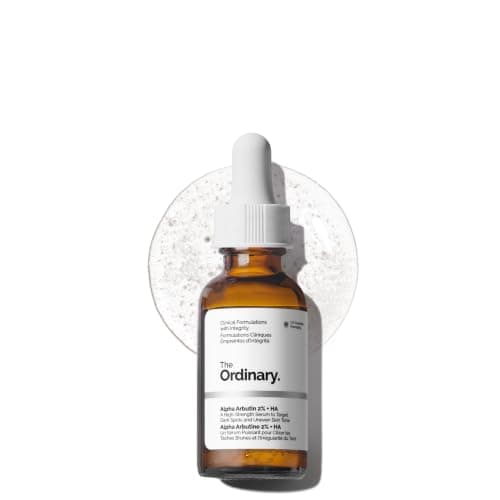
The Ordinary The Ordinary Alpha Arbutin 2% + HA
The Ordinary Alpha Arbutin 2% + HA

The reference product and the right first buy. 2% alpha arbutin, hyaluronic acid, and essentially nothing else to confuse the picture - which makes it the only product here where a result can actually be credited to the arbutin. Cheapest in the category by a wide margin.

Best overall, and best for finding out if it works for you
9.0
$11.50Amazon
02
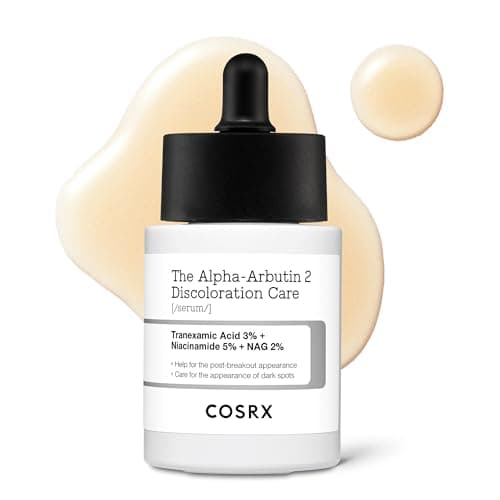
COSRX COSRX 2% Alpha Arbutin Discoloration Care Serum
COSRX 2% Alpha Arbutin Discoloration Care Serum

The multi-mechanism version, and the most sensible blend here. 2% alpha arbutin stated on the front, with niacinamide, tranexamic acid and glutathione alongside - three additions that work different steps of the same pathway rather than three that duplicate it. Larger bottle than the rest.

Best blend
8.0
$19.99Amazon
03
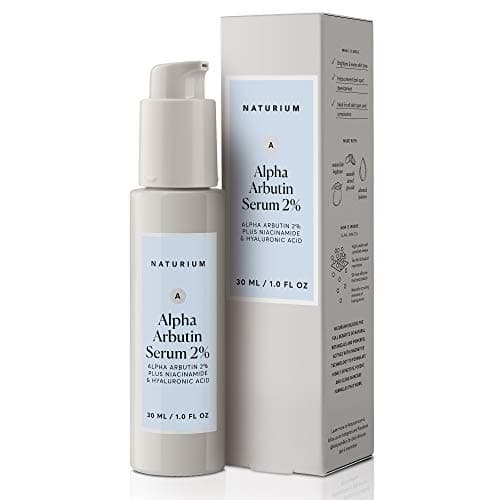
Naturium Naturium Alpha Arbutin Serum 2%
Naturium Alpha Arbutin Serum 2%

A stated 2% with niacinamide, in a more cosmetically pleasant formula than the bare single-active serums. The listing also names lemon, and on a page about pigment that is worth flagging rather than glossing over - citrus material in a leave-on is a fragrance-allergen and photosensitivity question we would rather avoid in this category specifically.

Best texture
7.0
$20.00Amazon
04
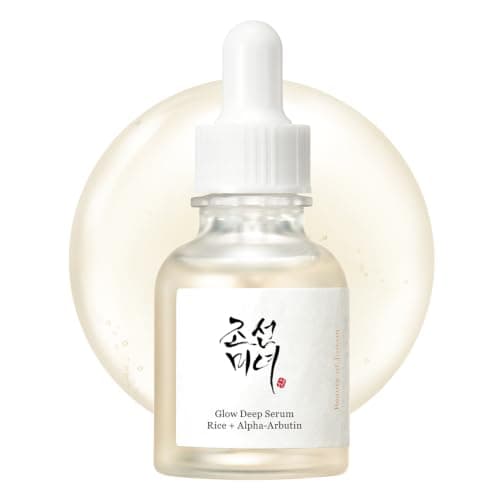
Beauty of Joseon Beauty of Joseon Glow Deep Serum: Rice + Alpha-Arbutin
Beauty of Joseon Glow Deep Serum: Rice + Alpha-Arbutin

The gentlest and most pleasant way to get this ingredient, and the least informative. Rice extract and niacinamide alongside alpha-arbutin in a hydrating serum people genuinely enjoy using - with no stated arbutin percentage, which on a slow single-mechanism ingredient is a real cost.

Best for dull rather than spotted skin
7.0
$16.99Amazon

#ad · Live prices from the Amazon Product API, as of November 13, 2026. Where we have no verified live price, we show none — a gap beats a number that has rotted.

In detail

The picks, in full

01
The Ordinary The Ordinary Alpha Arbutin 2% + HA

Best overall, and best for finding out if it works for you

The Ordinary Alpha Arbutin 2% + HA

2% alpha arbutinHyaluronic acid1 fl ozFragrance-free
9.0/10

The reference product and the right first buy. 2% alpha arbutin, hyaluronic acid, and essentially nothing else to confuse the picture - which makes it the only product here where a result can actually be credited to the arbutin. Cheapest in the category by a wide margin.

Dose transparency
10
Formula
8
Tolerability
9
Evidence fit
8
Value
10

Pros

  • States the percentage, at the category standard, with almost no other actives competing for credit
  • Fragrance-free and non-sensitizing - adds to an existing routine without rearranging it
  • Water-light texture that layers under anything, including sunscreen
  • Costs a fraction of the blended serums for the same headline active

Cons

  • Deliberately bare: no niacinamide, no tranexamic acid, nothing working a second mechanism
  • Slow even by the standards of a slow category - a single-mechanism product on an 8-to-12-week timeline
  • The hyaluronic acid base can feel tacky under a mineral sunscreen

Don't buy this if…

…you want one bottle doing several jobs at once - the COSRX blend is a better fit for that, at a higher price.

$11.50View on Amazon

Price as of November 13, 2026. Prices change — Amazon's at checkout is the one that counts.

#ad · we may earn a commission from this link to The Ordinary Alpha Arbutin 2% + HA

02
COSRX COSRX 2% Alpha Arbutin Discoloration Care Serum

Best blend

COSRX 2% Alpha Arbutin Discoloration Care Serum

2% alpha arbutinNiacinamide + tranexamic acid1.7 fl ozGlutathione
8.0/10

The multi-mechanism version, and the most sensible blend here. 2% alpha arbutin stated on the front, with niacinamide, tranexamic acid and glutathione alongside - three additions that work different steps of the same pathway rather than three that duplicate it. Larger bottle than the rest.

Dose transparency
7
Formula
9
Tolerability
8
Evidence fit
8
Value
8

Pros

  • States the arbutin percentage AND adds actives with their own pigment evidence at different steps
  • Niacinamide targets pigment transfer and tranexamic acid works upstream - genuinely complementary, not filler
  • Noticeably bigger bottle than the 1 oz standard, which changes the real cost per month
  • Well tolerated for a four-active formula

Cons

  • You cannot attribute a result to any single ingredient, which matters if you are trying to learn what your skin responds to
  • Does not state the niacinamide, tranexamic acid or glutathione percentages
  • Topical glutathione is the least evidenced thing in the bottle and we would not pay extra for it
  • Costs meaningfully more per bottle than the single-active option

Don't buy this if…

…you are already using a separate niacinamide or tranexamic acid serum - you would be paying twice for the same mechanisms.

$19.99View on Amazon

$25.0020% off

Price as of November 13, 2026. Prices change — Amazon's at checkout is the one that counts.

#ad · we may earn a commission from this link to COSRX 2% Alpha Arbutin Discoloration Care Serum

03
Naturium Naturium Alpha Arbutin Serum 2%

Best texture

Naturium Alpha Arbutin Serum 2%

2% alpha arbutinNiacinamide1 fl ozLemon in the formula
7.0/10

A stated 2% with niacinamide, in a more cosmetically pleasant formula than the bare single-active serums. The listing also names lemon, and on a page about pigment that is worth flagging rather than glossing over - citrus material in a leave-on is a fragrance-allergen and photosensitivity question we would rather avoid in this category specifically.

Dose transparency
8
Formula
7
Tolerability
6
Evidence fit
7
Value
7

Pros

  • States the percentage at the category standard, like the two picks above it
  • Niacinamide adds the pigment-transfer mechanism to the enzyme-inhibition one
  • Nicer to use than the stripped-back single-active serums - more like a finished skincare product
  • Mid-price: more polished than the cheapest, cheaper than a dedicated blend

Cons

  • The listing names lemon, and citrus material in a leave-on is an avoidable irritation and photosensitivity risk on a page whose whole point is minimizing pigment triggers
  • Does not state the niacinamide percentage
  • No upstream active like tranexamic acid, so it sits between the single-active and the full blend without clearly beating either

Don't buy this if…

…your skin is reactive or you are treating pigment on already-sensitive skin - take The Ordinary, which has nothing in it to react to.

$20.00View on Amazon

Price as of November 13, 2026. Prices change — Amazon's at checkout is the one that counts.

#ad · we may earn a commission from this link to Naturium Alpha Arbutin Serum 2%

04
Beauty of Joseon Beauty of Joseon Glow Deep Serum: Rice + Alpha-Arbutin

Best for dull rather than spotted skin

Beauty of Joseon Glow Deep Serum: Rice + Alpha-Arbutin

Alpha-arbutin (undosed)Rice extractNiacinamide30 ml
7.0/10

The gentlest and most pleasant way to get this ingredient, and the least informative. Rice extract and niacinamide alongside alpha-arbutin in a hydrating serum people genuinely enjoy using - with no stated arbutin percentage, which on a slow single-mechanism ingredient is a real cost.

Dose transparency
3
Formula
8
Tolerability
10
Evidence fit
6
Value
8

Pros

  • Easily the most pleasant texture here - a hydrating serum first and a pigment product second
  • Very well tolerated, including on reactive skin
  • Niacinamide is present and is doing verifiable work on tone and barrier
  • Reasonable price for a formula this finished

Cons

  • No stated alpha-arbutin percentage, so you cannot compare it on strength with anything on this page
  • Positioned for glow and dullness rather than discrete dark spots, which is a softer claim
  • Rice extract is the headline and the least evidenced ingredient in the bottle
  • If pigment is the actual goal, a stated 2% is a better use of the same money

Don't buy this if…

…you are treating specific, defined dark spots and want to know what dose you are applying - buy a stated 2% instead.

$16.99View on Amazon

Price as of November 13, 2026. Prices change — Amazon's at checkout is the one that counts.

#ad · we may earn a commission from this link to Beauty of Joseon Glow Deep Serum: Rice + Alpha-Arbutin

How to use it so the clock actually starts

  • Once or twice a day, on clean skin, before moisturizer. It is a water-light serum with no irritation potential worth managing, so it does not need a slot of its own or a ramp-up period.
  • Sunscreen every morning, without exception. This is the other half of the product. UV stimulates the enzyme you are inhibiting; skipping sunscreen does not slow the result, it cancels it.
  • Apply it at a different time from a low-pH vitamin C. Not because anything dangerous happens, but because a glycoside is the kind of molecule acid can cleave, and formulators keep arbutin near neutral for that reason. Arbutin at night, vitamin C in the morning is the simple answer.
  • Give it eight to twelve weeks, and photograph it. Slow, even fading is the hardest change to perceive in a mirror because you see it daily. One photo a month in the same light is the only way to know whether it is working.
  • Do not stack three pigment products at once. If you add arbutin, niacinamide and an acid in the same week and your skin reacts, you have learned nothing about any of them. Our patch-testing guide covers the boring version of doing this properly.

What it will not do

  • Red marks. The flat red or purple shadows left behind by a blemish are post-inflammatory erythema — dilated vessels, not melanin. A tyrosinase inhibitor has nothing to act on there. Time, sunscreen and barrier care are the tools, and skin purging vs breakout is the page for sorting out what you are actually looking at.
  • Melasma, on its own.Melasma is deeper, hormonally driven and prone to rebound. Alpha arbutin can be part of a melasma routine but it is nobody's front-line answer, and the ingredient with the most interest there is tranexamic acid. This is a dermatologist conversation.
  • Freckles and moles. Not targets, and anything changing shape or color needs a doctor rather than a serum.
  • Anything fast. There is no version of enzyme inhibition that produces a two-week result. A product promising one is either exfoliating you or lying.
  • Bleaching.Worth saying twice because the category's vocabulary is still full of it. Nothing on this page lightens your natural skin tone; they reduce excess pigment production in the areas making too much.

Is it safe?

At cosmetic concentrations, alpha arbutin has a benign profile: it does not exfoliate, does not sensitize skin to sunlight, and rarely stings. The ochronosis concern that attaches to long-term high-strength hydroquinone use is not a cosmetic-arbutin concern, and the reason is the same sugar we started with — the molecule is not free hydroquinone.

Two honest qualifications. First, the clinical literature is thin: most of what is known is in-vitro enzyme and cell work, and the 2021 review that supplies the headline potency figures explicitly calls for larger, higher-quality human trials. Second, long-term safety data in the way a dermatologist would want it does not really exist for this ingredient, because cosmetic ingredients are not studied that way. Neither of those is a reason to avoid it. Both are reasons to be suspicious of anyone describing it as a proven hydroquinone equivalent.
How we picked

We did not lab-test this gear

Everyone in this category says they tested twenty products. We have not lab-tested any of these, and we say so. What we did instead: compiled the published specifications, decoded the ingredient (INCI) lists active by active, ran the math where there was math to run, and scored each product against a published rubric. The scores are judgments from documented research — not measurements we took, because we do not have a lab and we will not pretend we do. Where a number came from someone else's work, we name them in Sources.

Questions

Frequently asked

What does alpha arbutin do for skin?
It inhibits tyrosinase, the rate-limiting enzyme in melanin production, so your skin makes less new pigment. That reduces the formation of dark spots and gradually evens tone as existing pigment sheds with normal epidermal turnover. It does not bleach, lift or remove pigment that is already there.
How long does alpha arbutin take to work?
Eight to twelve weeks before judging it, and that is arithmetic rather than caution. The mechanism only affects pigment not yet made; the pigment you can see has to leave on the schedule of epidermal turnover. Photograph the same area in the same light once a month, because slow even fading is almost impossible to perceive day to day.
Is alpha arbutin the same as hydroquinone?
Chemically it is hydroquinone with a glucose attached, which changes everything that matters: it is more stable, far gentler, releases slowly, and is legal to sell over the counter in the US, where hydroquinone products are not. It is also weaker, and the human clinical evidence behind it is much thinner. Gentler and slower in exchange for weaker is the honest summary.
Alpha arbutin vs arbutin - what is the difference?
Alpha-arbutin is the synthetic alpha-anomer; plain arbutin, or beta-arbutin, is the naturally occurring form from bearberry. Same two pieces bonded the other way round. A 2021 review in Phytotherapy Research reported alpha-arbutin inhibiting tyrosinase at around 2.0 mM where natural arbutin needed over 30 mM - the source of the common ten-times figure. Potency comparisons in this literature vary by assay, so treat the direction as solid and the exact multiple as approximate.
What percentage of alpha arbutin should I use?
2% is the de facto standard and nearly every serious product uses it. Higher numbers are rare rather than better, and a bigger figure without a published reason is a marketing decision. What matters more is that the percentage is stated at all - on a slow single-mechanism ingredient, an undisclosed dose means you cannot tell whether a disappointing result was the wrong product or the wrong dose.
Can you use alpha arbutin with niacinamide or vitamin C?
With niacinamide, yes, and it is a sensible pairing - niacinamide interferes with pigment transfer while arbutin inhibits its production, so they hit different steps. With vitamin C, use them at different times of day rather than mixed together: arbutin is a glycoside and formulators keep it near neutral, while a potent L-ascorbic acid serum is deliberately low-pH. Arbutin at night, vitamin C in the morning.
Does alpha arbutin make you sun sensitive?
No, which is one of its genuine advantages over acids and retinoids. You still need daily sunscreen - more than with most ingredients, not less, because UV directly stimulates the enzyme you are paying to inhibit. Using a tyrosinase inhibitor without sunscreen is suppressing pigment at night and triggering it at lunchtime.

Keep reading

Receipts

Sources

We do not run a testing lab, and we do not pretend to. Where a measured number came from someone else's work, we name them and link them. Where we could not verify something, we say so on the page rather than quietly leaving it out. Read our full method.