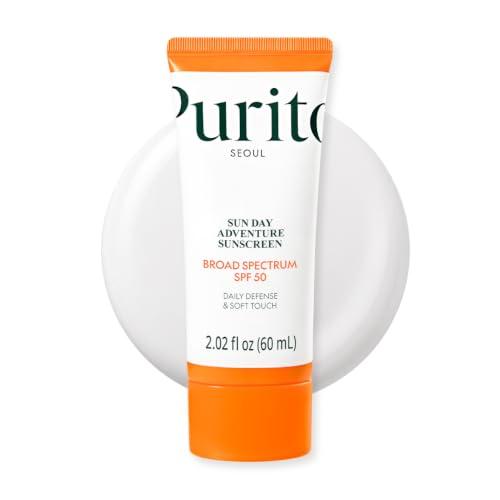
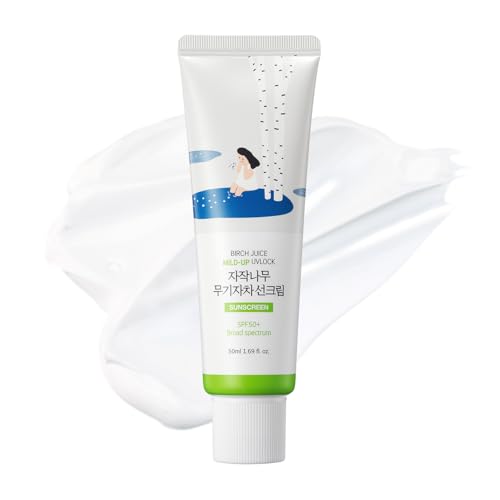
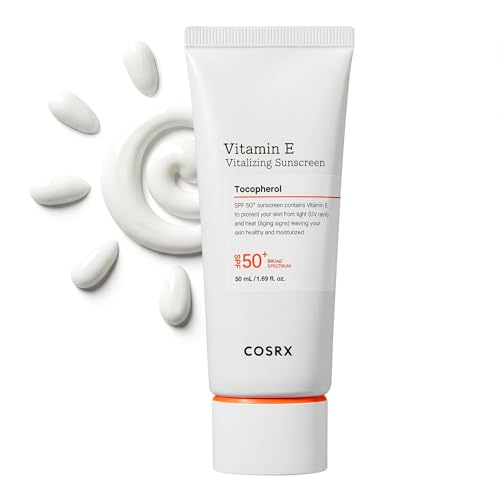
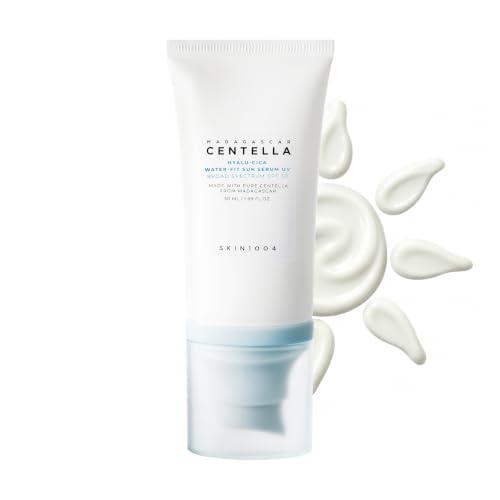
Buy the SKIN1004 Hyalu-Cica Water-Fit Sun Serum first. It states SPF 50, it wears like a hydrating serum rather than a sunscreen, and it leaves no white cast on any skin tone — which is the whole reason this category exists. The budget pick is the Round Lab Birch Juice Mild-up UV Lock, the cheapest bottle here and the only mineral option, and the best value per ounce is the PURITO SPF 50, which comes in the biggest bottle on the page.
The reason to care about Korean sunscreen is not that it protects better. It is that people wear it. The category is built on thin, watery, fast-absorbing textures that disappear into skin, and a sunscreen you apply generously every morning and reapply at lunch outperforms a theoretically superior one sitting unopened in a drawer. Sunscreen is the single highest-return product in any routine — more than any serum on this site — and the product that wins is the one that survives contact with your actual morning.
There is a second part of the story, and almost nobody writing about this category explains it. Sunscreen is regulated differently in the two countries. In the United States the FDA regulates sunscreen as an over-the-counter drug, and its list of permitted UV filters came almost entirely from a 1999 monograph — sixteen actives, frozen in place for a generation. In June 2026 the FDA finally added one more, bemotrizinol, and said so in a press release headlined as the first expansion in twenty years. The US list is moving again, and it is still far shorter than the one Korean and EU formulators work from.
In Korea sunscreen is regulated as a functional cosmetic, so Korean chemists have had access to those newer filters for years. That is the texture advantage — it is a formulation-chemistry difference, not marketing. It is also why a Korean sunscreen bought on Amazon in the US is an imported cosmetic rather than an FDA-reviewed drug product, and why the numbers on the bottle were measured under a different protocol than a US bottle uses. None of that makes these products bad. It does mean you should know what you are buying, which is what the labeling section below is for.
How we ranked these
- Texture and white cast — weighted heaviest, because compliance is the whole game. A sunscreen that pills under makeup, stings the eyes or leaves a gray cast on deeper skin tones is a sunscreen you will stop wearing by week three.
- Stated protection — what the live listing actually claims, nothing inferred. We score an SPF 50 above an SPF 45, but only slightly: the gap between them is far smaller than the gap between a generous application and a thin one.
- Size and value — per ounce, against the rest of the page. Daily face-and-neck use is more product than people expect, and a small bottle encourages under-application.
- Skin-type fit — oily, dry, sensitive or acne-prone. Four of the fifteen live autocomplete suggestions for this query name a skin type, so this is what people are actually asking.
- Listing reliability — whether the live Amazon title names the brand and the model. This category is full of relabeled listings that carry the product description without the brand, and we do not rank those at all.
Scores are judgments from documented research — published listings, manufacturer documentation and aggregated owner reports — not lab measurements, and how we reviewsays so in those words. We have not measured anyone's SPF. Every price in the table comes from the live price layer with its own "as of" date.
Which Korean sunscreen for which skin
| If your skin is | Buy | Why that one |
|---|
| Normal, combination, or you just want the best one | SKIN1004 Hyalu-Cica Water-Fit Sun Serum | The thinnest texture on the page at a stated SPF 50, with no cast on any tone |
| Sensitive, reactive, or on a budget | PURITO Korean Sunscreen SPF 50 | The biggest bottle here, so a generous daily dose stays affordable |
| Reacting to chemical filters, or wanting zinc oxide | Round Lab Birch Juice Mild-up UV Lock | The only mineral pick, and the cheapest bottle on the page |
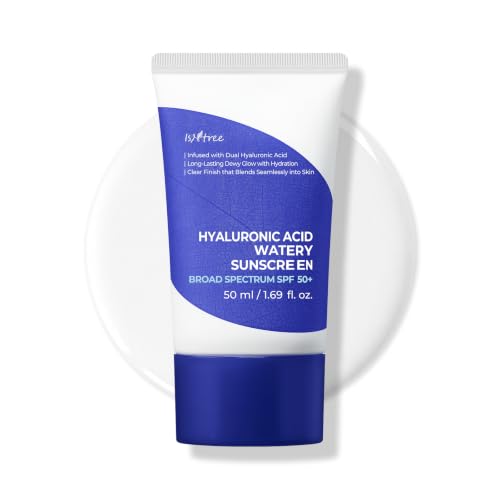
| Wearing makeup over it every day | ISNTREE Hyaluronic Acid Watery Sunscreen | Dries down non-sticky, which is the property that stops foundation rolling |
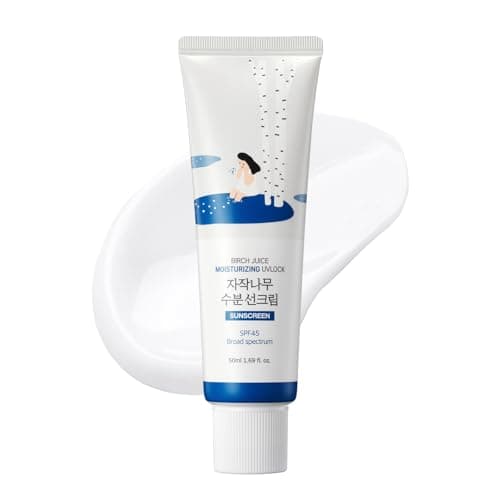
| Dry, tight, or tired of a separate moisturizer | Round Lab Birch Juice Moisturizing UV Lock | Hydrating and fragrance-free enough to replace the moisturizer step |
| Oily and shiny by lunchtime | COSRX Vitamin E Sunscreen SPF 50 | A natural rather than dewy finish, from the easiest brand here to restock |
What SPF 50, SPF 50+ and PA++++ actually mean
This is the part the category never explains, and it changes how you should read every bottle on this page.
SPF measures UVB protection, and the scale is not linear. A correctly applied SPF 30 blocks roughly 97% of UVB; SPF 50 blocks roughly 98%. The difference between SPF 45 and SPF 50 is far smaller than the difference between the amount the test uses and the amount you actually apply, which for most people is somewhere between a third and a half of it. Applying more of an SPF 30 beats applying a smear of an SPF 50 every time — see how much sunscreen to apply for the actual quantity.
PA ratings are not a US designation. The PA+ to PA++++ system is an Asian UVA scale based on persistent pigment darkening. The FDA does not use it; a US bottle says broad spectrum instead, based on a critical-wavelength test. Both are trying to describe UVA protection and neither translates into the other, so a PA++++ Korean bottle and a broad-spectrum US bottle are not directly comparable. Where a listing on this page states broad spectrum, we have said so; where it states a PA rating we have not converted it into anything.
And the regulatory difference is real. US sunscreen is an OTC drug working from a filter list inherited from 1999 — sixteen actives, plus bemotrizinol, added in June 2026 as the first new US sunscreen filter in about twenty years. Korean sunscreen is a functional cosmetic, and Korean formulators have long had access to newer filters permitted there and in the EU that the FDA has not cleared. That is the reason the textures are better. It also means these are imported cosmetics here rather than FDA-reviewed drug products — buy from a seller with real turnover, check the batch and expiry on arrival, and treat the printed numbers as measured under a different protocol.
That last point is not theoretical. In late 2020 one of the brands on this page suspended sales of three sunscreens and refunded buyers after independent European laboratory testing measured the SPF of its best-known product at a small fraction of the SPF 50+ on the label; the brand said the rating had been approved by the Korean regulator before launch and pointed at its third-party manufacturer. It reformulated and came back, and the product ranked second on this page is a different one — but the episode is the clearest reason to treat a printed number as a claim made under one country's testing rules rather than as a measurement you can bank. It is also why one of our five criteria is simply whether the live listing names the brand at all. Chemical vs mineral sunscreen covers the filter question in full, and do you need sunscreen indoors answers the other question people ask right after this one.
No sunscreen stick, and no Beauty of Joseon, and why
Two of the fifteen live autocomplete suggestions for this query ask for a sunscreen stick, and our registry carries none, so there is nothing for us to rank. That is a real gap rather than a judgment on the format — a stick is a genuinely good way to reapply over makeup, and it is the thing we would add next.
We also do not rank the best-known Korean sunscreen of all, the Beauty of Joseon Relief Sun. The reason is listing quality rather than product quality: the Amazon listings that surfaced for it on our last check either do not carry the brand name in the title — the category is full of relabeled bottles whose titles reproduce the description and omit the brand — or sit at low stock and a multiple of the normal price. We would rather publish the gap than put your money on an ASIN we cannot verify. Our best Beauty of Joseon products page makes the same call for the same reason.
Is Korean sunscreen better than American sunscreen?
On texture, yes, and it is not close — the newer UV filters available to Korean formulators make lighter, less greasy, less chalky sunscreens, and that is why this category took over. On regulatory oversight, no: a US sunscreen is reviewed as a drug, and a Korean one bought here is an imported cosmetic. On actual protection, the honest answer is that it depends entirely on how much you put on, which means the better sunscreen is almost always the one you like enough to use properly.
If you would rather have a US-regulated bottle, best face sunscreen ranks the field at every price, best mineral sunscreen covers the zinc-and- titanium side, and best sunscreen for oily skin handles the most common complaint. For a fragrance-free Western SPF 50 fluid with a similar serum-adjacent feel, the best Paula's Choice products page ranks one.
And if this is your first Korean product rather than your first sunscreen, best Korean skincare for beginners makes the case that a four-product routine led by a sunscreen beats a ten-step one, while best Korean skincare and the Korean skincare routine cover the rest of the shelf and the order it goes on in.