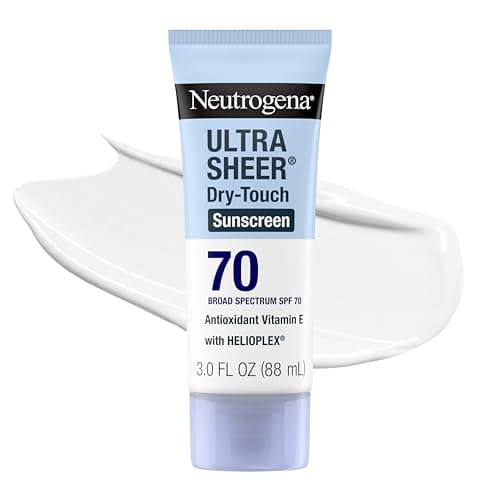
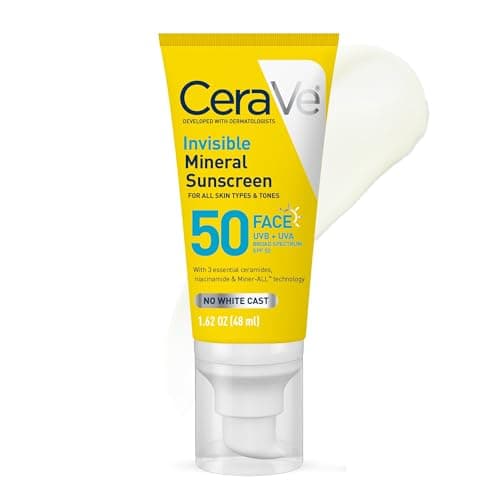
The closest match is the CeraVe Invisible Mineral Sunscreen SPF 50. It is zinc-led like UV Clear, it is fragrance-free, it carries niacinamide and ceramides, and it costs well under a third as much. If you want the cheapest sunscreen we rank rather than the closest match, that is the Neutrogena Ultra Sheer Dry-Touch SPF 70 — our budget pick, and a completely different formula that protects you anyway.
First, what you are actually trying to replace, because this page is only useful if it is specific. EltaMD UV Clear is a broad-spectrum SPF 46 whose primary filter is 9% zinc oxide, paired with octinoxate — a chemical UVB filter — which is a large part of why it feels lighter than most zinc sunscreens. Alongside the filters it carries a stated 5% niacinamide, sodium hyaluronate, tocopheryl acetate and lactic acid at a low, non-exfoliating level, in an oil-free, fragrance-free, non-comedogenic base. We decoded that ingredient list for our own EltaMD UV Clear review, and the short version is that it is a very good formula for reactive, flushing and acne-prone skin, which is exactly why dermatologists hand it out.
It is also the most expensive sunscreen in our registry, which is the only reason this page exists. The argument below is deliberately narrow. UV Clear is a list of properties — a zinc load, a niacinamide dose, an oil-free base, a cosmetically light finish — and properties can be matched one at a time. Matching most of a property list is not the same as being the same product, and this page will say which properties each pick misses.
How we matched these
- Filter match— is the protection zinc-led, the way UV Clear's is, with a published percentage on the Drug Facts panel? A good chemical sunscreen protects you just as well, but it is a sidestep rather than a match, and it is scored as one.
- Supporting ingredients — does it bring niacinamide, ceramides or another barrier ingredient to the party, or is it filters and a base? This is where UV Clear is hardest to match, for a reason spelled out below.
- Finish — weight, cast, and whether it sits under makeup. UV Clear is unusually light for a zinc sunscreen, and a mineral SPF that looks chalky has not replaced it however good the filters are.
- Tolerability — fragrance-free, oil-free, non-comedogenic. The people looking for this product usually flush, break out, or both.
- Value — against the original, per unit of product. Every pick here costs less; some cost a fifth.
Scores are judgments from documented research — published Drug Facts panels, decoded ingredient lists, manufacturer documentation and aggregated owner reports. They are not lab measurements and no SPF here was tested by us; how we reviewsays so in those words. Every price in the table comes from the live price layer with its own "as of" date.
Two requests we cannot fill honestly
A page selling a swap is tempted to pretend everything can be swapped. Two things about UV Clear have no good match in our registry, and naming them is more useful than filling the slot badly.
- A sunscreen with a published niacinamide percentage. UV Clear states 5%. Two picks above contain niacinamide, but neither publishes a concentration, so neither can be said to match the dose — only the architecture. If the niacinamide is specifically why you were buying it, the honest alternative is to keep a cheaper sunscreen and add a separate niacinamide serum at a stated strength underneath it. That costs less than the original and gives you a number you can check.
- A cheaper tinted mineral sunscreen.The tinted version of UV Clear is a common reason people look at this brand at all, and the only tinted mineral face sunscreen in our registry is EltaMD's own UV Physical, which costs more rather than less. We have no cheaper tinted match to offer and will not pass off an untinted one as the same thing.
Which property are you actually replacing?
Nobody wants all of UV Clear. They want one or two of its properties and the price of a drugstore sunscreen. Pick the row that describes you:
| What you actually liked | Buy | What you give up |
|---|
| Zinc-led protection with barrier ingredients in it | CeraVe Invisible Mineral SPF 50 | The stated 5% niacinamide dose, and some of the light finish |
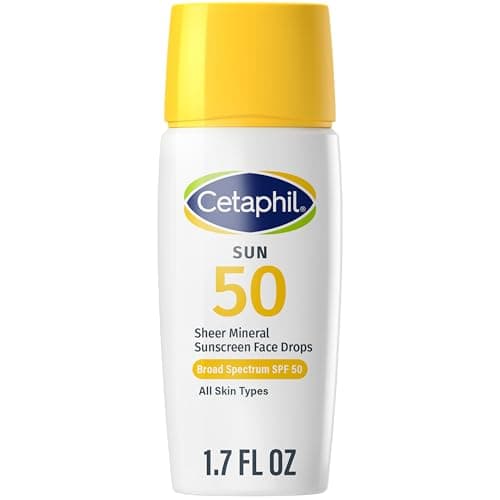
| Fragrance-free zinc at the lowest possible price | Cetaphil Sheer Mineral SPF 50 | Every supporting ingredient - this is filters and a base |
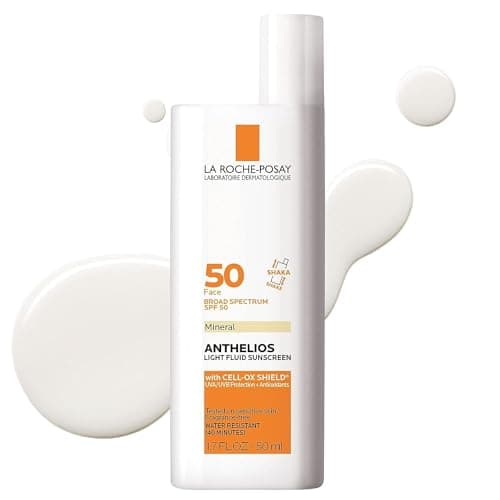
| How light it felt on your face | La Roche-Posay Anthelios Mineral Ultra-Light Fluid SPF 50 | Most of the saving, and the niacinamide |
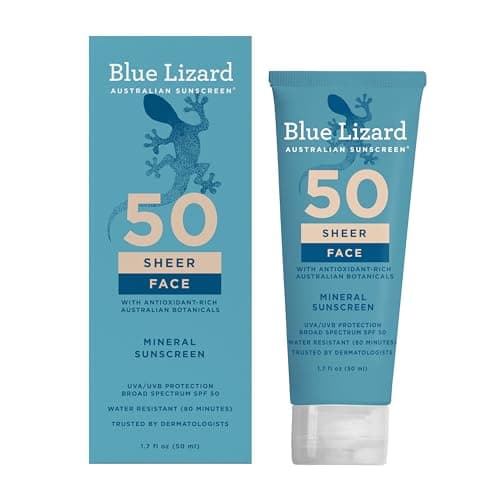
| Minerals only, nothing propping up the SPF number | Blue Lizard Sheer Face Mineral SPF 50 | Wearability under makeup |
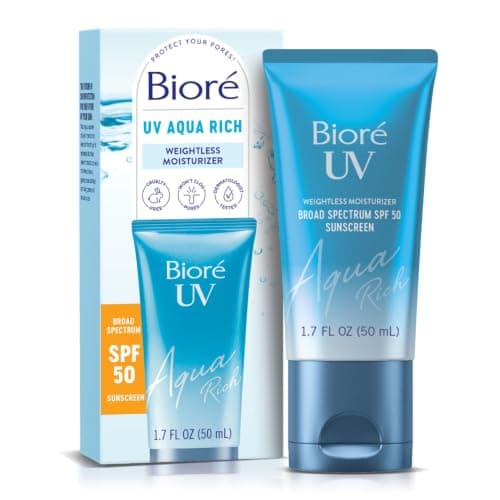
| That it was invisible under everything | Biore UV Aqua Rich SPF 50 | The zinc, and the reactive-skin tolerability |
| Only the price | Neutrogena Ultra Sheer SPF 70 | Essentially every property except broad-spectrum protection |
Matching a property list is not inheriting a result
Worth saying plainly, because it cuts against the point of this page. UV Clear's reputation does not rest on its percentages alone — it rests on an oil-free base that carries a 9% zinc load without feeling like one, and on years of dermatologists watching reactive patients tolerate it. A cheaper sunscreen can reproduce the filter type, the fragrance-free base and the presence of niacinamide. It does not thereby inherit the comfort, and it does not inherit the track record.
What that means in practice: if you have rosacea or inflamed acne and UV Clear is the only sunscreen you have ever got on without a flare, the saving is not worth the experiment. Buy the original. For everyone else — people who were handed it at a dermatology appointment and have calm, ordinary skin — the picks above do the job, and the money is better spent on using enough sunscreen than on a better one. A cheap SPF applied properly beats an expensive one you ration, every time. Our how much sunscreen to apply guide has the amount, and it is more than you think.
Where EltaMD UV Clear is genuinely hard to beat
- The stated dose. Printing 5% niacinamide on the label is a transparency decision almost no other sunscreen brand makes, and it is the one property on this page that nothing in our registry reproduces.
- The base at that zinc load. 9% zinc oxide in something this light is a formulating achievement. The two cheapest mineral picks here carry more zinc and feel like it.
- Clinical continuity. It is stocked by dermatology offices, which means the thing recommended to you is the thing you can keep buying. That is worth something real to anyone whose skin punishes experiments.
None of which changes the arithmetic for most buyers. If your skin is ordinary, the best face sunscreen roundup ranks the whole field without the brand framing, and best mineral sunscreen covers the zinc-only options in more depth. If you flush or break out, start with best skincare for rosacea or best sunscreen for oily skin and work outwards from there.
How we picked
We did not lab-test this gear
Everyone in this category says they tested twenty products. We have not lab-tested any of these, and we say so. What we did instead: compiled the published specifications, decoded the ingredient (INCI) lists active by active, ran the math where there was math to run, and scored each product against a published rubric. The scores are judgments from documented research — not measurements we took, because we do not have a lab and we will not pretend we do. Where a number came from someone else's work, we name them in Sources.