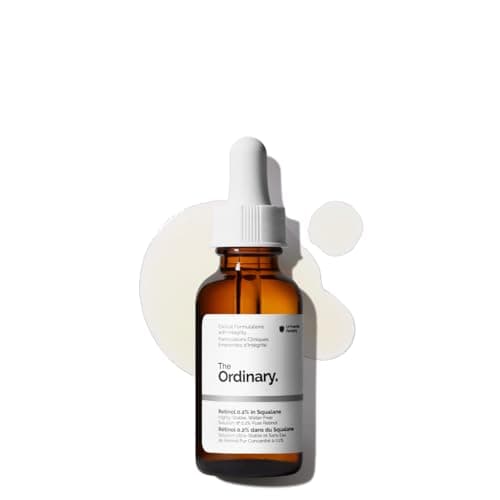
Use retinol. If you can tolerate it, retinol is the one with decades of published work behind it, and the cheapest sensible starting point is The Ordinary Retinol 0.2% in Squalane — the right first bottle for anyone whose skin has never had a retinoid on it. Choose bakuchiol instead in three specific situations: you are pregnant or breastfeeding, you have tried a retinoid twice and your skin genuinely will not have it, or you want something mild to use on the nights your retinoid is off. For those readers, Acure's dual-phase bakuchiol serum is the pick.
The internet treats these two as equivalents — “nature's retinol” is printed on half the bottles — and they are not. They are two different molecules doing two different amounts of work, and the honest comparison is less flattering to bakuchiol than the marketing but more useful than it.
What each one actually is
Retinol is a vitamin A derivative, and the category is a drug mechanism. Applied to skin, retinol is converted in two steps — to retinaldehyde, then to retinoic acid — and retinoic acid binds nuclear receptors that change how skin cells behave. That is why the class does real, measurable things to turnover, collagen expression and pigment, and it is also why it irritates: you are altering cell behaviour, and the first few weeks look like it. Our retinol guide covers the strength ladder, and retinol vs retinoid explains where prescription tretinoin sits above it.
Bakuchiol is a meroterpene phenol from the seeds of Psoralea corylifolia. It is not a vitamin A derivative, it is not converted to retinoic acid, and it does not bind retinoid receptors. What it does have is antioxidant activity and some signalling effects on the same downstream pathways, plus one frequently-cited twelve-week randomised trial that compared it against 0.5% retinol and found comparable improvement in pigmentation and wrinkle surface area with significantly less scaling and stinging. One decent trial is one decent trial — it is a reason to take the ingredient seriously, not a reason to call it equivalent to a category with forty years of literature. Our bakuchiol guide goes through what that study did and did not show.
Side by side
| | Retinol | Bakuchiol |
|---|
| Molecule class | Vitamin A derivative (retinoid) | Plant meroterpene phenol — not a retinoid |
| Mechanism | Converted to retinoic acid; binds nuclear retinoid receptors | Antioxidant and signalling effects; no receptor binding |
| Depth of evidence | Decades of trials across the retinoid class | A small number of studies, one credible head-to-head |
| Irritation | Expected for the first 2-6 weeks; dose-dependent | Minimal in most people |
| Sun sensitivity | Yes — night use, and sunscreen is not optional | No photosensitising effect reported; sunscreen still sensible |
| Pregnancy | Topical retinoids are the clear avoid | Commonly suggested as an alternative — ask your own clinician |
| Strength is stated on the label | Often, as a percentage | Rarely, which makes products hard to compare |
| Realistic timeline | Texture in 8-12 weeks, lines in months | Subtle, over months, in the better-formulated products |
Who should genuinely choose bakuchiol
- Anyone pregnant or breastfeeding. Topical retinoids are off the table — this is the one unambiguous avoid in pregnancy skincare — and bakuchiol is the usual suggestion in their place. Our pregnancy-safe roundup covers the whole routine, and every specific should go through your own doctor or midwife.
- Skin that has twice failed a retinoid honestly.Not “it peeled in week two” — that is the adjustment period — but genuine, repeated, weeks-long irritation at the lowest strength with buffering.
- Reactive and rosacea-prone faces. Flushing-prone skin often cannot run a retinoid at a useful frequency. Our rosacea page is the better starting point for that reader.
- People who want something for the off-nights. If you are on a skin cycling schedule, bakuchiol is a reasonable thing to apply on the recovery nights, since it is not competing for the same receptor.
Everyone else is better served by starting low on retinol and going slowly. That is not a preference; it is where the evidence is.
The short answer
Quick picks
| # | Product | Best for | Score | Price |
|---|
| 01 | The Ordinary Retinol 0.2% in SqualaneThe winner of this comparison on the evidence, and the correct first retinoid for almost anyone. Eight ingredients, a stated percentage, and a squalane base with no alcohol to sting. Two nights a week for a fortnight, then three, and review at twelve weeks. | Best retinol to start with | | $8.10·Amazon |
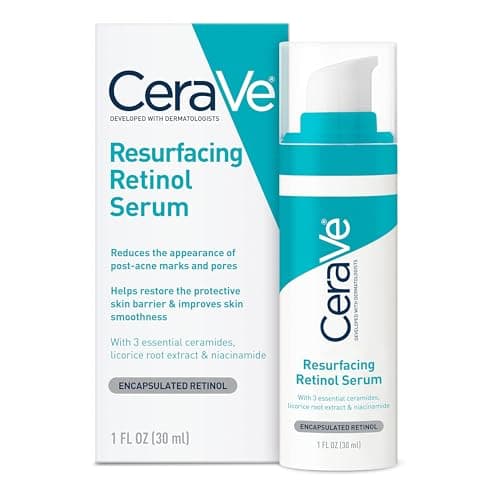
| 02 | CeraVe Resurfacing Retinol SerumThe retinol for people whose real objection to the category is irritation. Encapsulated retinol releases more gradually, and the formula carries ceramides and niacinamide to prop up the barrier while it works — which is the sensible answer to 'bakuchiol is gentler' before you give up on retinoids entirely. | Best retinol if irritation is your worry | | $16.49·Amazon |
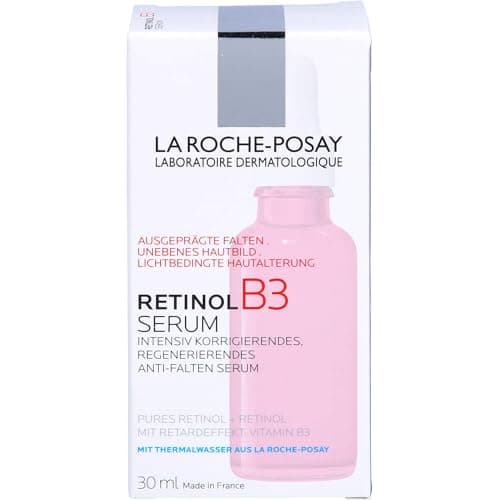
| 03 | La Roche-Posay Pure Retinol B3 SerumThe step above both of the retinols here, and the pick for anyone who has already done a year on a starter strength. Pure retinol plus a gradual-release form, niacinamide alongside it, in an airless pump that protects the active — the best-engineered retinol on this page, and priced like it. | Best step up from a starter retinol | | $44.97·Amazon |
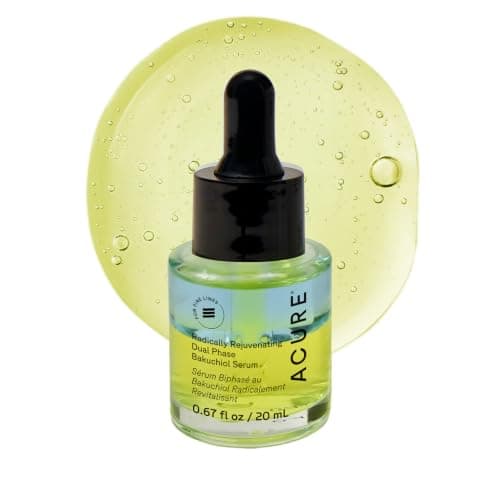
| 04 | Acure Radically Rejuvenating Dual Phase Bakuchiol SerumThe bakuchiol to buy if bakuchiol is genuinely the right category for you — pregnancy, a face that has twice rejected retinoids, or the off-nights of a cycling schedule. A dual-phase oil-and-water serum you shake before use, vegan, and the best-presented bakuchiol in the registry. Expect subtle over months, not retinoid results. | Best bakuchiol serum overall | | $21.99·Amazon |
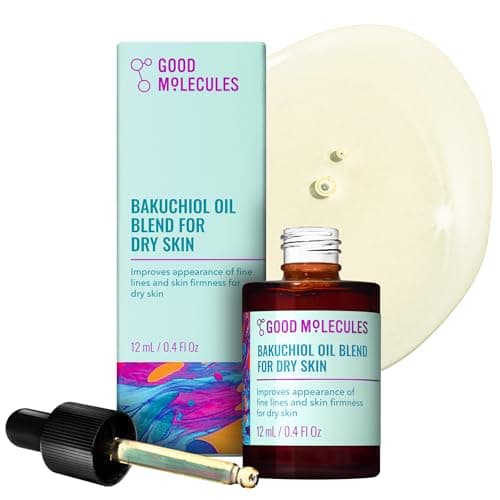
| 05 | Good Molecules Bakuchiol Oil BlendThe cheap way to find out whether you like bakuchiol at all. Bakuchiol in a plain oil base, fragrance-free, at a price that makes a three-month trial trivial. It is the least ambitious product on this page and the best value if your reason for being here is 'my skin hates retinol and I want to try something'. | Best cheap bakuchiol trial | | $9.99·Amazon |
#ad · Live prices from the Amazon Product API, as of October 19, 2026. Where we have no verified live price, we show none — a gap beats a number that has rotted.
In detail
The picks, in full
Best retinol to start with
The Ordinary Retinol 0.2% in Squalane
0.2% retinol8-ingredient anhydrous baseStated percentageFragrance-free
The winner of this comparison on the evidence, and the correct first retinoid for almost anyone. Eight ingredients, a stated percentage, and a squalane base with no alcohol to sting. Two nights a week for a fortnight, then three, and review at twelve weeks.
- Efficacy
- 6
- Tolerability
- 9
- Formula
- 8
- Texture
- 6
- Value
- 10
Pros
- +The lowest strength worth using, which is the right first rung
- +Percentage printed on the box, so a step up is plannable
- +Anhydrous squalane base is among the gentler retinol vehicles
- +Cheap enough that finding out costs nothing much
Cons
- −0.2% is mild by design; some people will outgrow it
- −Oil texture goes on last and needs a minute
- −Dropper bottle, and retinol does not love heat or light
Don't buy this if…
…you are pregnant or breastfeeding. Topical retinoids are the one clear avoid, and this page has two alternatives below.
Best retinol if irritation is your worry
CeraVe Resurfacing Retinol Serum
Encapsulated retinolCeramides + niacinamideFragrance-freeNon-comedogenic
The retinol for people whose real objection to the category is irritation. Encapsulated retinol releases more gradually, and the formula carries ceramides and niacinamide to prop up the barrier while it works — which is the sensible answer to 'bakuchiol is gentler' before you give up on retinoids entirely.
- Efficacy
- 7
- Tolerability
- 9
- Formula
- 9
- Texture
- 8
- Value
- 9
Pros
- +Encapsulation genuinely softens the first few weeks
- +Ceramides and niacinamide in the same bottle, so no second product needed
- +Supermarket availability and a sane price
- +Fragrance-free, which matters on skin that is already complaining
Cons
- −No stated percentage, so you cannot plan the ladder
- −Gentler also means slower — give it the full twelve weeks
- −Tube rather than a pump
Don't buy this if…
…you want to know the strength. The Ordinary prints its number and this does not.
Best step up from a starter retinol
La Roche-Posay Pure Retinol B3 Serum
Pure + gradual-release retinolNiacinamideFragrance-freeAirless pump
The step above both of the retinols here, and the pick for anyone who has already done a year on a starter strength. Pure retinol plus a gradual-release form, niacinamide alongside it, in an airless pump that protects the active — the best-engineered retinol on this page, and priced like it.
- Efficacy
- 8
- Tolerability
- 8
- Formula
- 9
- Texture
- 9
- Value
- 5
Pros
- +Two retinol forms gives an immediate and a sustained release
- +Airless pump is the right packaging for an unstable active
- +Niacinamide included, which helps the redness retinol can cause
- +Light serum texture that layers under a moisturizer
Cons
- −The most expensive thing on this page
- −Strong enough to need the slow introduction properly
- −Still a retinoid, so still not for pregnancy
Don't buy this if…
…this is your first retinoid. Start cheaper and lower; you can always move up.
Best bakuchiol serum overall
Acure Radically Rejuvenating Dual Phase Bakuchiol Serum
BakuchiolDual-phase oil + water0.67 fl ozVegan
The bakuchiol to buy if bakuchiol is genuinely the right category for you — pregnancy, a face that has twice rejected retinoids, or the off-nights of a cycling schedule. A dual-phase oil-and-water serum you shake before use, vegan, and the best-presented bakuchiol in the registry. Expect subtle over months, not retinoid results.
- Suitability
- 8
- Formulation
- 8
- Tolerability
- 8
- Texture
- 7
- Value
- 6
Pros
- +Usable by people who cannot or should not use a retinoid at all
- +No adjustment period and no photosensitivity to plan around
- +Dual-phase format delivers both the oil- and water-soluble parts
- +Can be layered with almost anything, including acids
Cons
- −No stated bakuchiol percentage, which is the category's chronic problem
- −Small bottle for the price
- −Needs shaking every time, and the texture divides opinion
Don't buy this if…
…you can tolerate a retinoid. You would be paying more for a thinner evidence base.
Best cheap bakuchiol trial
Good Molecules Bakuchiol Oil Blend
Bakuchiol in oil base0.4 fl ozFragrance-freeVegan
The cheap way to find out whether you like bakuchiol at all. Bakuchiol in a plain oil base, fragrance-free, at a price that makes a three-month trial trivial. It is the least ambitious product on this page and the best value if your reason for being here is 'my skin hates retinol and I want to try something'.
- Ingredients
- 7
- Efficacy
- 6
- Gentleness
- 9
- Texture
- 6
- Value
- 9
Pros
- +Lowest cost of entry to the category by a wide margin
- +Fragrance-free, so it suits the reactive skin that sends people here
- +Oil base doubles as the last step of a dry-skin routine
- +Nothing in it to react with the rest of your shelf
Cons
- −Tiny bottle, and an oil base is the slower vehicle
- −No percentage stated, so comparison with the Acure is guesswork
- −Oil texture is wrong for anyone still oily
Don't buy this if…
…your skin is oily or acne-prone. An oil blend is the wrong vehicle; look at a water-based serum instead.
The trial everybody cites, and what it actually found
Almost every bakuchiol product on the market leans on one twelve-week randomised, double-blind study that put bakuchiol against 0.5% retinol. The headline is that both improved pigmentation and wrinkle surface area with no significant difference between them, while the retinol group reported significantly more scaling and stinging. That is a genuine result and it is why we stock bakuchiol picks at all.
The caveats matter just as much. It was a single, small, twelve-week study against one strength of retinol — not against tretinoin, not against the stronger retinols people actually graduate to, and not over the months-to-years horizon on which retinoid benefits accumulate. Replication is thin. Meanwhile the retinoid class has decades of trials, including prescription comparisons, and a mechanism that is understood down to the receptor. If you want the most likely result, that asymmetry is the whole argument.
The percentage problem
Retinol products increasingly print their strength, which is what makes a ladder possible: 0.2% to 0.3% to 0.5% to a retinal, with our retinol roundupranking that ladder. Bakuchiol products almost never do. A listing that says “bakuchiol complex” is describing a blend, not a dose, and the ingredient's position on the INCI list is the only clue you get — our ingredient-list checker explains how to read that position. Until the category starts printing numbers, comparing two bakuchiol serums is largely guesswork, and we say so rather than inventing a ranking.
Can you use them together?
Yes, and there is no chemical reason not to — they are not competing for the same receptor and neither destabilises the other. Whether it is worth doing is another matter. If you tolerate retinol, adding bakuchiol buys you very little. The one arrangement that makes sense is alternating: retinoid on its nights, bakuchiol on the recovery nights, which is the structure our skin cycling guide lays out.
The non-negotiable, whichever you pick
Retinol is photosensitising, so it is a night product and daily sunscreen stops being optional the day you start — see our sunscreen roundup. Bakuchiol has no reported photosensitising effect, which is a genuine convenience, but if your goal is pigment and fine lines then sunscreen is doing more of that work than either active. The hierarchy on this site has not changed: sunscreen first, retinoid second, everything else after.
How we picked
We did not lab-test this gear
Everyone in this category says they tested twenty products. We have not lab-tested any of these, and we say so. What we did instead: compiled the published specifications, decoded the ingredient (INCI) lists active by active, ran the math where there was math to run, and scored each product against a published rubric. The scores are judgments from documented research — not measurements we took, because we do not have a lab and we will not pretend we do. Where a number came from someone else's work, we name them in Sources.
Questions
Frequently asked
Is bakuchiol as effective as retinol?+
One twelve-week trial against 0.5% retinol found comparable improvement in pigmentation and wrinkles with less irritation. That is a real finding, but it is one small study against a mid-strength retinol — not a match for a class with decades of trials behind it. Treat bakuchiol as a credible mild option, not an equivalent.
Which is better for anti-aging, retinol or bakuchiol?+
Retinol, if you can tolerate it. It has the deeper evidence base, a mechanism understood at the receptor level, and a strength ladder you can climb as your skin adapts. Bakuchiol is the better answer only when a retinoid is unavailable to you — in pregnancy, or on skin that genuinely cannot tolerate one.
Is bakuchiol safe during pregnancy?+
It is the ingredient most commonly suggested in place of a retinoid during pregnancy, and topical retinoids are the clear avoid. But we are not clinicians and the published safety data on bakuchiol in pregnancy is limited, so this is a question for your own doctor or midwife rather than a page on the internet.
Can you use bakuchiol and retinol together?+
Yes — different mechanisms, no interaction, no destabilisation. The useful version is alternating rather than layering: the retinoid on its nights, bakuchiol on the off-nights. Using both on the same night is unlikely to add anything.
Does bakuchiol cause purging or peeling?+
Rarely. Because it does not accelerate turnover the way a retinoid does, it mostly skips both the purge and the peeling phase — which is exactly why people with reactive skin end up here. The flip side is that the absence of a reaction is not evidence it is working.
What percentage of bakuchiol should I look for?+
Published studies have generally used around 0.5% to 1%. The practical problem is that most products do not state a figure at all, so the ingredient's position on the INCI list is your only signal. We will not guess a percentage a brand has not published.
Receipts
Sources
We do not run a testing lab, and we do not pretend to. Where a measured number came from someone else's work, we name them and link them. Where we could not verify something, we say so on the page rather than quietly leaving it out. Read our full method.