Skip to content
Barrier & Bloom

Education · Ingredients

Bakuchiol, explained

Marketed as a natural retinol without the irritation. The honest position: a real ingredient with a small evidence base, best suited to people who cannot use a retinoid at all.

By Stephen V.Updated How we review
#ad

We earn a commission when you buy through our Amazon links, at no extra cost to you. It never changes a verdict, and we say so when the cheaper product is the better buy. How this works.

Bakuchiol is a compound extracted from the seeds of Psoralea corylifolia, marketed as a gentler, plant-derived alternative to retinol. It is not a retinoid — it is not structurally related to vitamin A at all — but it appears to switch on some of the same genes in skin cells, which is why comparisons keep being drawn.

Here is the honest position, stated up front. Bakuchiol is a real ingredient with real, if limited, published support. It is meaningfully less irritating than retinol. And the entire evidence base is a handful of small studies against decades of research on retinoids. If you can tolerate a retinoid, use a retinoid. If you cannot — because you have tried and failed, because your skin is extremely reactive, or because you are pregnant or breastfeeding — bakuchiol is a reasonable thing to use instead.

What the research actually says

The most-cited study is a twelve-week randomized comparison of 0.5% bakuchiol twice daily against 0.5% retinol once daily, which found both improved wrinkles and pigmentation with no significant difference between them — and that the retinol group reported significantly more scaling and stinging. That is a genuinely interesting result and it is the source of nearly every marketing claim you will read.

It is also one small study with a few dozen participants over three months. Retinoids have that many studies with that many participants many times over, spanning decades, including long-term data on photoaging that no bakuchiol trial has yet attempted. Both things are true: the finding is real, and the weight of evidence is not remotely comparable. Any page telling you bakuchiol is "proven to work as well as retinol" is over-reading a single trial.

Who should genuinely choose it

  • People who cannot tolerate retinoids. If you have tried a low-strength retinol with buffering and slow introduction and your skin still will not have it, bakuchiol is the sensible next thing.
  • People who are pregnant or breastfeeding. Retinoids are avoided in pregnancy, and bakuchiol is generally considered acceptable — but this is a conversation to have with your own doctor or midwife rather than a decision to take from a skincare page. Azelaic acid is the other commonly recommended pregnancy-safe active.
  • People who want an evening active but also use acids. Bakuchiol stacks far more forgivingly than a retinoid does.

Who should not: anyone using bakuchiol because it sounds more natural. Natural is not a safety or efficacy category — plant extracts include some of the most irritating ingredients in cosmetics — and choosing the less-studied option on that basis is trading evidence for a story.

Strengths and formulation

0.5% to 1%is the standard range, and 0.5% is what the comparison study used. Higher percentages are not obviously better and the data does not extend there. Bakuchiol is oil-soluble, so it is usually formulated in an oil, an oil-in-water serum or a cream — a watery-looking "bakuchiol serum" with no oil phase deserves a second look at the ingredient list.

Unlike retinol, bakuchiol is photostable, so morning use is not the problem it is with retinoids. That does not change the sunscreen advice, which is the same for everyone regardless of what else is on their face.

A note on the plant it comes from

Bakuchiol is extracted from babchi seeds. The whole seed and its oil also contain psoralens, which are strongly photosensitizing compounds used therapeutically in light treatment for psoriasis. Purified cosmetic bakuchiol is processed to remove them, which is why cosmetic bakuchiol and raw babchi oil are not interchangeable. Do not substitute babchi oil from a wellness shop for a formulated bakuchiol product — that is a genuine burn risk, not a purist quibble.

The bottom line

Bakuchiol is worth having in the toolkit and it is not a substitute for the evidence base behind retinoids. If your skin can take a retinoid, our retinol roundup ranks the strengths to start at and retinol vs retinoid explains the family. If it cannot, the two picks below are the honest options — and either way, the thing doing the most work for aging skin is the sunscreen you wear every morning.

The short answer

Quick picks

#ProductBest forScorePrice
01
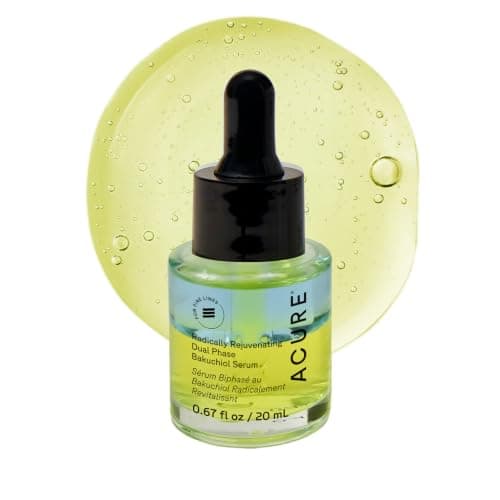
Acure Acure Radically Rejuvenating Dual Phase Bakuchiol Serum
Acure Radically Rejuvenating Dual Phase Bakuchiol Serum

A properly formulated dual-phase serum — bakuchiol in the oil layer, humectants in the water layer, shaken to combine. The most sensible over-the-counter option we can point at.

Best overall
7.4
$21.99Amazon
02
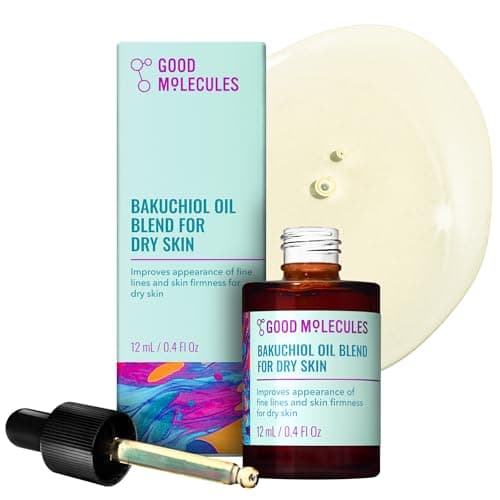
Good Molecules Good Molecules Bakuchiol Oil Blend
Good Molecules Bakuchiol Oil Blend

The cheapest honest way to try bakuchiol. A simple facial oil blend for under ten dollars — no dual-phase engineering, no claims beyond the ingredient, and enough to find out whether your skin likes it.

Cheapest way to try it
7.4
$9.99Amazon

#ad · Live prices from the Amazon Product API, as of Aug 28, 2026. Where we have no verified live price, we show none — a gap beats a number that has rotted.

In detail

The picks, in full

01
Acure Acure Radically Rejuvenating Dual Phase Bakuchiol Serum

Best overall

Acure Radically Rejuvenating Dual Phase Bakuchiol Serum

BakuchiolDual-phase oil + water0.67 fl ozVegan
7.4/10

A properly formulated dual-phase serum — bakuchiol in the oil layer, humectants in the water layer, shaken to combine. The most sensible over-the-counter option we can point at.

Ingredients
7
Efficacy
6
Gentleness
9
Texture
8
Value
7

Pros

  • Oil phase is the correct vehicle for an oil-soluble ingredient
  • Humectant water phase means it does not feel purely greasy
  • Widely available and reasonably priced for the category

Cons

  • Bakuchiol percentage is not disclosed
  • Small bottle, and it needs shaking before every use

Don't buy this if…

you can tolerate a retinoid. The evidence gap between the two is large and a retinol costs less.

$21.99View on Amazon

Price as of Aug 28, 2026. Prices change — Amazon's at checkout is the one that counts.

#ad · we may earn a commission from this link to Acure Radically Rejuvenating Dual Phase Bakuchiol Serum

02
Good Molecules Good Molecules Bakuchiol Oil Blend

Cheapest way to try it

Good Molecules Bakuchiol Oil Blend

Bakuchiol in oil base0.4 fl ozFragrance-freeVegan
7.4/10

The cheapest honest way to try bakuchiol. A simple facial oil blend for under ten dollars — no dual-phase engineering, no claims beyond the ingredient, and enough to find out whether your skin likes it.

Ingredients
7
Efficacy
6
Gentleness
9
Texture
6
Value
9

Pros

  • Costs less than a takeaway coffee round
  • Oil base is the right vehicle, and the list is short
  • Nothing in the marketing that the ingredient cannot support

Cons

  • Very small bottle
  • Oil finish is too rich for oily skin under a moisturizer

Don't buy this if…

your skin is oily or blemish-prone — a facial oil is the wrong format regardless of what is dissolved in it.

$9.99View on Amazon

Price as of Aug 28, 2026. Prices change — Amazon's at checkout is the one that counts.

#ad · we may earn a commission from this link to Good Molecules Bakuchiol Oil Blend

How we picked

We did not lab-test this gear

Everyone in this category says they tested twenty products. We have not lab-tested any of these, and we say so. What we did instead: compiled the published specifications, decoded the ingredient (INCI) lists active by active, ran the math where there was math to run, and scored each product against a published rubric. The scores are judgments from documented research — not measurements we took, because we do not have a lab and we will not pretend we do. Where a number came from someone else's work, we name them in Sources.

Questions

Frequently asked

Is bakuchiol as good as retinol?
One twelve-week study found comparable improvement in wrinkles and pigmentation with less irritation. That is a real result from a small trial. Retinoids have decades of research and long-term photoaging data behind them. If you can tolerate a retinoid, use one; bakuchiol is the alternative when you cannot.
Is bakuchiol safe during pregnancy?
It is generally considered acceptable where retinoids are not, and it is one of the more common recommendations for pregnancy skincare. That said, this is a question for your own doctor or midwife rather than a skincare page — and azelaic acid is the other active usually named alongside it.
What percentage of bakuchiol should I look for?
0.5% to 1%. The main comparison study used 0.5% twice daily. Higher concentrations are not obviously better and there is no data supporting them.
Can I use bakuchiol with retinol?
You can, and some products combine them, but there is no evidence the combination beats a well-tolerated retinoid alone. If you are already using a retinoid successfully, adding bakuchiol adds cost rather than results.
Is babchi oil the same as bakuchiol?
No, and the difference matters. Raw babchi seed oil contains psoralens, which are strongly photosensitizing and can cause serious burns. Cosmetic bakuchiol is purified to remove them. Never substitute raw babchi oil for a formulated bakuchiol product.

Keep reading

Receipts

Sources

We do not run a testing lab, and we do not pretend to. Where a measured number came from someone else's work, we name them and link them. Where we could not verify something, we say so on the page rather than quietly leaving it out. Read our full method.