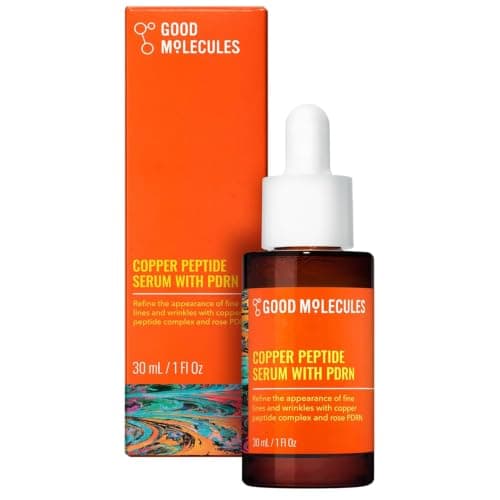
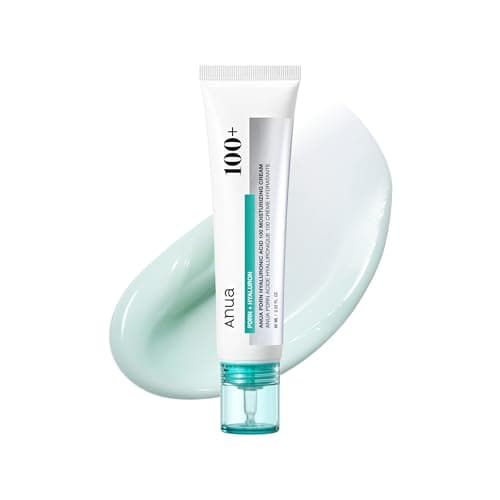
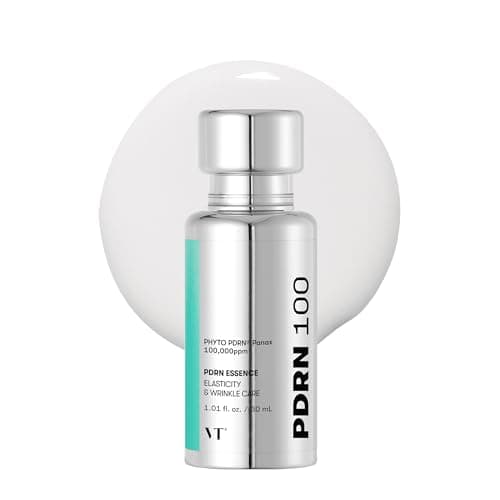
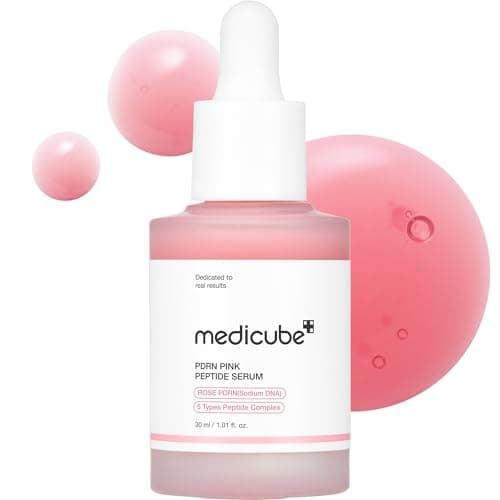
Buy the medicube PDRN Pink Peptide Serum if you want the best-built product in this category: a light, fragrance-free-leaning serum whose supporting cast — peptides, niacinamide and humectants — would be worth using even if you deleted the PDRN from the label. The budget pick is the Good Molecules Copper Peptide Serum with PDRN, the cheapest way into the ingredient and a genuinely competent peptide serum in its own right. If you want a cream rather than a serum, the ANUA PDRN Hyaluronic Acid 100 Moisturizing Cream is the one to get.
Now the caveat, up front rather than buried, because it changes how you should read every product page in this category: the clinical research that made PDRN famous was done with injections, and a serum cannot inherit it. We rank these on the formula around the PDRN, not on the PDRN, and the rest of this page explains why that is the only defensible way to do it.
What PDRN is
PDRN stands for polydeoxyribonucleotide: a mixture of short DNA fragments, in medical use typically derived from salmon. The clinical interest in it is real and goes back decades — it has been studied as an injectable in wound healing and tissue repair, and the current aesthetic version of the story is "polynucleotide skin boosters", which are injected into the dermis by a practitioner.
So the ingredient is not invented, and the research is not fake. The problem is the delivery step. A DNA fragment is a large, water-loving molecule, and large water-loving molecules are precisely what intact stratum corneum is built to keep out. An injection bypasses that barrier completely. A serum does not, and no manufacturer we are aware of has published a controlled human trial showing that topical PDRN reaches the dermis in any meaningful amount.
This is the same structural problem we walked through on the collagen guide: an ingredient with genuine biology, sold in a format that cannot deliver it. We flagged it there and it applies here with the molecular weights pointing in the same direction.
So why rank them at all?
Because the products are good, for reasons that have nothing to do with PDRN. Every serum on this page is a well-formulated hydrating treatment carrying peptides, niacinamide and humectants at sensible positions in the ingredient list. Those ingredients have their own literature, modest as it is, and they are what you are actually buying. If PDRN eventually turns out to do something topically, you have it. If it does not, you still own a good serum.
That is also why we do not rank on PDRN concentration. Several products in this category advertise a percentage; none of them, as far as we can establish, publish an assay confirming the fragment size or the quantity that survives formulation. We are not going to score a number we cannot check — the whole point of our review method is that we only score what is documented.
How we ranked these
- Supporting formula — what the product delivers that is NOT PDRN. Peptides, niacinamide, humectants, barrier lipids, and where they sit in the list.
- Tolerance — fragrance, essential oils, drying alcohol. This category sells to people with mature or reactive skin, so irritants cost more here than elsewhere.
- Honesty — does the brand make claims the format cannot support? Pages that borrow injectable trial language lose points.
- Value — cost per ounce against the ingredients we can verify, not against the headline.
The question to ask before buying any PDRN product
Not "how much PDRN is in it", which you cannot verify. Ask: would I buy this serum if the word PDRN were removed from the label? If the answer is yes — because it is a decent peptide serum, or a good niacinamide hydrator, or a well-built fragrance-free cream — then the purchase makes sense and PDRN is a free option on top. If the answer is no, you are paying a premium for a marketing term.
That test is the reason our ranking looks the way it does. The two products that survive it best are at the top; the one that survives it worst is at the bottom, despite being the most PDRN-forward product on the page.
Injections versus serums, in one table
| Polynucleotide / PDRN injection | PDRN serum |
|---|
| Where the material ends up | Dermis, by needle | Surface of the stratum corneum, mostly |
| Published human evidence | Yes — wound healing and aesthetic literature exists | Not that we can find, for delivery or outcome |
| Who administers it | A practitioner, as a medical procedure | You, over a sink |
| What you can reasonably expect | Outcomes described in that literature | Hydration, plus whatever the peptides and niacinamide do |
Read down the right-hand column and the ranking criteria on this page stop looking cautious and start looking like the only honest option.
A note on microneedling
Autocomplete is full of "best PDRN serum for microneedling", and the logic is obvious: if the barrier is the problem, make holes in it. We are not going to recommend that. Applying a cosmetic serum into channels you have just opened in your skin is an infection and granuloma risk, and cosmetic serums are not formulated or sterilized for intradermal delivery. If the injectable version of this ingredient is what you want, that is a conversation with a licensed practitioner, not a derma roller and a bottle from a parcel.
Where PDRN sits against things with better evidence
If your goal is firmer-looking skin and you have a fixed budget, the order of operations has not changed: sunscreen first, then a retinoid, then everything else. Our anti-aging roundup ranks that properly, and peptides versus retinolexplains how much smaller the peptide effect is than the marketing implies. PDRN is one more option in the "nice, unproven, pleasant to use" tier — the same tier as snail mucin, and a tier worth buying from only once the proven steps are already in place.