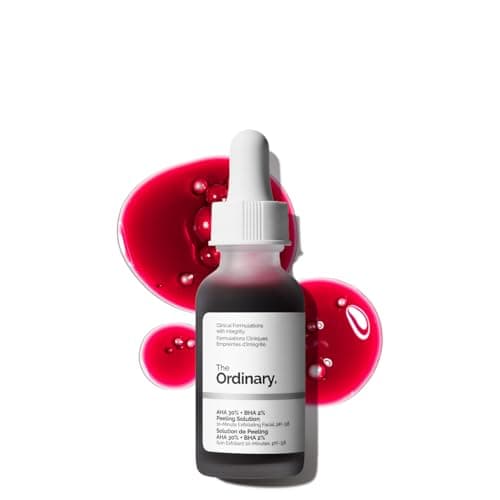
This is a legitimate professional-tier chemical peel that costs less than lunch, and that combination is the entire story — both the reason it works and the reason it goes wrong. The formula is honest, the label is unusually specific, and almost none of the people who buy it because they saw it on a screen read either. Used exactly as directed, it does what it says. Used the way it is usually used, it is the fastest route to a damaged barrier we know of.
We have ranked it before, as the one to be careful with in our exfoliant roundup. This page is the long version: what is actually in the bottle, what the published pH means, the layering restrictions the brand itself lists, and the specific people who should buy something else. Nothing here is from memory — every figure below is from the product's own ingredient list and the manufacturer's published directions.
Who it's for
Buy it if you have used leave-on acids comfortably for at least several months, your skin is robust rather than reactive, your complaint is surface texture or dullness, and you are genuinely willing to run a timer and wear sunscreen daily for the following week.
Do not buy it if you are new to acids, you have rosacea or eczema-prone skin, your barrier is currently unhappy, you use a retinoid, or you suspect you would leave it on "just a bit longer" to make it work better. That last one is not a hypothetical — it is the single most common way this product causes harm, and the formula gives you no warning signal until the damage is done.
The brand agrees, in writing. Its own product page states the peel is only suitable for experienced users of acid exfoliation and advises against use on sensitive, peeling or compromised skin. That is a manufacturer voluntarily narrowing its own market, which is rare enough to take seriously.
The ingredient list, decoded
The marketing describes five exfoliating acids totaling 32%. The ingredient list tells you something more useful about the balance between them, and it is worth reading the first line twice:
Glycolic acid is the first ingredient — listed before water. On a cosmetic list ordered by descending concentration, that places glycolic above everything else in the bottle including the solvent. The remaining acids appear in order as salicylic acid (the 2% BHA), then lactic, tartaric and citric acid, all of which sit after cocamidopropyl dimethylamine and well down the list.
So the honest description is not "a blend of five acids". It is a strong glycolic peel with a 2% BHA and three supporting acids. That matters for who should use it, because glycolic is the smallest AHA molecule and therefore the fastest and the harshest — the reason our glycolic acid guide puts it at the robust-skin end of the family and our AHA vs BHA comparison routes reactive skin to mandelic instead.
The supporting cast is better than it needs to be at this price. Panthenol, aloe barbadensis leaf water (the third ingredient), sodium hyaluronate crosspolymer and Tasmanian pepperberry (Tasmannia lanceolata) are all there to take the edge off. Pepperberry in particular is included in cosmetics specifically to reduce the sting of low-pH formulas. They are real inclusions and they do help. They do not turn 32% acid into a gentle product, and nothing could.
One detail that answers a question we get a lot: the red color is not the acids. It is black carrot extract (Daucus carota sativa), fifth on the list. The dramatic look that made this bottle famous on video is a vegetable pigment.
Why pH 3.5 is the number that matters
Concentration alone does not determine how strongly an acid acts — pH does at least as much work. An acid at a higher pH is largely neutralized and does comparatively little; the lower the pH, the more of the acid is in its active free form. The Ordinary publishes this peel at pH 3.50-3.70.
That is a genuinely low figure, and paired with 30% AHA it is what separates this from a leave-on toner. It is also the reason the ten-minute limit is not brand caution — it is the actual safety envelope. A 30% glycolic concentration at pH 3.5 is in professional-peel territory, and the only thing standing between you and a professional-peel outcome is a timer. Publishing the pH at all is to the brand's credit; almost nobody in this category does.
The layering list nobody reads
This is the part that surprises people most, and it comes from the manufacturer rather than from us. The Ordinary advises against combining this peel with retinoids, direct vitamin C, peptides, copper peptides, niacinamide powder and other direct acids.
Read that against a normal shelf and you will notice it excludes most of what people already own. If you use a retinoid, this product does not slot into your week — it displaces something. If you own a peptide serum, the same restriction applies that our peptide roundup flags for copper formulas. The practical consequence is that buying this is a decision about your whole routine, not about one ten-minute step, and the ten-dollar price tag disguises that completely.
What using it is actually like
The directions are specific and worth following literally: once or twice a week maximum, in the evening, on thoroughly clean, dry skin — not damp, which the brand calls out explicitly — for no more than ten minutes, then rinsed with lukewarm water. Avoid the eye contour entirely.
Expect a tingle that builds over the first two or three minutes and then plateaus. A tingle is normal. Burning, stinging that keeps escalating, or any white blanching of the skin is not — rinse immediately rather than waiting out the clock, and do not treat finishing the ten minutes as the goal. The single most useful habit with this product is setting an actual timer, because ten minutes is shorter than it feels and "a few more minutes" on a 30% acid is a materially different exposure.
Afterwards, skin looks smoother and reflects light better fairly immediately. That is real, and it is surface-level — it is the effect of removing the dead layer, not a change in your skin's underlying condition. Follow it with a bland, fragrance-free moisturizer and nothing else that night.
The sun sensitivity clause people miss
The FDA has considered evidence that AHA-containing cosmetics increase sun sensitivity during use and for up to a week after stopping, and recommends a specific sunburn-alert label. The Ordinary carries the same warning on this product, advising sunscreen, protective clothing and limited sun exposure during use and for one week afterwards.
One week. Not the next morning. This is the clause that turns a good result into hyperpigmentation for people who peel on a Sunday and spend the following Saturday outdoors, and it is the reason we would not recommend this product at all to anyone unwilling to wear daily sunscreen. If that describes you, the peel is not a shortcut — it is a step backwards.
How it compares
Against a leave-on 2% BHA such as Paula's Choice Skin Perfecting 2% BHA, this is a different category of product rather than a stronger version of the same one. The BHA is a maintenance step you use several times a week forever; this is an occasional reset. For congestion and blackheads specifically, the BHA is the better tool and it is not close, because it stays on the skin and works inside the pore.
Against a leave-on glycolic toner such as The Ordinary's own Glycolic Acid 7%, the peel is roughly four times the concentration at a lower pH for a fraction of the contact time. For most people the 7% used two or three nights a week produces a better long-run result with a far smaller downside, which is why our exfoliant roundup ranks leave-on options above this one for general use.
Where the peel genuinely wins is the occasional, visible reset on robust skin — before an event, or to shift a stubborn stretch of rough texture that a gentler acid has not moved. It is a good product for a narrow job, sold at a price that encourages people to use it for a broad one.
The verdict in one line
An honest, well-formulated, genuinely strong peel that is priced like a casual purchase and labeled like a professional one — buy it only if you are the experienced user its own bottle asks for, and if you are not sure whether that is you, it is not. If you got here because your skin is already tight, stinging and reactive, our damaged barrier guide is the page you actually need.