Skip to content
Barrier & Bloom

Explainers · Learn

Can you use retinol and vitamin C together?

The short answer is yes, but you almost certainly should not need to. Why the pH argument is overstated, why irritation is the real issue, and the schedule that solves it.

By Stephen V.Updated How we review
#ad

We earn a commission when you buy through our Amazon links, at no extra cost to you. It never changes a verdict, and we say so when the cheaper product is the better buy. How this works.

Yes, you can use both — and the sensible arrangement is vitamin C in the morning, retinol at night. They do not chemically cancel each other out on your face. The real risk is irritation: two potent actives applied at once is a common route to a stinging, flaking, compromised barrier, and the split schedule removes that risk for free.

This question gets asked constantly because the two ingredients are the most-recommended actives in skincare — vitamin C for daytime antioxidant protection, retinol for overnight renewal. Almost everyone building a serious routine ends up wanting both. The good news is that their natural timings are opposite, so the conflict people worry about mostly resolves itself.

The pH argument, and why it is overstated

The classic objection is that L-ascorbic acid needs a low pH (around 3.5) to be absorbed, while retinol works best nearer skin-neutral (around 5.5 to 6), so using them together renders one or both inert. There is real chemistry underneath that — but the conclusion is overdrawn.

Skin re-establishes its own pH within about half an hour of applying anything. The idea that a vitamin C serum permanently acidifies your face for the rest of the evening does not survive contact with how skin actually behaves. In practice, applying one, waiting, and applying the other does not destroy either. The reason not to do it is simpler and more practical: it is uncomfortable, and there is no benefit to offset the discomfort.

The real problem is irritation

Retinol causes a well-documented adjustment period — dryness, flaking, some sensitivity — that lasts a few weeks. A potent L-ascorbic acid serum stings on compromised skin. Stack them and you compound both, which is how people end up abandoning the single best-evidenced anti-aging ingredient there is within a fortnight.

If your skin is already unhappy, the answer is not a clever layering order. It is to fix the barrier first — our barrier repair guide covers that — and reintroduce one active at a time afterwards.

The schedule that works

  • Morning: cleanse, vitamin C, moisturizer, sunscreen. Vitamin C belongs here because its job is neutralizing the free radicals daylight generates, and it works alongside sunscreen rather than replacing it.
  • Night:cleanse, retinol, moisturizer. Retinol belongs here because it degrades in UV light and because overnight is when the skin's repair processes are most active.
  • Frequency: vitamin C daily; retinol two or three nights a week to start, building up over a couple of months. Never increase both at once.

If you genuinely want to use both in one sitting — because you do not wear sunscreen in the evening and want the antioxidant at night, say — apply the vitamin C, wait fifteen to thirty minutes, then the retinol. It works. It is just a lot of standing around for no measurable gain.

Gentler versions of both

If the split schedule still irritates, drop the intensity rather than the ingredients. A vitamin C derivative (ascorbyl glucoside, magnesium ascorbyl phosphate, THD ascorbate) sits at a higher pH and stings far less than L-ascorbic acid, at the cost of some potency. A lower-strength retinol, or a retinol buffered in squalane, gives you the same mechanism with a slower ramp. Our vitamin C roundup is organized by form for exactly this reason, and the retinol roundup is organized by starting strength.

What matters more than the schedule

Sunscreen, every morning, in enough quantity. A retinoid without daily SPF is close to pointless — you are accelerating cell turnover on skin you then expose to the thing causing the damage. And vitamin C's antioxidant role is defined relative to sunscreen: it catches what gets through, it does not stand in for the filter. Get that right and the retinol-and-vitamin-C question becomes a detail. See how much sunscreen to apply for the quantity most people get wrong.
The short answer

Quick picks

#ProductBest forScorePrice
01
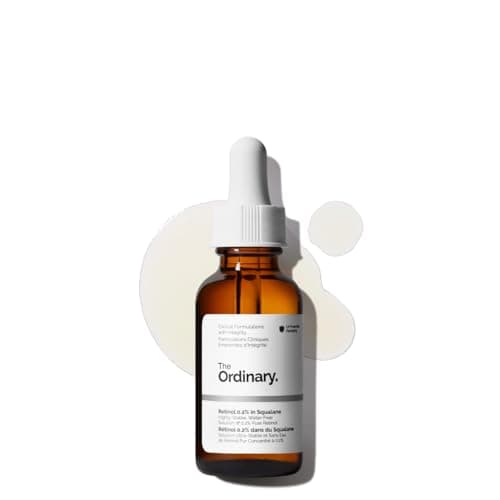
The Ordinary The Ordinary Retinol 0.2% in Squalane
The Ordinary Retinol 0.2% in Squalane

The night half of the pairing, at the strength a beginner should actually start on. Retinol suspended in squalane, which buffers the irritation that makes people quit in week two.

The night active
8.4
$8.10Amazon
02
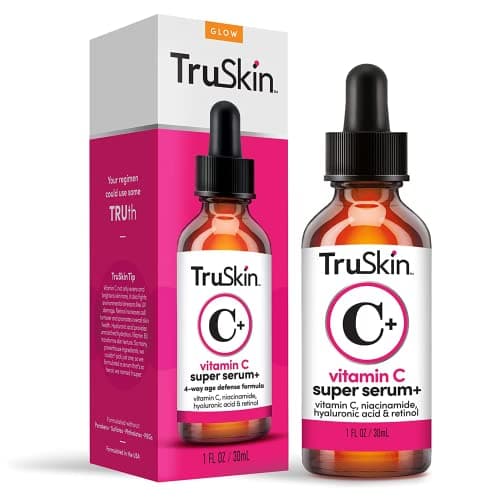
TruSkin TruSkin Vitamin C Super Serum
TruSkin Vitamin C Super Serum

The morning half. A vitamin C serum with hyaluronic acid and vitamin E in a base mild enough to sit under sunscreen every day without complaint — which is the property that matters when you are pairing it with a retinoid.

The morning antioxidant
7.6
$21.99Amazon

#ad · Live prices from the Amazon Product API, as of Aug 28, 2026. Where we have no verified live price, we show none — a gap beats a number that has rotted.

In detail

The picks, in full

01
The Ordinary The Ordinary Retinol 0.2% in Squalane

The night active

The Ordinary Retinol 0.2% in Squalane

0.2% retinolSqualane base1 fl ozFragrance-free
8.4/10

The night half of the pairing, at the strength a beginner should actually start on. Retinol suspended in squalane, which buffers the irritation that makes people quit in week two.

Ingredients
9
Efficacy
7
Gentleness
9
Texture
7
Value
10

Pros

  • Low enough strength to build tolerance rather than fight it
  • Squalane base offsets the dryness retinol causes
  • Stated percentage in opaque packaging, both of which matter

Cons

  • 0.2% is genuinely mild — experienced users will want more
  • Oil-based texture is not ideal for oily skin

Don't buy this if…

you are pregnant or breastfeeding. Retinoids are avoided then — see our bakuchiol and azelaic acid guides for the alternatives.

$8.10View on Amazon

Price as of Aug 28, 2026. Prices change — Amazon's at checkout is the one that counts.

#ad · we may earn a commission from this link to The Ordinary Retinol 0.2% in Squalane

02
TruSkin TruSkin Vitamin C Super Serum

The morning antioxidant

TruSkin Vitamin C Super Serum

Vitamin C + EHyaluronic acid1 fl ozDaily morning use
7.6/10

The morning half. A vitamin C serum with hyaluronic acid and vitamin E in a base mild enough to sit under sunscreen every day without complaint — which is the property that matters when you are pairing it with a retinoid.

Ingredients
7
Efficacy
7
Gentleness
8
Texture
8
Value
8

Pros

  • Tolerable enough for daily use alongside an evening retinoid
  • Vitamin E and hyaluronic acid make it kinder than a bare L-ascorbic serum
  • Widely stocked and consistently priced

Cons

  • Contains fragrance, which reactive skin may not want
  • Less potent than a high-percentage L-ascorbic acid serum

Don't buy this if…

you avoid fragrance strictly — a derivative-based fragrance-free serum from our vitamin C roundup is the better fit.

$21.99View on Amazon

$29.9527% off

Price as of Aug 28, 2026. Prices change — Amazon's at checkout is the one that counts.

#ad · we may earn a commission from this link to TruSkin Vitamin C Super Serum

How we picked

We did not lab-test this gear

Everyone in this category says they tested twenty products. We have not lab-tested any of these, and we say so. What we did instead: compiled the published specifications, decoded the ingredient (INCI) lists active by active, ran the math where there was math to run, and scored each product against a published rubric. The scores are judgments from documented research — not measurements we took, because we do not have a lab and we will not pretend we do. Where a number came from someone else's work, we name them in Sources.

Questions

Frequently asked

Can you use retinol and vitamin C together?
Yes. The usual arrangement is vitamin C in the morning and retinol at night, which suits both ingredients anyway. Using them in the same sitting is possible but uncomfortable for most people, and there is no measurable benefit to offset the irritation.
Do retinol and vitamin C cancel each other out?
No. The pH argument — that vitamin C needs an acidic environment and retinol a neutral one — has real chemistry behind it but is overstated for real-world use. Skin re-establishes its own pH within about half an hour, and neither ingredient is destroyed by the other on your face.
Which should I apply first if I use both at once?
Vitamin C first, since it is the more acidic and works best on bare skin, then wait fifteen to thirty minutes before applying retinol. Honestly, though, the morning-and-night split gets you the same result with none of the waiting.
What if using both irritates my skin?
Reduce intensity rather than dropping either ingredient. Switch to a vitamin C derivative, which stings far less than L-ascorbic acid, or a lower-strength retinol buffered in squalane. If your skin is already compromised, repair the barrier first and reintroduce one active at a time.
Do I still need sunscreen if I use vitamin C?
Absolutely. Vitamin C is an antioxidant that neutralizes free radicals which get past your defenses — it is not a UV filter and its role is defined relative to sunscreen, not instead of it. Using a retinoid without daily SPF is close to self-defeating.

Keep reading

Receipts

Sources

We do not run a testing lab, and we do not pretend to. Where a measured number came from someone else's work, we name them and link them. Where we could not verify something, we say so on the page rather than quietly leaving it out. Read our full method.