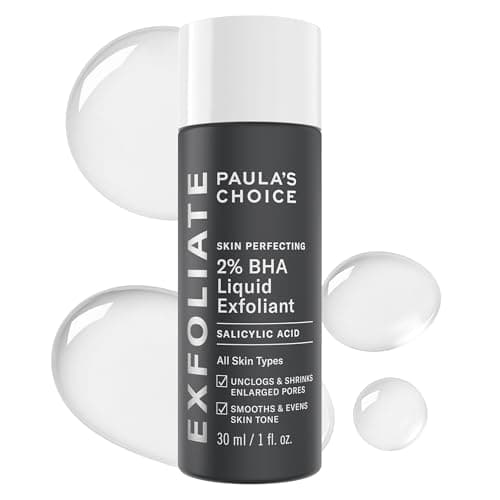
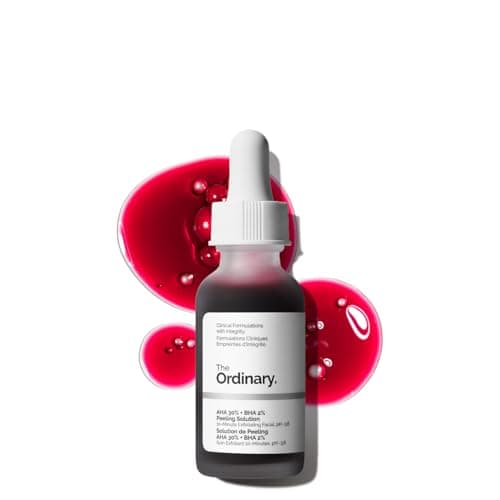
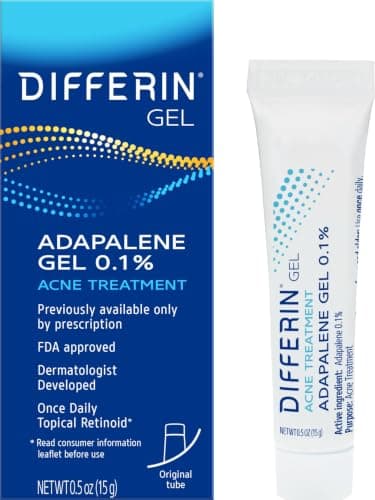
Buy Differin Adapalene Gel 0.1%. It is the only product on this page that attacks the cause rather than the symptom: adapalene is a retinoid, retinoids normalize the way cells shed inside the follicle, and a follicle that sheds normally stops producing plugs. It is also, since the over-the-counter switch, absurdly cheap for what it is. If you want something gentler or faster-feeling, the Paula's Choice 2% BHA Liquid Exfoliant is the best oil-soluble acid here and the right second purchase. The budget pick is The Ordinary AHA 30% + BHA 2% Peeling Solution — the cheapest product in our registry carrying a real BHA, with the caveat that it is a ten-minute rinse-off used weekly, not a daily treatment.
Everything else sold for blackheads — the strips, the charcoal masks, the metal loops, the steaming, the apricot scrubs — either removes the top of a plug while leaving the plug, or damages the pore it is clearing. We go through each one below, because the money people waste in this category is almost all spent there.
What a blackhead actually is
An open comedone. The follicle fills with a mix of shed keratin and sebum, the opening stays wide, and the exposed surface of that plug darkens. The darkening is oxidation and melanin in the plug material — it is not dirt, and it is not a lack of washing. That single fact invalidates most of the category: if blackheads were dirt, cleaning harder would fix them, and it does not.
A whitehead is the same plug with the opening closed over, which is why the two respond to the same treatments but look completely different. And sebaceous filaments — the tiny uniform gray dots across the nose that reappear within days of being squeezed out — are not blackheads at all. They are the normal sebum lining of the follicle, every nose has them, and there is no treatment because there is no disease. This is the most important distinction in the category, because people spend years attacking a normal anatomical feature. Our blackheads guide covers how to tell the two apart in a mirror.
The two mechanisms that work
1. Get an acid inside the pore. Salicylic acid is a beta hydroxy acid and, unlike the alpha hydroxy acids, it is oil-soluble. That is not a marketing distinction: it is why salicylic acid can travel into a sebum-filled follicle while glycolic acid mostly works on the surface. Inside the pore it is keratolytic — it loosens the bonds holding the plug together, and the plug comes out gradually without being pulled.
2. Stop the plug forming. A retinoid changes how follicular cells differentiate and shed, which reduces the formation of new comedones rather than clearing existing ones faster. That is a slower, structurally better fix, and it is why adapalene wins this page despite doing nothing visible for the first several weeks.
Use both and you get the two halves of the job — the acid clears what is there, the retinoid reduces what arrives next. Use them on alternating nights, not together, which is the single most common reason people conclude their skin "cannot handle actives".
The things that do not work, and why
| Product | What it does | Verdict |
|---|
| Pore strips | Rips the exposed top off the plug and some surface skin with it. The follicle refills | Satisfying, temporary, and repeated use is hard on an already-stretched pore opening |
| Charcoal and peel-off masks | Adsorb surface oil; charcoal does not reach into a follicle | A mask, not a treatment. Harmless, ineffective |
| Metal extractor loops | Force a plug out mechanically, with no control over pressure | Bruising, broken capillaries and post-inflammatory marks. Leave it to someone trained |
| Steaming | Softens the plug and makes extraction easier for a short window | A useful adjunct, not a treatment. See our steamer page |
| Gritty scrubs | Abrade the surface. The plug is below the surface | No mechanism, and they make inflamed skin worse |
| Vacuum pore tools | Apply suction to the skin surface | Bruises readily; no evidence of a lasting effect on comedones |
How we ranked these
- Comedolytic action — does this product reduce the formation of plugs, or only clear what is already there? Scored highest, because that is what changes a nose over months rather than days.
- Pore penetration — oil-soluble and able to reach into a sebum-filled follicle, or surface-only.
- Tolerance — how likely the average person is to still be using it in week six. Irritation is the main reason blackhead routines fail.
- Value — cost per month of actual use.
The twelve-week routine that actually clears a nose
Nothing here is fast. The following is the version that works, and the reason it works is that it is boring enough to keep doing.
- Weeks 1-2. Gentle cleanser twice a day, moisturizer, sunscreen every morning. Nothing else. You are establishing the base that makes an active tolerable.
- Week 3. Add the BHA liquid, two nights a week, on the areas with blackheads rather than the whole face.
- Week 5. Add the adapalene gel on the nights you are not using the acid. Pea-sized for the whole face, on dry skin.
- Weeks 6-8. Expect this to look worse before it looks better. Purging is real and it is not the product failing — our purging versus breakout page has the distinction.
- Week 12. Now judge it. If the nose is clearer, hold the routine. If it is not, that is the point to see a dermatologist rather than add a sixth product.
The two mistakes that undo all of it
Squeezing. A plug forced out through a narrow opening ruptures the follicle wall more often than it exits cleanly, and a ruptured follicle is how a blackhead becomes an inflamed papule and then a mark that outlasts it by months. If you must extract, do it after a warm shower, with clean hands, once, and stop if it does not come easily.
Over-cleansing. Blackheads are not dirt, so a stronger cleanser cannot help, and stripping the barrier reliably makes skin produce a worse version of the same problem. One wash at night, one in the morning if you want it, and nothing abrasive — the cleanser roundup covers what gentle means here.
What about niacinamide and clay?
Niacinamide is a reasonable supporting ingredient — it has published work behind it for sebum and for the look of pore size, and it is easy to tolerate alongside a retinoid. It is not a blackhead treatment on its own, which is why it is not on this ranking; see the niacinamide roundup if you want to add it. Clay masks absorb surface oil and feel like they are doing more than they are. Both are fine. Neither replaces either mechanism at the top of this page.
When to stop self-treating
If you have inflamed lesions as well as blackheads, if marks are being left behind, or if twelve weeks of the routine above has changed nothing, that is a dermatologist conversation rather than a seventh product. Prescription options start where adapalene 0.1% stops, and they are far better value than another cabinet shelf. Our acne roundup sets out where the over-the-counter ceiling sits.